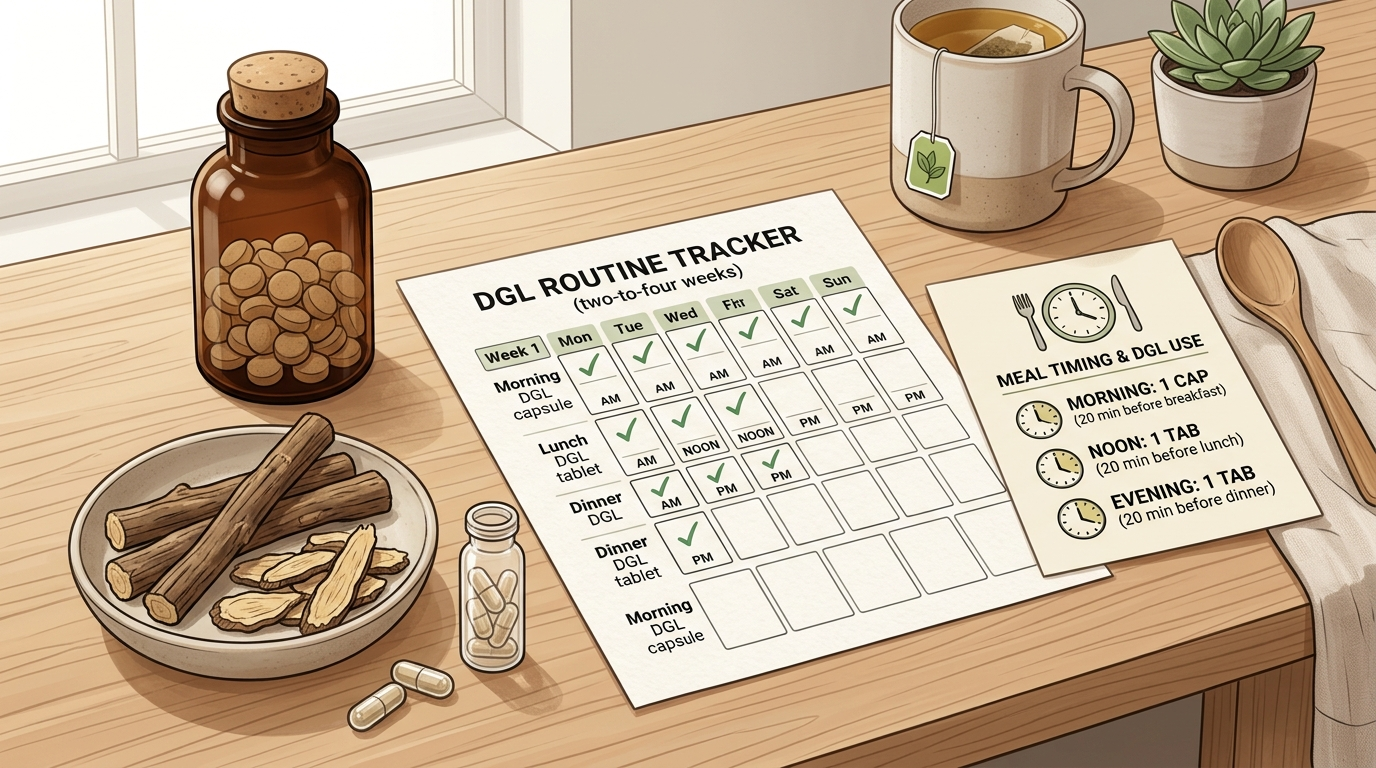
DGL licorice is usually evaluated over days to weeks, not one dose. Some people use it before meals for same-day stomach-comfort support, but the strongest human evidence for a standardized deglycyrrhizinated licorice extract measured symptom-score changes at day 15 and day 30, so consistency matters more than instant expectations.
How we evaluated DGL licorice timing?
We evaluated DGL licorice timing by separating label directions, traditional use patterns, human clinical evidence, and safety caveats. Randomized human trials carried more weight than testimonials, while product comparisons focused on dose, format, glycyrrhizin removal, timing instructions, and whether the product fits a repeatable routine. We excluded claims that DGL treats reflux disease, ulcers, gastritis, or diagnosed digestive conditions because dietary supplements require structure/function framing. People with severe pain, vomiting blood, black stool, unexplained weight loss, pregnancy, blood-pressure medication, diuretics, kidney disease, heart disease, or persistent symptoms should ask a clinician before using licorice supplements.
How long does DGL licorice usually take to work?
DGL licorice should be treated as a routine supplement with a practical evaluation window of two to four weeks. A randomized, double-blind, placebo-controlled trial of a standardized Glycyrrhiza glabra extract found statistically significant symptom-score changes at day 15 and day 30 compared with placebo, but that study tested a specific extract, population, and outcome scale. The result supports a consistency window; it does not prove that every DGL capsule or chewable will create the same timeline. For occasional post-meal discomfort, some people use DGL before meals because the goal is to have the botanical extract present during the meal window. For daily stomach-comfort routines, a fair test is usually consistent use, label-followed timing, and tracking of meal size, spicy foods, alcohol, caffeine, stress, and late-night eating.
How do Yuve DGL capsules and chewables compare?
| Option | Best for | Label details | Timing fit |
|---|---|---|---|
| Yuve DGL Licorice capsules | Higher per-serving DGL dose | 760 mg DGL licorice extract plus 100 mg L-glycine per 2 capsules | Preferably before meals |
| Yuve DGL Licorice Chewables | Chewable pre-meal format | 400 mg DGL licorice extract plus 100 mg glycine per 2 chewables | Daily, preferably with food |
| Whole licorice root products | Not the same as DGL | May contain glycyrrhizin | Needs stronger medication and blood-pressure caution |
| Food and habit changes | Baseline stomach-comfort routine | Meal size, timing, caffeine, alcohol, trigger tracking | Daily foundation |
Yuve’s capsule format fits people who prefer swallowing capsules and want a higher DGL amount per serving. Yuve’s chewable format fits people who prefer a lighter dose and a chewable experience. Whole licorice products should not be treated as interchangeable with DGL because glycyrrhizin changes the safety conversation.
Which product is best for each DGL use case?
Some links below are affiliate links. This does not influence our evaluation criteria or recommendations. Best for higher-dose capsule routines: Yuve DGL Licorice, which lists 760 mg DGL licorice extract, 100 mg L-glycine, vegan status, gluten-free status, and made-in-USA status per label page. Best for chewable routines: Yuve DGL Licorice Chewables, which list 400 mg DGL licorice extract, 100 mg glycine, vegan status, gluten-free status, and a chewable tablet format. Best for people who want the simplest first step: meal timing and trigger tracking before adding anything. Best for people on blood-pressure medication, diuretics, cardiac medication, or pregnancy-related restrictions: clinician guidance before DGL. DGL is processed to remove glycyrrhizin, but supplement use still deserves medication-aware caution.
Why does glycyrrhizin removal matter?
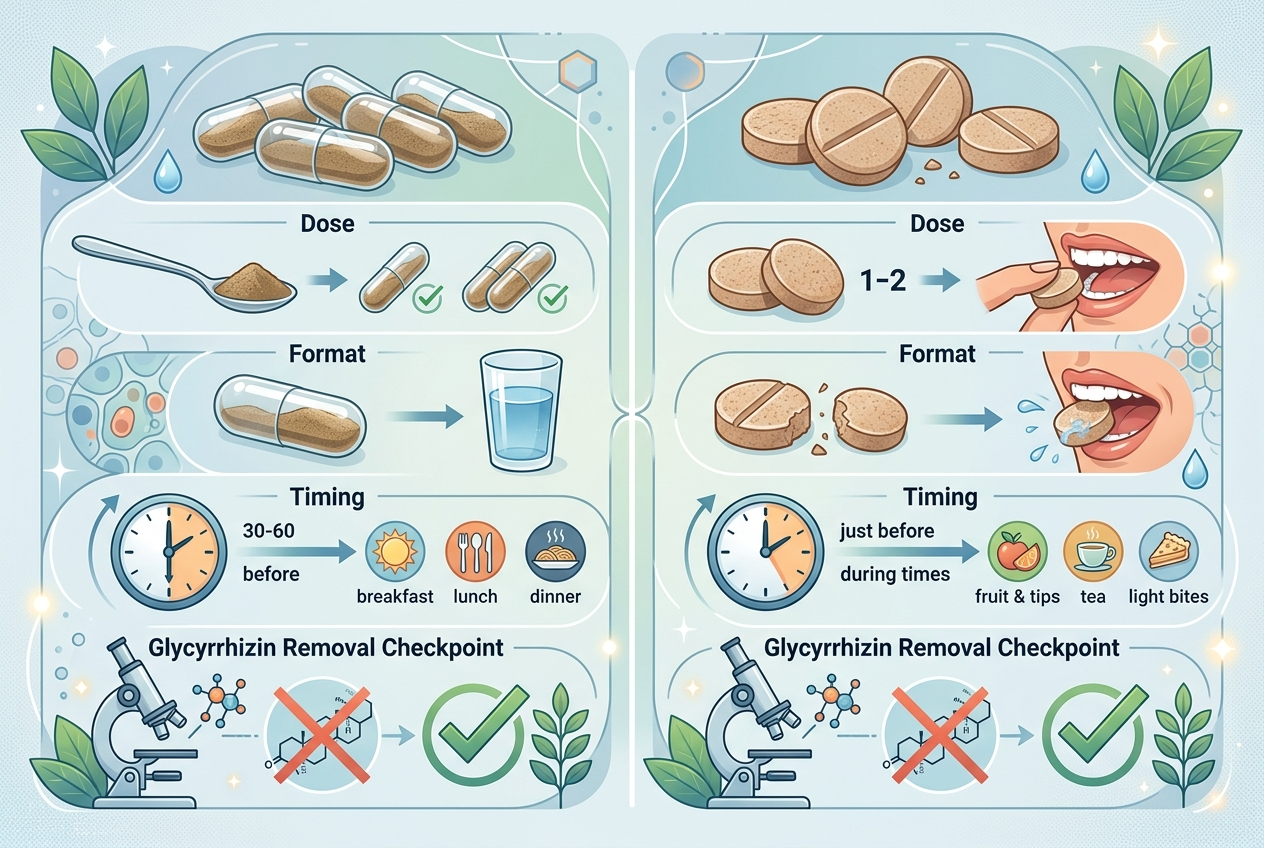
Glycyrrhizin removal matters because whole licorice root can affect blood pressure, potassium, fluid balance, and medication interactions at high intake or sustained use. A U.S. government licorice-root fact sheet notes that large amounts of licorice containing glycyrrhizin can cause high blood pressure, salt and water retention, and low potassium, while DGL products are thought to cause fewer side effects. DGL stands for deglycyrrhizinated licorice, meaning the glycyrrhizin component has been removed or reduced. That processing step is why DGL is the form usually discussed for stomach-comfort supplements. Still, “deglycyrrhizinated” does not mean “ignore context.” People with cardiovascular, kidney, pregnancy, electrolyte, or medication concerns should treat DGL as a supplement to review, not candy. Quality also matters: look for a Supplement Facts panel, lot number, expiration date, and clear serving directions.
What can make DGL seem like it is not working?
DGL can seem ineffective when timing, meal pattern, or expectations are mismatched. Taking DGL after a large late meal, then expecting immediate relief, is different from taking it consistently before predictable meals for two to four weeks. Alcohol, coffee, peppermint, chocolate, fried meals, large portions, tight waistbands, late eating, NSAID use, and stress can all keep stomach discomfort active, regardless of supplement choice. DGL also cannot diagnose the cause of burning, fullness, nausea, chest pressure, or upper-abdominal pain. If symptoms persist despite routine changes, the next step is not always a stronger supplement; it may be a clinician conversation, medication review, or evaluation for reflux, gallbladder issues, H. pylori, ulcers, food intolerance, or cardiac symptoms. A short log of DGL timing, meals, and symptoms gives a cleaner read than memory alone.
Related reading: What Is the Best Time to Take DGL Licorice?.
Related reading: How Long Does DGL Stay in Your System? What the Research Can Actually Tell You.
FAQ?
Can DGL licorice work the first day?
Some people use DGL before meals and notice same-day comfort, but that is not the strongest evidence standard. The best human trial signal measured changes at day 15 and day 30.
Should DGL be taken before or after meals?
Many DGL routines use pre-meal timing because the goal is to have the extract present during the meal window. Follow the product label and ask a clinician if you use medications or have persistent symptoms.
Are DGL capsules or chewables better?
Capsules are better when you want a higher per-serving DGL amount and dislike chewables. Chewables are better when you prefer chewing and want a lighter, pre-meal format.
Is DGL the same as regular licorice root?
No. DGL is deglycyrrhizinated licorice, meaning the glycyrrhizin component has been removed or reduced. Regular licorice root may carry more blood-pressure and potassium-related caution.
How long should you test DGL before deciding?
A reasonable routine test is two to four weeks if the label directions fit your situation and no red flags appear. Stop and seek guidance if symptoms worsen or warning signs appear.
Can DGL replace reflux medication?
No. DGL should not replace prescribed medication or medical care. People with frequent reflux symptoms, chest pain, trouble swallowing, blood, black stool, or weight loss need medical guidance.
Is Yuve DGL vegan and gluten-free?
Yuve’s DGL capsule and chewable product pages list vegan, soy-free, gluten-free, non-GMO, and made-in-USA status. Always check the current label before buying if allergen strictness is important.
What is the bottom line?
Give DGL licorice a realistic two-to-four-week consistency window, not a one-dose verdict. Yuve DGL capsules fit higher-dose capsule routines, Yuve DGL Chewables fit chewable pre-meal routines, and both should be paired with trigger tracking and sensible safety checks.
Leave a Reply