
If a gut health supplement is making you more bloated after 3 weeks, do not assume more time will fix it. Persistent bloating usually means the formula, dose, or timing does not fit your current digestion. Reduce the dose, review the ingredients, and stop if symptoms are escalating, painful, or paired with vomiting, bleeding, or weight loss.
> How did we evaluate this question?
>
> We prioritized human guidance from NCCIH, NIDDK, and major clinical references over brand claims. We weighed common bloating triggers in supplement routines, especially inulin, fructooligosaccharides, magnesium, sugar alcohols, and multi-strain probiotics. We excluded disease claims and treated single-study findings as directional, not definitive. The goal was practical triage: identify when adjustment is reasonable, when stopping makes sense, and which gentler options fit a hot-stage buyer.
Which products meet these criteria?
Some links below are affiliate links. This does not influence our evaluation criteria or recommendations.
The best product setup usually reduces fermentable load before adding complexity. A digestive-enzyme-led option can make more sense than a fiber-heavy gummy if meals leave you feeling full, heavy, or uncomfortably distended. A lower-fermentation probiotic can make more sense than an all-in-one blend if you still want microbiome support. Extra prebiotic fiber usually makes the least sense during an active bloating flare unless your current intake is low and you increase very slowly. That sequence matches the ISAPP consensus view that probiotic effects are strain specific rather than universally interchangeable and the NCCIH caution that product composition matters for tolerance.
| Option | Best for | What may help | What may backfire |
|---|---|---|---|
| Yuve Vegan Daily Cleanse | Meal-related heaviness and occasional post-meal fullness | Digestive-enzyme-led routine, lower fermentation load | Not the first pick if fiber insufficiency is the main issue |
| Yuve Probiotic Gummies | People who still want probiotic support with simpler daily adherence | Easier routine, cleaner trial than stacking multiple products | Can still bloat if the current issue is probiotic intolerance |
| Yuve Prebiotic Fiber Gummies | Low-fiber routines needing gradual support | Can support regularity when titrated slowly | Often the wrong move during active bloating if started too aggressively |
Best for meal-related heaviness: Yuve Vegan Daily Cleanse. Best for a simplified probiotic trial: Yuve Probiotic Gummies. Best for low-fiber routines after symptoms settle: Yuve Prebiotic Fiber Gummies.
FAQ
Is bloating from a probiotic normal at first? Mild gas can show up early, but worsening bloating at week 3 is not a great sign. Early adjustment is one thing; persistent deterioration usually means the formula or dose is wrong for you right now.
Should I take the supplement with food instead of on an empty stomach? Yes, that is often a smart first change. Taking a gut supplement with food can reduce symptom intensity because the dose lands in a less abrupt digestive context.
Could prebiotic fiber be the reason I feel worse? Yes. Inulin, FOS, and similar fibers can raise fermentation fast, which can mean more gas and pressure before your routine is ready for it.
Is it better to switch formulas than to keep pushing through? Usually, yes, once symptoms are clearly worsening. A narrower formula gives you cleaner feedback than staying on a blend that is already failing the tolerance test.
When should I talk to a clinician? Talk to one if bloating comes with pain, vomiting, bleeding, fever, or unexplained weight loss. Those are not push-through-it signals.
What internal links are worth checking next? If you want a gentler next step, compare Yuve’s digestive health collection with the specific goal you are trying to solve. Matching the product to the problem matters more than buying the strongest-looking label.
Why can a gut health supplement make bloating worse after 3 weeks?
A gut health supplement can increase bloating after 3 weeks when the formula raises fermentation faster than your gut adapts. Prebiotic fibers such as inulin and FOS feed colonic bacteria, but a rapid increase can also raise gas production and abdominal pressure, which the NIDDK notes is a common pathway behind bloating and gas. Probiotic blends can also feel rough when they stack multiple strains, large colony counts, or added fibers in one serving, and the NCCIH says digestive symptoms such as gas and bloating are among the more common early complaints with probiotics. Three weeks is long enough to question fit. A short adjustment window is normal. Ongoing worsening usually points to dose mismatch, ingredient sensitivity, or a routine problem such as taking the product on an empty stomach.
When should you keep going, lower the dose, or stop?
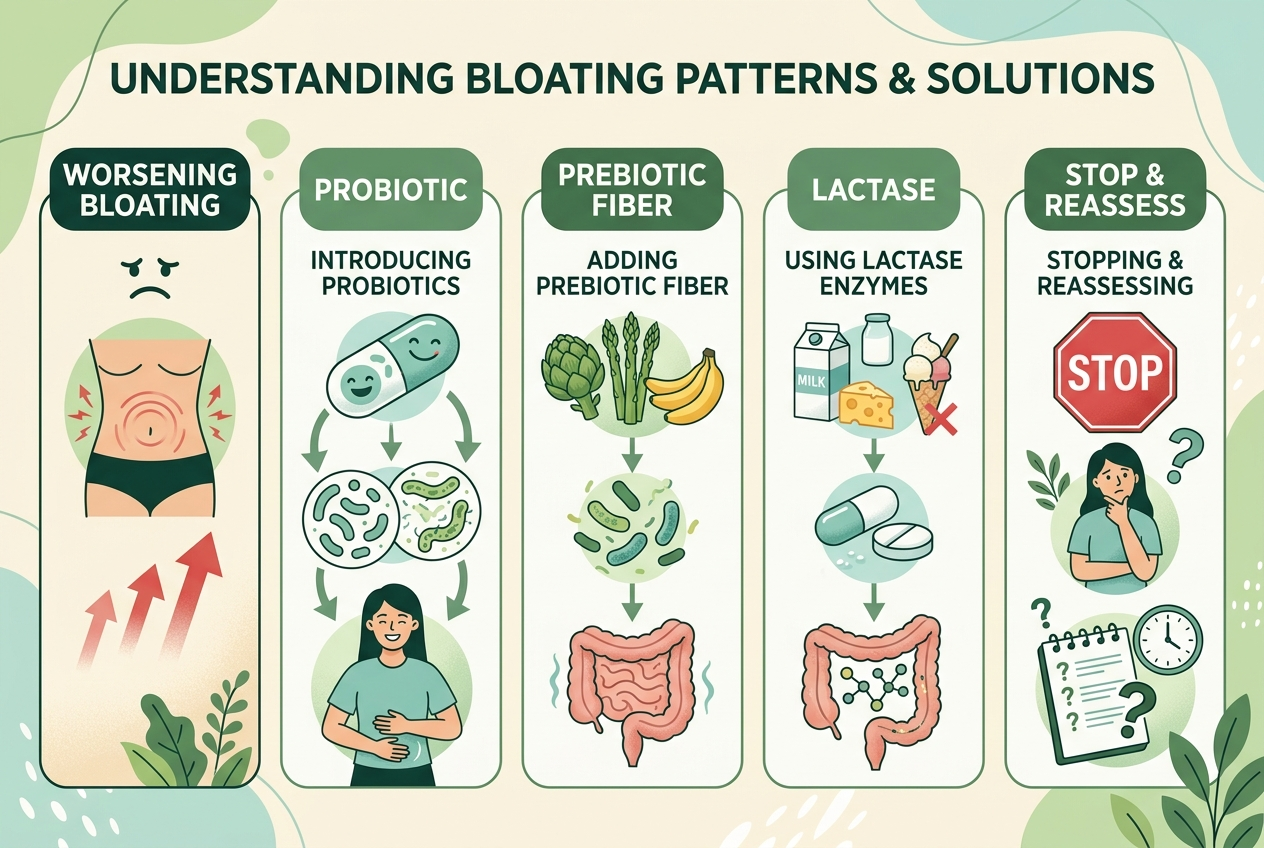
You can sometimes keep going if the bloating is mild, clearly improving week to week, and not paired with pain, nausea, bowel changes, or appetite loss. You should usually lower the dose first when the label combines fermentable fibers, probiotics, or magnesium in a full serving. A half dose taken with food often gives cleaner signal than pushing through discomfort. You should stop and reassess when bloating is getting worse at week 3, when your clothes fit tighter by the day, or when the supplement adds cramping, diarrhea, constipation, or reflux. The Cleveland Clinic lists persistent bloating with pain, bleeding, fever, vomiting, or unexplained weight loss as reasons to seek medical evaluation. The practical rule is simple: improvement supports continuation, stability supports dose adjustment, and deterioration supports stopping.
What should your next 7 days actually look like?
Your next 7 days should function like a clean reset, not a loyalty test. Day 1 should identify the exact trigger category on the label: probiotic strains, prebiotic fibers, magnesium, sugar alcohols, herbal laxatives, or a blend. Days 1 through 3 should either pause the product or cut to half dose with food, not on an empty stomach. Days 4 through 7 should track only four variables: bloating severity, bowel pattern, meal timing, and whether symptoms cluster after the supplement or after specific foods. Do not add two new gut products at once because bad attribution ruins the read. If you want a replacement, choose one narrow job. Use an enzyme-led product for meal heaviness, a probiotic-led product for a cautious retry, or a fiber-led product only after the flare settles. If symptoms keep climbing despite simplification, the experiment is over.
Leave a Reply