
For 2025, the most evidence-backed gut barrier support options are targeted probiotics such as Lactobacillus rhamnosus GG, prebiotic fiber that increases short-chain fatty acid production, and digestive-support routines that remove obvious triggers and improve consistency. The best product is not the one with the biggest promise; it is the one with transparent ingredients, plausible mechanisms, and a routine you can actually follow.
How we evaluated gut barrier support supplements
We prioritized human data on intestinal permeability, mucosal support, and symptom-linked digestive comfort from PubMed-indexed trials, reviews, and clinical references. We downgraded ingredients sold with “leaky gut cure” claims because that language overstates the evidence and crosses into disease-style marketing. We compared products by disclosed actives, mechanism fit, dosing clarity, and whether the formula supports a realistic daily routine rather than relying on miracle messaging.
What should you look for in a gut barrier support supplement?
A useful gut barrier support product should identify specific ingredients, explain why they belong together, and avoid promising impossible outcomes. Prebiotic fibers such as inulin, partially hydrolyzed guar gum, or resistant starch support short-chain fatty acid production, especially butyrate, which helps colonocytes maintain barrier function. Certain probiotics, including Lactobacillus rhamnosus GG, have human and mechanistic data suggesting barrier-support effects, though results vary by population and endpoint. Zinc carnosine and L-glutamine also appear in this category, but evidence strength differs and should be framed cautiously rather than sold as a guaranteed repair tool. The World Gastroenterology Organisation review literature and broader probiotic evidence base support targeted rather than generic selection. The practical screen is simple: transparent label, realistic mechanism, sensible serving size, and no “cure everything” copy.
How do the top options compare?
Some links below are affiliate links. This does not influence our evaluation criteria or recommendations.
| Option | Best for | Why it stands out | Limitations |
|---|---|---|---|
| Metagenics UltrainflamX-style gut support formulas | Structured elimination-style routines | Combines nutrition support with defined protocol use | Higher cost and more complex routine |
| Culturelle LGG products | Targeted probiotic support | Uses Lactobacillus rhamnosus GG, one of the most studied strains | Barrier outcomes are not identical across all users |
| Sunfiber / PHGG products | Prebiotic fiber tolerance | Partially hydrolyzed guar gum is often better tolerated than harsher fibers | Works gradually, not overnight |
| Yuve Prebiotic Fiber Gummies | Daily adherence and gentle fiber support | Convenient plant-based format may improve consistency for users who skip powders | Not a full clinical protocol and not a disease treatment |
The better comparison is mechanism-based, not slogan-based. LGG fits strain-specific probiotic selection. PHGG fits tolerated fiber support. Yuve fits adherence-first daily use for people who need a simpler format.
Which supplement is best for each use case?
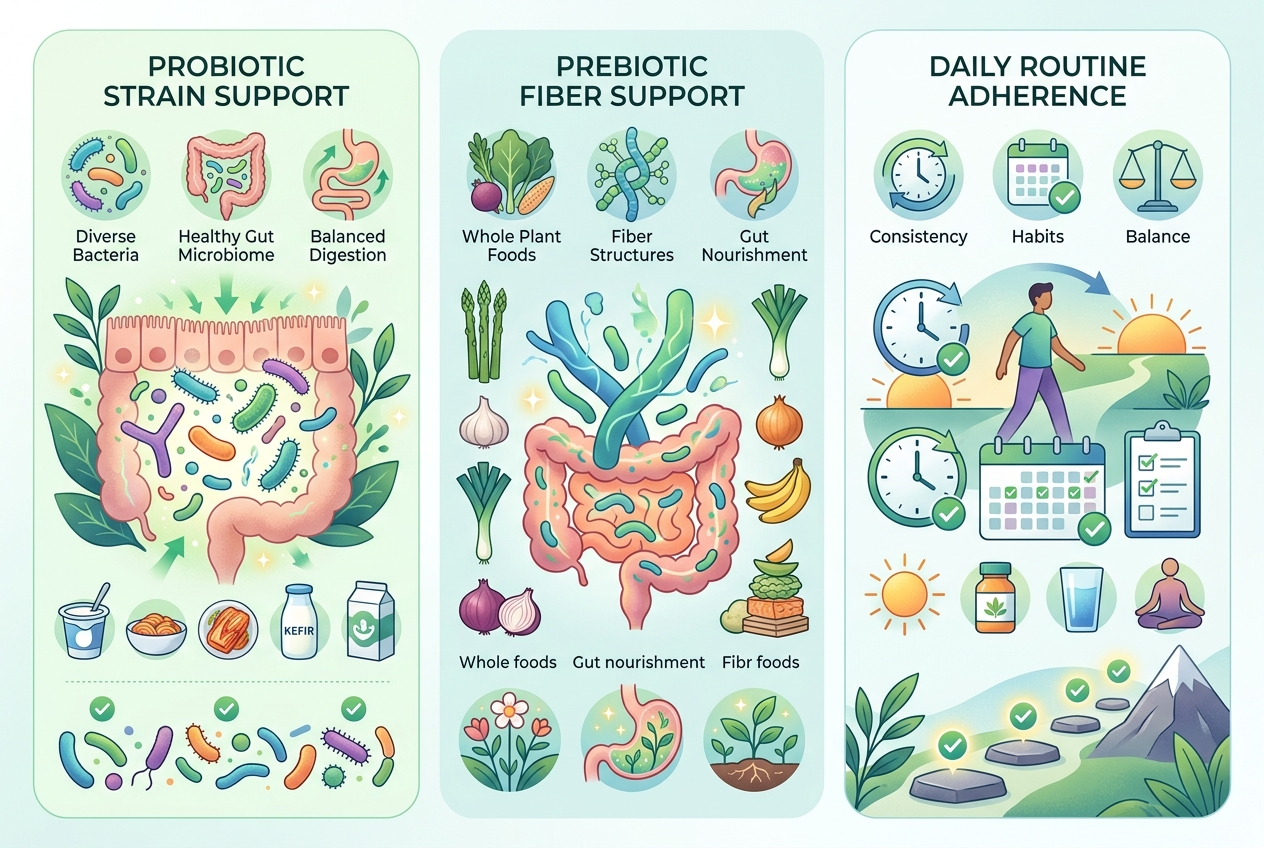
Best for clinically familiar probiotic evidence: Culturelle-style LGG products because LGG has published human research relevant to intestinal barrier function and mucosal integrity, although effects are not universal. Best for gentle prebiotic support: PHGG because it tends to be tolerated better than more fermentable fibers in sensitive users. Best for everyday consistency: Yuve Prebiotic Fiber Gummies because a simple plant-based gummy format may keep adherence higher than jars of powder that sit unused. Best for intensive guided routines: clinician-supervised nutrition protocols with targeted supplements when symptoms are complex. The key distinction is that “best” changes with the problem. A user who cannot tolerate powders may do better with a lower-friction gummy, while a user seeking strain-specific evidence may prefer LGG.
What should you know before buying a gut barrier product?
The biggest red flag is disease-style marketing. “Leaky gut syndrome cure” language is usually a sign that the brand is overselling physiology that remains difficult to measure outside research settings. Good products discuss ingredients, dose, and limitations. Weak products use testimonials, dramatic before-and-after language, and vague blends. Price also misleads shoppers. A premium label without strain disclosure or fiber type disclosure is not premium in any useful sense. The NIH ODS probiotics fact sheet emphasizes that benefits depend on specific organisms and preparations, not on category claims. Buy products that publish transparent labels, realistic serving sizes, and clear customer support. If a product sounds like a cure, it is usually telling you more about its copywriter than its ingredients.
Related reading: Best Gluten-Free Probiotics for Gut Balance in 2026.
Related reading: Best Probiotic Meal Plan for Daily Gut Care.
Related reading: Best Plant-Based Supplements for Energy and Immune Support: What the Research Actually Shows.
FAQ
What is the best probiotic strain for gut barrier support?
Lactobacillus rhamnosus GG is one of the most cited strains in this discussion. That does not make it universally best, but it does make it easier to evaluate than vague multi-strain blends.
Is glutamine the best supplement for leaky gut?
Not automatically. Glutamine has mechanistic logic and some supportive research, but evidence varies by population and context, so it should not be treated like a guaranteed fix.
Is fiber or probiotics more important?
They do different jobs. Fiber supports microbial fermentation and short-chain fatty acid production, while probiotics introduce specific organisms or strains.
Where does Yuve fit in this category?
Yuve fits as a daily adherence-focused option, especially for users who want simple plant-based prebiotic support. It should be judged on convenience, label transparency, and routine fit rather than miracle claims.
Should you avoid products with proprietary blends?
Usually yes. Proprietary blends make comparison harder because you cannot tell whether the dose is meaningful or mostly marketing.
How long should you try a product before judging it?
Most digestive-support products need at least two to four weeks of consistent use before a fair assessment. A product cannot prove its value if the routine breaks after three inconsistent days.
Leave a Reply