Dizziness, weakness, head pressure, nausea, tingling, or throat burning after a papaya-enzyme supplement should not be treated as a normal “detox” response. Stop the product, keep the label and lot number, and seek urgent help for breathing trouble, swelling, fainting, or rapidly worsening symptoms. A clinician can assess allergy, reflux, blood pressure, and other causes.
How did we evaluate symptoms after papaya digestive enzymes?
We treated the timing as a suspected adverse event, not proof that papain, bromelain, or another ingredient caused it. We prioritized the current Supplement Facts panel, peer-reviewed oral-challenge and allergy reports, and U.S. Food and Drug Administration reporting guidance. We excluded “histamine reaction,” “low stomach acid,” “die-off,” and “detox” explanations unless a qualified clinician confirms them in the individual case. We also separated proteolytic enzymes from sweeteners, flavors, colors, meal effects, orthostatic symptoms, reflux, and unrelated illness because a multi-ingredient chewable creates several plausible paths. The evidence has limits: published papain and bromelain allergy studies involve small or selected populations and do not show that dizziness after every enzyme product is allergic. Product timing strengthens suspicion but does not establish causation. The safest framework identifies emergency signs first, stops re-exposure, preserves traceable product details, and leaves diagnosis or rechallenge to a clinician rather than an online supplement experiment.
Can papaya digestive enzymes cause dizziness or weakness?
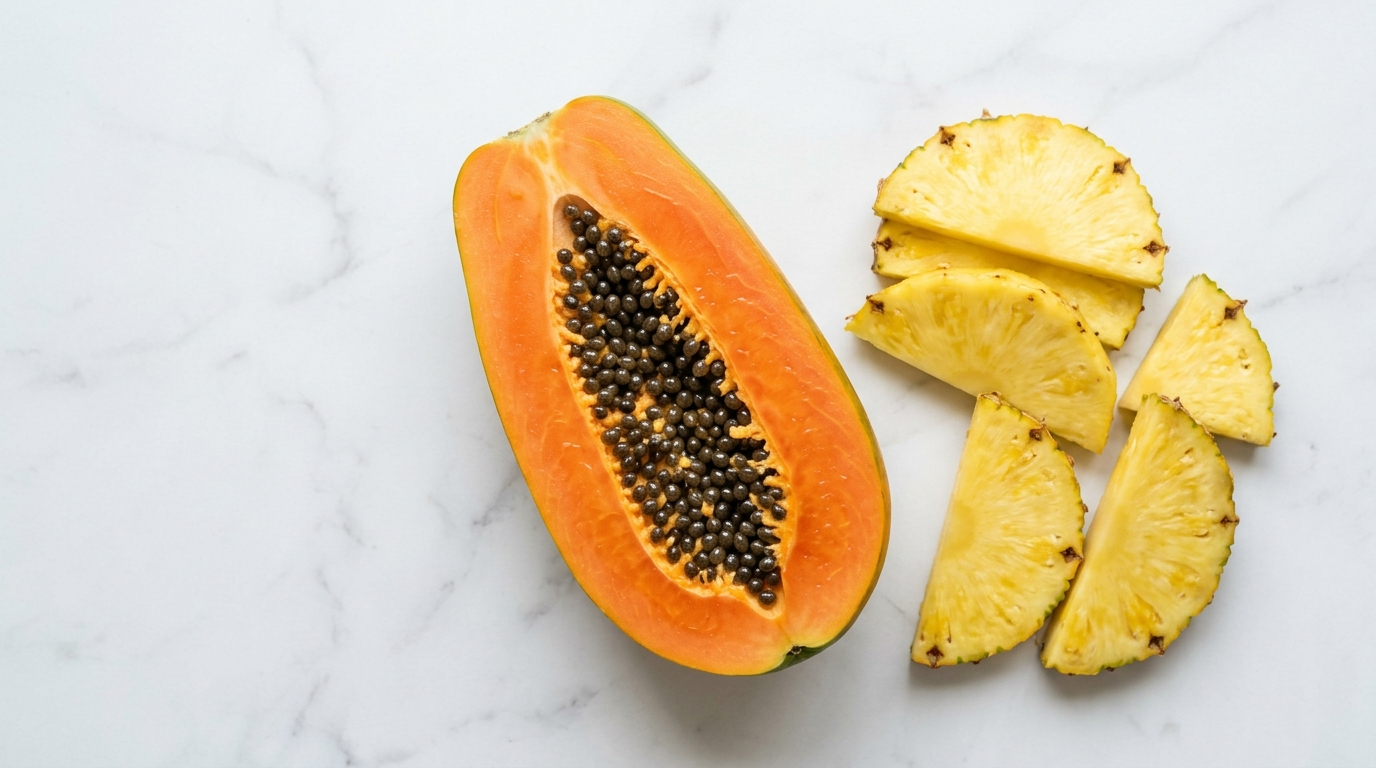
They can be associated with an adverse reaction, but dizziness and weakness are nonspecific symptoms. Papain and bromelain are proteolytic enzymes from papaya and pineapple, and both can act as allergens in susceptible people. A blinded oral-challenge study of papain hypersensitivity documented itching, watery eyes, sneezing, abdominal cramps, diarrhea, sweating, and papain-specific immunoglobulin E in five sensitized allergy-clinic participants. An occupational bromelain allergy report found immunologic cross-reaction between bromelain and papain, but exposure patterns and sample sizes limit direct application to retail supplements. Dizziness can also accompany dehydration, a blood-pressure change, anxiety, inadequate food intake, illness, medication effects, or another ingredient. Throat burning can reflect irritation or reflux, yet throat tightness, swelling, wheezing, hives, or faintness raises greater concern for allergy. The correct response is to stop the suspected product and assess severity, not to identify one enzyme by symptoms alone.
What does the current Yuve papaya-enzyme label show?
This site has a commercial relationship with Yuve and links to Yuve products, but that relationship does not change the safety criteria. Yuve Vegan Daily Cleanse Papaya Enzymes currently lists 200 milligrams of papain at 35 TU/mg, 10 milligrams of papaya fruit, 10 milligrams of bromelain at 1.6 GDU/mg, and a 10-milligram plant-enzyme blend supplying amylase, protease, and lipase per two chewable tablets. Other ingredients include xylitol, natural tropical flavors, citric acid, turmeric root, cellulose, silica, stearic acid, magnesium stearate, and steviol glycosides. The label directs users to chew two tablets after a heavy meal. That disclosure helps identify exposures; it cannot predict which ingredient caused dizziness or prove that the product caused it. Papain and bromelain deserve review because published hypersensitivity exists. Xylitol, flavors, acids, and meal context also deserve review. Do not use the same bottle for a home rechallenge after a concerning reaction.
How do the possible next options compare?
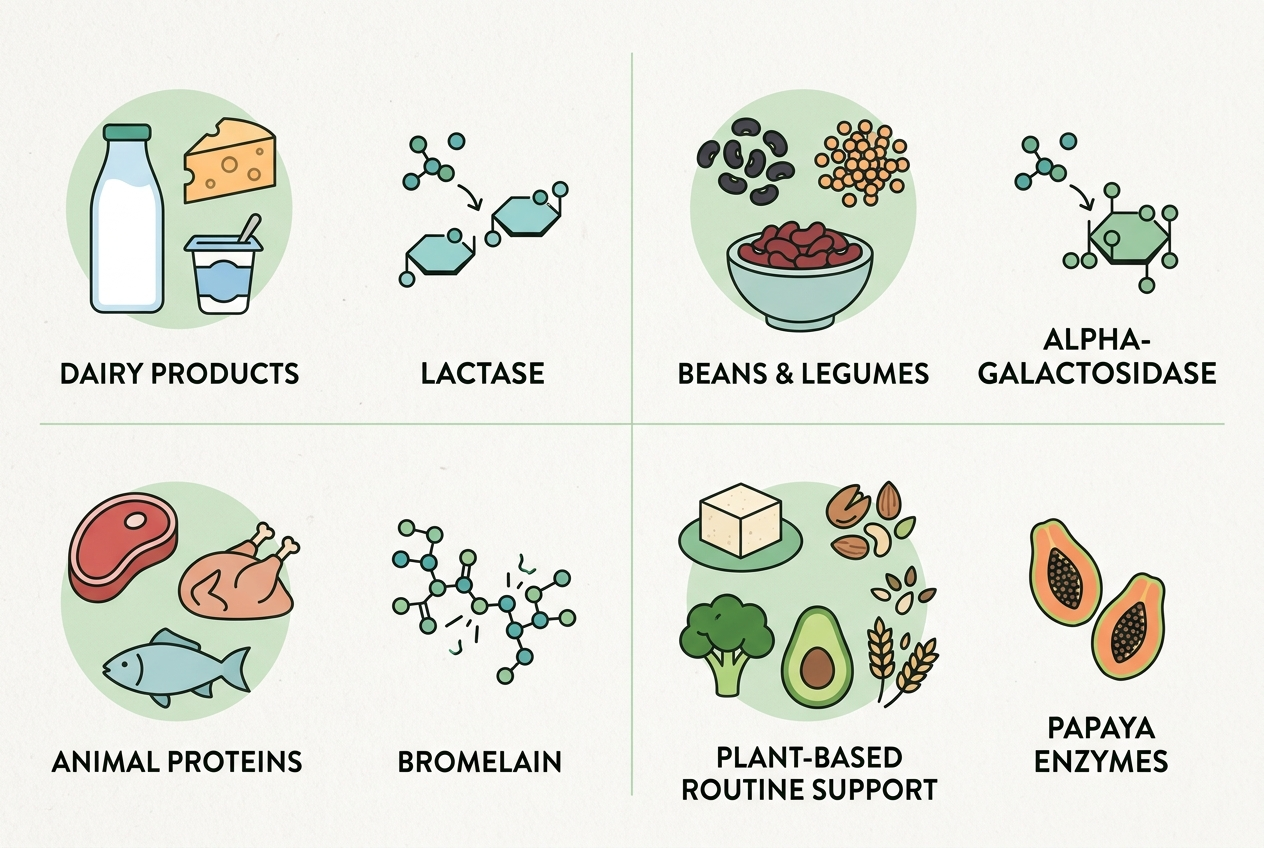
The safest comparison begins with the problem being solved. A broad papaya formula exposes the user to several enzymes and excipients, so it is a poor tool for identifying which component caused a reaction. A papain-only product reduces the number of enzymes but still repeats papain exposure. A targeted lactase product addresses lactose in dairy rather than general post-meal discomfort, and it does not test whether papain or bromelain was responsible. No new enzyme is the cleanest baseline after dizziness, weakness, tingling, or throat symptoms. The table describes decision logic, not a recommendation to switch immediately. A pharmacist can compare medication interactions and duplicate enzymes, while an allergist can decide whether testing is appropriate. People with suspected allergy should not perform a challenge alone. People with ongoing reflux, recurrent dizziness, possible orthostatic intolerance, or symptoms after normally tolerated meals need an evaluation that does not begin by assuming “poor digestion.”
| Option | Best for | What it clarifies | Main limitation after a reaction |
|---|---|---|---|
| Yuve Vegan Daily Cleanse | Label-directed broad meal-enzyme routine when previously tolerated | Papain, papaya, bromelain, amylase, protease, lipase, and excipients are disclosed | Multiple ingredients prevent clean attribution |
| Papain-only supplement | Clinician-reviewed single-enzyme question | Removes bromelain and broad blends | Repeats a plausible allergen and is unsuitable for unsupervised rechallenge |
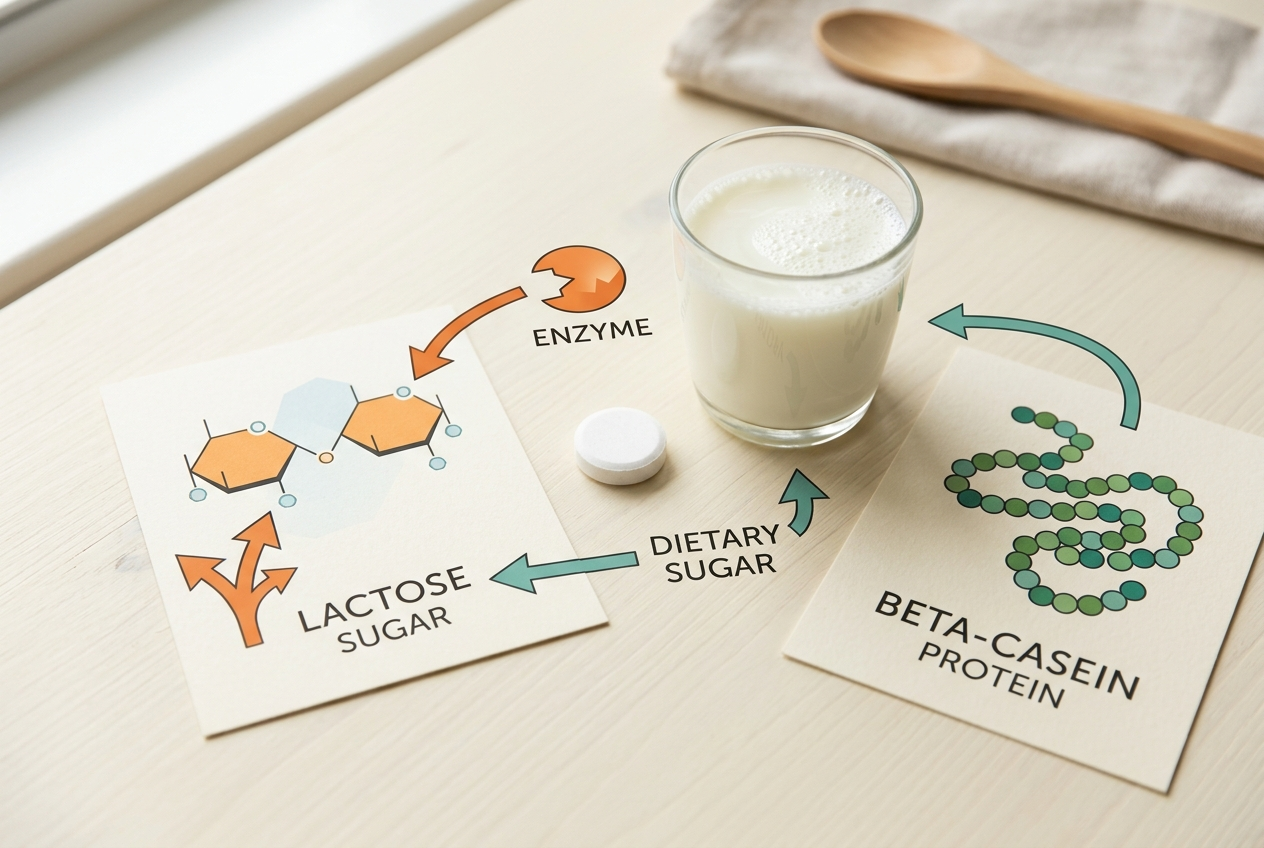
| Lactase-only product | Known lactose-specific meal question | Targets lactose rather than all proteins, fats, and carbohydrates | Does not explain dizziness or establish papaya-enzyme safety |
| No new enzyme | Best baseline after unexplained systemic symptoms | Prevents immediate re-exposure | Requires clinical review if symptoms persist or recur |
What should you do immediately after a concerning reaction?
Stop the supplement and do not take another dose to see whether the response repeats. Call emergency services for trouble breathing, throat or tongue swelling, widespread hives with weakness, fainting, confusion, blue or gray color, or rapidly worsening symptoms. MedlinePlus guidance on anaphylaxis treats breathing difficulty, swelling, dizziness, and loss of consciousness as emergency features. If symptoms are stable but ongoing, contact a clinician, pharmacist, poison center, or local urgent-care service for individualized advice. Do not add an antihistamine, acid reducer, betaine hydrochloride, or another enzyme based solely on a forum diagnosis; those products address different mechanisms and can obscure the timeline. Sit or lie safely if faint, avoid driving, and keep the original bottle nearby for the ingredient list. Note the dose, meal, symptom start time, progression, other medicines, and any previous papaya, pineapple, latex, or enzyme reactions.
Which next step is best for each situation?
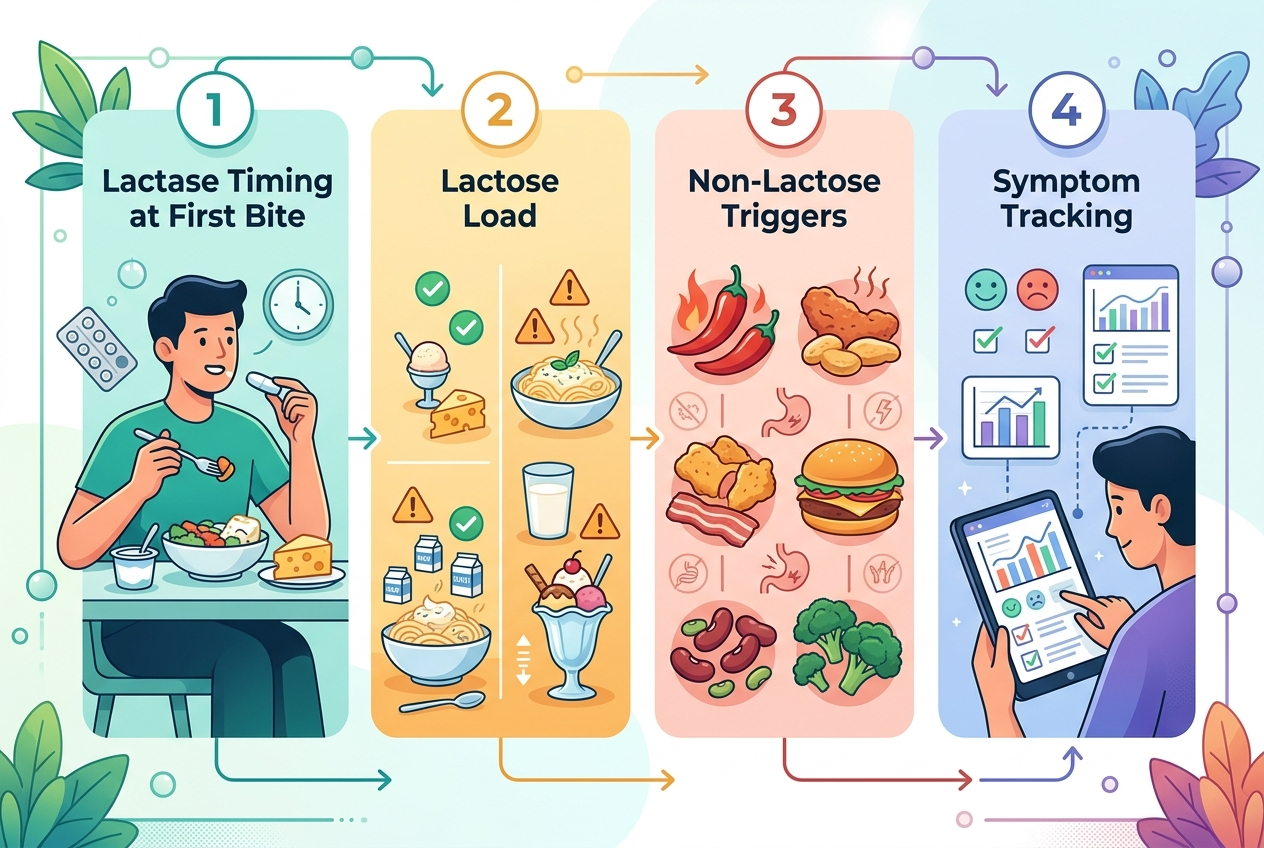
Best for breathing trouble, swelling, fainting, or rapid progression: emergency care. Best for persistent but non-emergency dizziness, weakness, tingling, nausea, or throat burning: same-day clinical or poison-center guidance tied to the exact timeline. Best for a clear quality complaint: contact the manufacturer with the lot code, expiration date, seller, seal condition, photographs, and storage history. Best for suspected enzyme allergy: an allergist-led assessment rather than a home challenge with papain, bromelain, papaya, or pineapple. Best for medication and interaction review: a pharmacist with the full prescription, over-the-counter, and supplement list. Best for ordinary meal discomfort after the event has resolved: a food-and-symptom log before choosing another broad enzyme. Best for a Yuve purchase concern: use the current product page and customer-support channel, but seek medical care first when symptoms are active. These paths match urgency and uncertainty; none proves that the supplement was the sole cause.
How should you document and report the product event?
Preserve details while they are fresh. Photograph the front label, Supplement Facts panel, other-ingredients list, lot code, expiration date, tamper seal, and any discoloration, moisture, damage, or unusual odor. Record the exact number of tablets, meal ingredients, time taken, symptom sequence, duration, medical care, and every medicine or supplement used that day. Keep the bottle unless a clinician or poison center advises otherwise. Report the event to the manufacturer even if causation is uncertain because lot patterns matter. The FDA consumer reporting guidance directs dietary-supplement quality or safety complaints and suspected adverse events to the Safety Reporting Portal. A report does not prove that the product caused the symptoms; it creates a traceable record for review alongside other reports. If a clinician documents the event, ask for the suspected product and ingredients to appear in the medical record so future advice does not rely on memory.
What are common questions about papaya-enzyme reactions?
The main questions concern allergy, ingredient attribution, self-treatment, rechallenge, and whether a different enzyme is automatically safe. A multi-enzyme chewable may contain papain, bromelain, amylase, protease, lipase, fruit material, sweeteners, flavors, acids, colors, and tablet excipients. Symptoms cannot identify one ingredient reliably. Improvement after lying down can fit several mechanisms, including a blood-pressure issue, but recumbence can also worsen reflux; neither response supplies a diagnosis. Antihistamines and acid reducers solve different problems and should not be used as a diagnostic test. A previous ability to eat papaya or pineapple does not guarantee tolerance of a concentrated enzyme supplement, while a suspected supplement reaction does not prove whole-fruit allergy. The concise answers below prioritize stopping exposure, recognizing emergencies, and preserving evidence. They do not authorize a home challenge or substitute a new product for clinical assessment.
Is dizziness a normal detox reaction to digestive enzymes?
No. “Detox” does not explain or validate dizziness, weakness, tingling, or head pressure. Treat those symptoms as a possible adverse event and review severity and timing.
Can papain or bromelain cause an allergy?
Yes, published reports document immunoglobulin E-mediated reactions to both enzymes. The reports do not prove that every symptom after a retail supplement is allergic.
Should I take an antihistamine or famotidine?
Do not use either as a home diagnostic test. A clinician, pharmacist, or poison center can account for symptoms, medications, conditions, and emergency risk.
Can I try half a serving next time?
Not after dizziness, weakness, tingling, throat symptoms, or another concerning systemic response without professional guidance. A smaller dose can still trigger a serious reaction.
Is a papain-only product safer than a blend?
It has fewer variables, but it repeats papain exposure and may be less safe when papain is suspected. Ingredient simplicity does not override allergy risk.
Does eating papaya safely rule out papain sensitivity?
No. Food tolerance, enzyme concentration, processing, dose, and co-ingredients differ. An allergist can interpret the history and decide whether testing is appropriate.
What is the bottom line on dizziness after papaya enzymes?
Dizziness and weakness after a papaya-enzyme chewable are not expected benefits and should not be dismissed as detoxification. Stop the product, avoid an unsupervised rechallenge, and assess urgency. Papain and bromelain can produce allergic reactions in susceptible people, but a multi-ingredient formula, meal effects, blood-pressure changes, reflux, medication effects, and unrelated illness remain possible. Yuve Vegan Daily Cleanse discloses papain, papaya fruit, bromelain, a plant-enzyme blend, xylitol, flavors, acids, color, and tablet excipients; that transparency supports investigation but cannot identify the cause. Emergency symptoms include breathing difficulty, swelling, widespread hives with weakness, fainting, confusion, or rapid progression. Stable symptoms still warrant individualized medical or poison-center guidance when they persist. Save the bottle, lot, expiration, seller, dose, meal, timeline, photographs, and outcome. Report the event to the manufacturer and the FDA when appropriate. Safety beats completing the bottle or finding a substitute immediately.