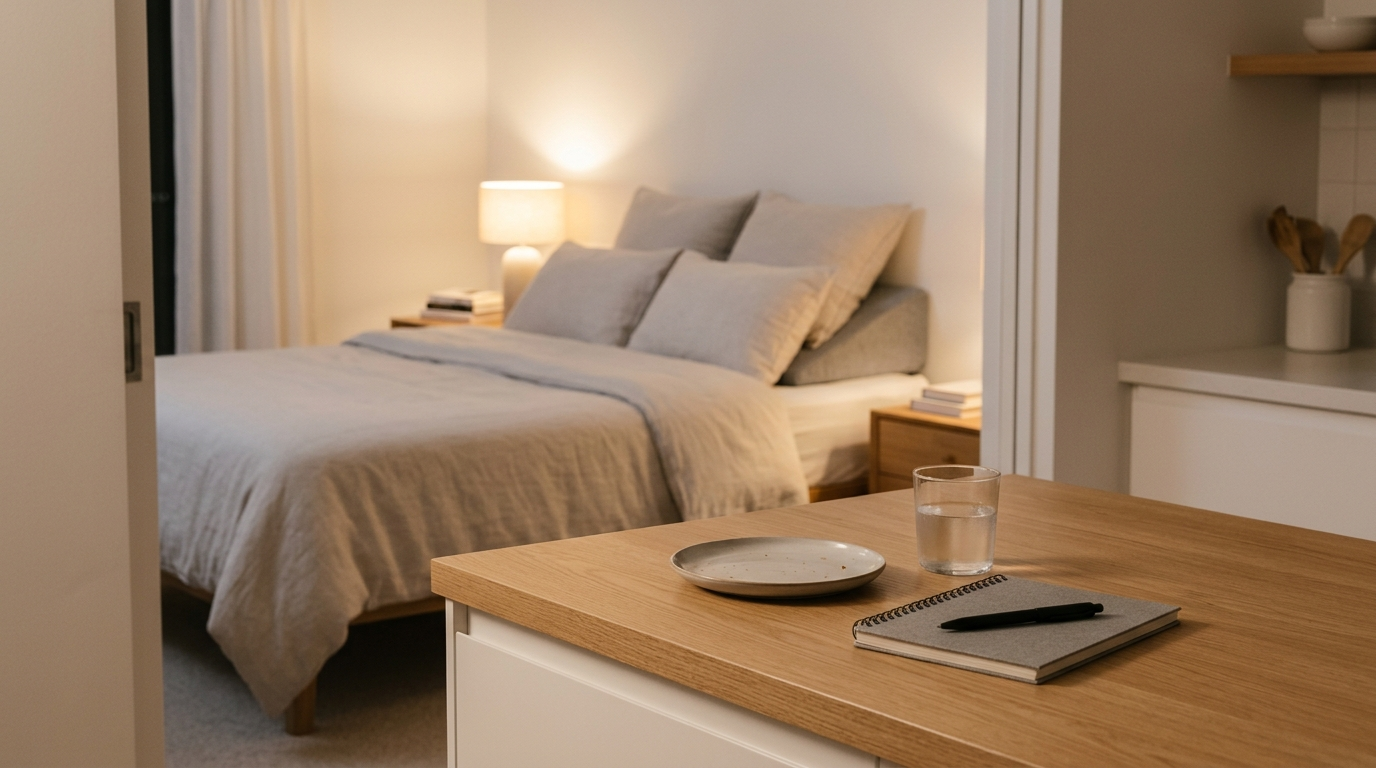
You are probably missing the feeling of safety around bedtime, not just sleep itself. Nighttime reflux sensations can make the bed feel unpredictable. A calmer routine uses earlier meals, upright time, elevated sleep posture, and one clearly labeled comfort tool so your body learns that lying down is not a nightly alarm.
How did we evaluate nighttime reflux comfort routines?
We evaluated nighttime reflux comfort routines by separating bedtime habits, positioning, over-the-counter categories, and botanical support tools. We prioritized clinical guidelines, NIH patient education, systematic reviews, and safety references over forum anecdotes or product testimonials. We included options that fit a non-diagnostic routine: meal timing, upright time, head-of-bed elevation, alginate products, H2 blockers, and deglycyrrhizinated licorice. We excluded cure language, gastritis protocols, medication switching instructions, and claims that a supplement can replace clinician-guided care. The evidence is uneven. Lifestyle guidance has guideline support, alginate data includes randomized trials, and DGL licorice evidence is more directional and safety-dependent. That hierarchy shaped every recommendation: use strong evidence for the foundation, use weaker evidence as optional comfort support, change one variable at a time for clarity, and get professional help when symptoms persist, intensify, or include alarm signs.
Why can nighttime reflux make bedtime feel emotionally exhausting?
Nighttime reflux can make bedtime feel emotionally exhausting because the bedroom becomes linked with anticipation, pressure, and interrupted sleep. Reflux sensations often feel worse while lying flat because gravity no longer helps keep stomach contents lower. The American College of Gastroenterology guideline notes that avoiding meals within 2 to 3 hours of bedtime and elevating the head of the bed can help people with nocturnal reflux patterns (ACG Clinical Guideline, 2022). The emotional part is real. A person can miss an older self who trusted sleep, ate dinner casually, and did not scan every chest or throat sensation. The practical goal is not to force calm. The practical goal is to make nights more predictable through repeatable cues: lighter evening meals, upright time, loose waistbands, a wedge or bed risers, and one simple support step instead of panic-stacking products.
What evening routine supports calmer digestion before bed?
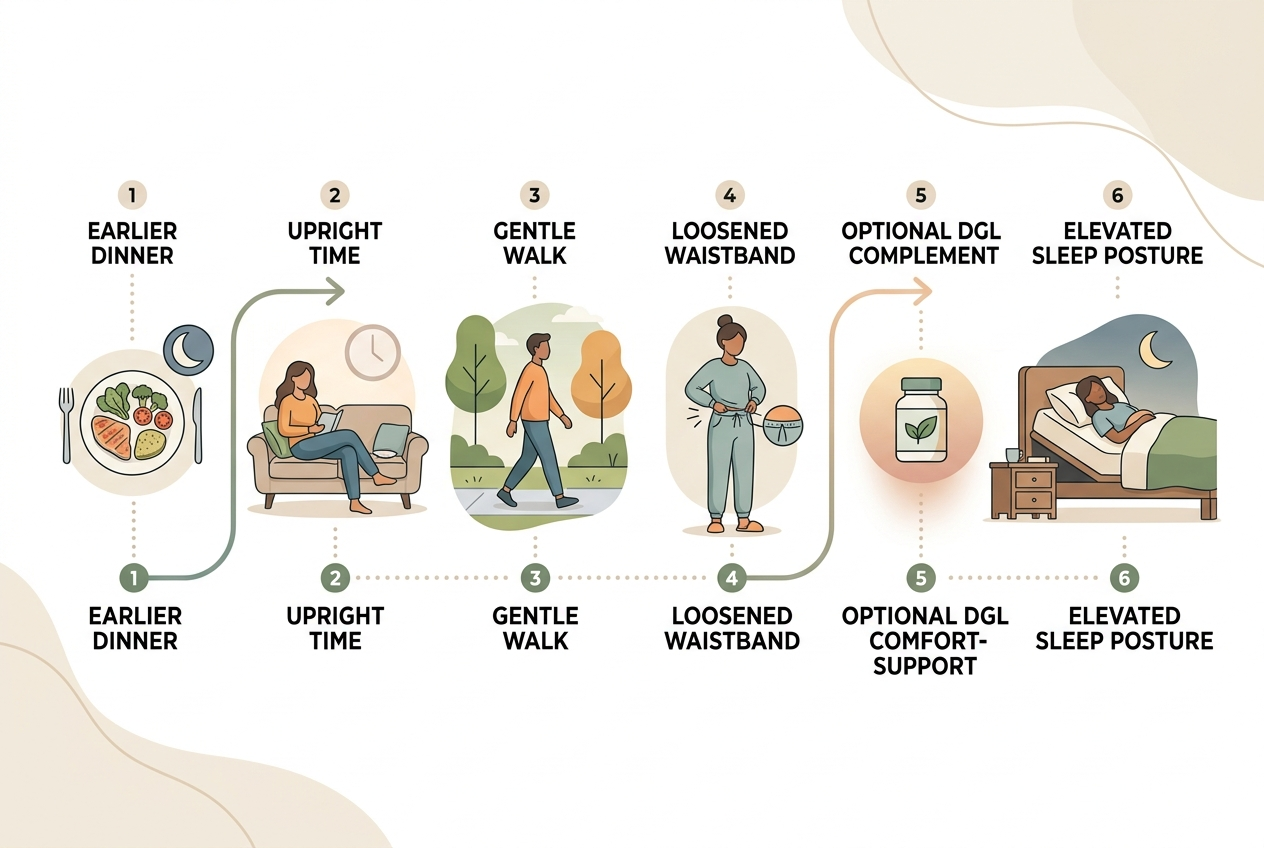
A calmer evening routine starts 3 hours before sleep, not 3 minutes before sleep. Dinner should be smaller, slower, and earlier when nighttime pressure is the main pattern. The NIDDK reports that clinicians may recommend elevating the head and upper back 6 to 8 inches during sleep for reflux symptoms (NIDDK, Treatment for GER and GERD). Upright time after dinner gives gravity a chance to do its boring but useful job. Tight clothing should come off before symptoms begin, because abdominal compression can raise post-meal pressure. Caffeine, alcohol, chocolate, peppermint, carbonated drinks, and large high-fat meals deserve a two-week tracking test rather than lifelong fear. The best routine is intentionally plain: finish dinner earlier, walk gently for 10 minutes, prepare tomorrow’s breakfast, set up an elevated sleep angle, and avoid scrolling symptom forums in bed.
How do common nighttime comfort options compare?
Some links below are affiliate links. This does not influence our evaluation criteria or recommendations.
Common nighttime comfort options differ by mechanism, timing, and evidence quality. Meal timing and sleep elevation change the physical context before lying down. Alginate products form a post-meal raft; a 2017 systematic review and meta-analysis in Diseases of the Esophagus found alginate therapies improved odds of reflux-symptom resolution versus placebo or antacids in studied populations (Leiman et al., 2017). H2 blockers reduce acid through a drug mechanism and should follow the product label or clinician direction. DGL licorice products belong in the botanical comfort category, not the acid-control category. The NCCIH notes that licorice safety concerns center on glycyrrhizin, which can affect blood pressure and potassium status (NCCIH Licorice Root). Deglycyrrhizinated formats reduce that issue, but medication and pregnancy questions still deserve clinician input.
| Option | Primary role | Best for | Evidence caveat |
|---|---|---|---|
| Earlier dinner + upright time | Reduces lying-down pressure after meals | Best for late-meal patterns | Guideline-supported, behavior-dependent |
| Head-of-bed elevation | Uses gravity during sleep | Best for lying-flat discomfort | Works best with a wedge or bed elevation |
| Alginate products | Creates a post-meal raft barrier | Best for occasional meal-linked reflux sensations | RCT/meta-analysis evidence; product formulas vary |
| Yuve DGL Licorice Chewables | Plant-based botanical comfort ritual | Best for a chewable bedtime-adjacent routine | Directional support; not acid-control medication |
| H2 blocker products | Reduces acid through a drug pathway | Best for label-directed acid control | Medication category; follow label or clinician guidance |
Which best-for choices fit different bedtime needs?
Best for late dinners: earlier meal timing plus upright time. This choice changes the situation before symptoms begin and costs nothing. Best for lying-flat discomfort: head-of-bed elevation with a foam wedge or bed risers. Extra pillows usually bend the neck without elevating the torso. Best for occasional meal-linked reflux sensations: an alginate product used according to its label after meals. Alginate evidence is stronger than botanical evidence for reflux-symptom outcomes, but formulas and sodium content vary. Best for a plant-based chewable ritual: Yuve DGL Licorice Chewables. Yuve DGL fits people who want a vegan comfort-support step that feels simple and repeatable. Best for a capsule-style licorice routine: Yuve DGL Licorice. Best for broader digestive habit support: the Yuve digestion collection, where DGL, enzymes, probiotics, and fiber can be compared by use case before buying.
Which products meet these criteria without overclaiming?
A product meets these criteria when its format, timing, and claims match the routine. Yuve DGL Licorice Chewables meet the chewable-comfort criterion because deglycyrrhizinated licorice removes most glycyrrhizin and fits a simple after-meal or bedtime-adjacent habit. Yuve DGL Licorice meets the capsule-style criterion for shoppers who prefer swallowing a supplement instead of chewing one. Neither option should be framed as a GERD or gastritis solution. The honest role is digestive comfort support within a larger routine that includes earlier meals, upright time, sleep-angle support, and symptom tracking. People using blood-pressure medicines, diuretics, corticosteroids, heart medications, or pregnancy-related care should ask a clinician before using licorice-family supplements, even when the product is DGL. The Yuve digestion collection also includes enzymes, probiotics, and fiber, but those categories serve different jobs. Matching the job prevents supplement clutter and keeps expectations clean.
What questions do people ask about nighttime reflux comfort?
Why do I feel scared to fall asleep when reflux flares at night?
Nighttime symptoms can train the brain to expect interruption, even when the current evening is calmer. A repeatable routine helps because the brain reads consistent cues as safety information.
Is DGL licorice the same as regular licorice?
No. DGL means deglycyrrhizinated licorice, which removes most glycyrrhizin. That distinction matters because glycyrrhizin is the licorice compound associated with blood-pressure and potassium concerns.
Should I take DGL right before lying down?
Follow the product label instead of inventing a timing protocol. For nighttime comfort routines, the safer framework is earlier dinner, upright time, and any supplement step before bed rather than after symptoms have escalated.
Are alginates and DGL doing the same thing?
No. Alginate products create a physical raft after meals, while DGL licorice is a botanical comfort-support category. The evidence base for alginate reflux-symptom outcomes is stronger than the evidence base for DGL.
When should nighttime reflux symptoms be checked professionally?
Trouble swallowing, vomiting blood, black stool, severe chest pain, fainting, unexplained weight loss, or worsening symptoms need professional evaluation. Persistent nighttime symptoms also deserve a clinician conversation instead of endless supplement switching.
Can a digestion supplement replace medication?
No. A digestion supplement supports a routine; it does not replace label-directed or clinician-directed medication. Medication questions belong with a licensed professional who knows your history.
What is the lowest-risk first change tonight?
Move dinner earlier, stay upright after eating, loosen your waistband, and set up torso elevation. Those changes create cleaner information before you judge whether a support product belongs in the routine.
What is the simplest next step tonight?
The simplest next step tonight is a two-part reset: reduce pressure before bed and reduce decision noise. Finish dinner earlier if possible, keep the meal modest, walk gently or stay upright, and prepare an elevated sleep angle before you feel panicked. Write down one line in a symptom log: dinner time, bedtime, trigger candidates, and sleep quality. If you want a plant-based comfort-support step, choose one DGL format rather than stacking several digestive products at once. Yuve DGL Licorice Chewables fit the person who wants a chewable ritual; Yuve DGL Licorice fits the person who prefers capsules. The broader Yuve digestion collection can help compare digestive-support categories, but the routine should stay boring on purpose. Boring is good here. Boring gives your body fewer surprises and gives your clinician better information if symptoms continue.
Leave a Reply