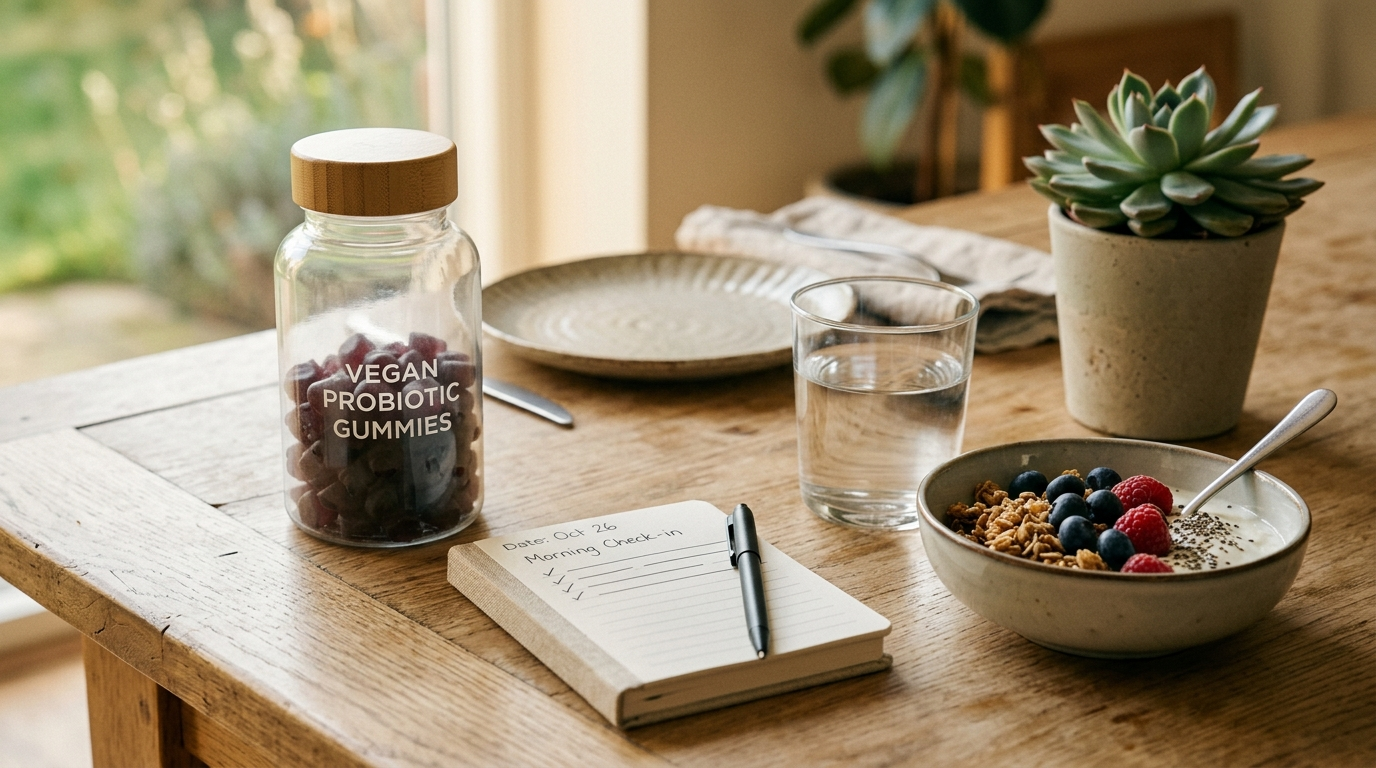
Starting probiotics works best when you pick one strain-specific product, take it consistently, and track one or two outcomes for two to four weeks. A simple vegan option such as Yuve Probiotic Gummies can fit beginners, but the best choice depends on strain, dose, tolerance, and the reason you are starting.
How did we evaluate beginner probiotic routines?
We evaluated beginner probiotic routines by prioritizing strain transparency, CFU clarity, delivery format, tolerability, and realistic structure/function language. NIH Office of Dietary Supplements guidance, ISAPP consensus papers, and human probiotic trials received more weight than broad “gut reset” claims. We separated daily digestive support from disease treatment because probiotics are not interchangeable medical therapies. We also looked at practical adherence, since a product that sits in a cabinet cannot support a routine.
What should you do before starting probiotics?
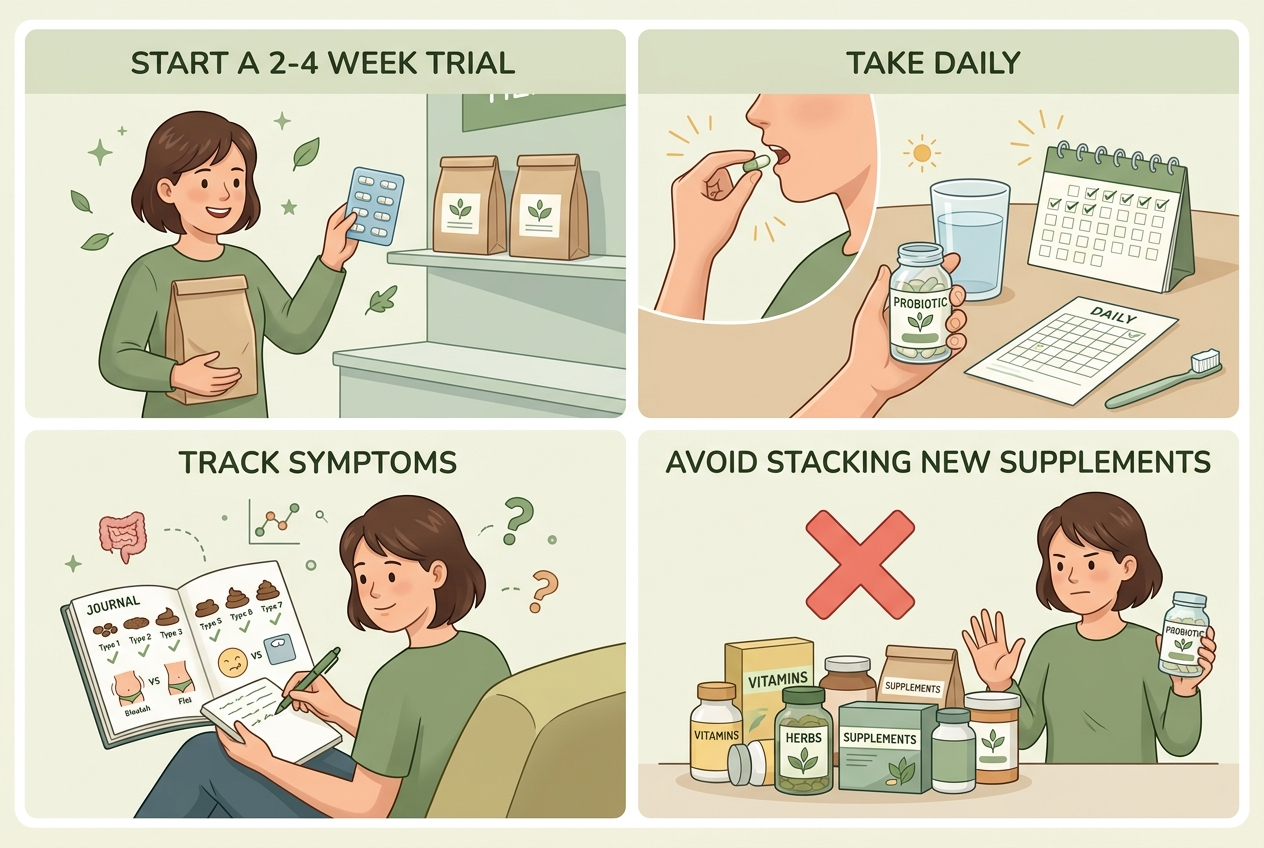
Before starting probiotics, define the job clearly. A beginner should ask whether the goal is daily digestive regularity, post-antibiotic routine rebuilding, travel convenience, or general gut-health support. That choice matters because probiotic effects are strain-specific, according to the NIH Office of Dietary Supplements (NIH ODS). A label should show genus, species, strain when available, CFU count, serving size, and storage guidance. The first two weeks should be boring on purpose: one product, one dose, no new fiber powder, no new magnesium, and no dramatic elimination diet at the same time. Tracking stool form, bloating, gas, and consistency gives the routine a fair read. If symptoms are severe, new, or paired with red flags such as blood, fever, weight loss, or persistent pain, medical review should come before supplement testing.
How do beginner probiotic options compare?
Some links below are affiliate links. This does not influence our evaluation criteria or recommendations.
Beginner probiotic options differ by strain, format, and friction. Yuve Probiotic Gummies use a vegan gummy format with Bacillus coagulans, a spore-forming organism that fits shelf-stable daily use better than many fragile probiotic formats. Culturelle Digestive Daily centers on Lactobacillus rhamnosus GG, one of the most studied Lactobacillus strains. Align Probiotic uses Bifidobacterium 35624, which has IBS-adjacent research but should not be generalized to every bloating pattern. Florastor uses Saccharomyces boulardii CNCM I-745, a probiotic yeast with a different use case from bacterial probiotics. A 2020 ISAPP consensus paper emphasizes that probiotic benefits should be tied to specific strains and endpoints rather than generic category claims (Hill et al., 2020).
| Best for | Option | Primary organism | Main caveat |
|---|---|---|---|
| Simple vegan daily routine | Yuve Probiotic Gummies | Bacillus coagulans | General digestive support, not a targeted medical therapy |
| Classic capsule routine | Culturelle Digestive Daily | Lactobacillus rhamnosus GG | Capsule format may be less appealing for gummy-first users |
| IBS-adjacent strain comparison | Align Probiotic | Bifidobacterium 35624 | IBS evidence does not guarantee results for occasional discomfort |
| Yeast-based option | Florastor | Saccharomyces boulardii CNCM I-745 | Different organism type and not ideal for every immune-risk context |
Why is Yuve a practical first probiotic routine?
Yuve Probiotic Gummies are practical for beginners because the format reduces friction. A two-gummy habit can be easier to repeat than a capsule routine for people who avoid pills, and routine consistency is one of the main variables beginners can actually control. Bacillus coagulans also fits a gummy format better than many delicate Lactobacillus strains because spore-forming bacteria tolerate processing and storage conditions more easily. That does not make Yuve automatically “stronger” than every capsule. It means Yuve’s format, organism choice, vegan pectin base, and daily-use positioning line up well for someone who wants a simple first experiment. The appropriate claim is digestive support, not cure language. A buyer comparing Yuve should still check serving size, CFU statement, ingredient tolerance, added sugars, and how the product fits alongside fiber intake and overall diet.
What mistakes make starting probiotics harder to judge?
The biggest mistake is changing five variables at once. If someone starts a probiotic, adds inulin powder, increases beans, quits coffee, and changes medication timing in the same week, the probiotic cannot be judged cleanly. The second mistake is expecting same-day results. Probiotics interact with diet, transit time, baseline microbiota, and consistency, so a two-to-four-week window is more useful than a one-day verdict. The third mistake is treating more CFU as automatically better. Higher counts do not rescue a poor strain fit or an inconsistent routine. The fourth mistake is ignoring temporary adjustment symptoms. Mild gas can happen when the routine changes, but escalating discomfort should prompt a pause. The fifth mistake is buying vague blends. “Proprietary probiotic complex” gives less evidence traceability than a clear organism, CFU count, and serving instruction.
How should you test a probiotic without overthinking it?
A clean probiotic test uses one product, one dose, one timing pattern, and a simple tracking note. Start with the label serving unless sensitivity suggests starting lower. Take the probiotic at the same time daily for two weeks, then decide whether to continue to four weeks. Track stool form with the Bristol Stool Chart, bloating from zero to ten, gas, urgency, and any new discomfort. Keep meals roughly stable so the probiotic is not competing with a completely new diet pattern. If you choose Yuve Probiotic Gummies, treat them as the probiotic variable, not one item in a whole supplement pile. If you also want fiber, enzymes, or other digestive products from Yuve’s digestive health collection, add those later so the effect is easier to interpret.
Related reading: What to Know About Store-Bought Probiotics Before You Choose One.
Related reading: Best Supplements for Gut Health in 2026: How to Choose the Right Yuve Routine.
What questions do beginners ask about probiotics?
Should probiotics be taken with food?
Many products can be taken with or without food, but the label should be followed first. Consistency usually matters more than finding a perfect timing ritual.
How long does a probiotic take to work?
A fair beginner trial is usually two to four weeks. Enzyme products can feel meal-specific faster, but probiotics usually need repeated daily use before patterns are clear.
Is a gummy probiotic serious enough?
A gummy probiotic can be serious when the organism and format are compatible. The key question is whether the product discloses the active organism, serving size, and realistic use case.
Can probiotics make bloating worse at first?
Some people notice temporary gas or bloating when starting a probiotic. If discomfort escalates, persists, or feels severe, stopping and seeking professional guidance is smarter than forcing the routine.
Should beginners use probiotics and prebiotics together?
Not at first. Testing one variable makes cause and effect easier to read, while adding prebiotic fiber immediately can increase gas in sensitive users.
Who should ask a clinician before using probiotics?
People who are immunocompromised, critically ill, pregnant with complications, managing major digestive disease, or taking complex medications should ask a clinician first. Probiotics are routine-support tools, not substitutes for care.
Starting probiotics should feel like a controlled experiment, not a leap of faith. For a simple vegan daily option, review Yuve Probiotic Gummies and keep the first trial boring enough to learn from.
Leave a Reply