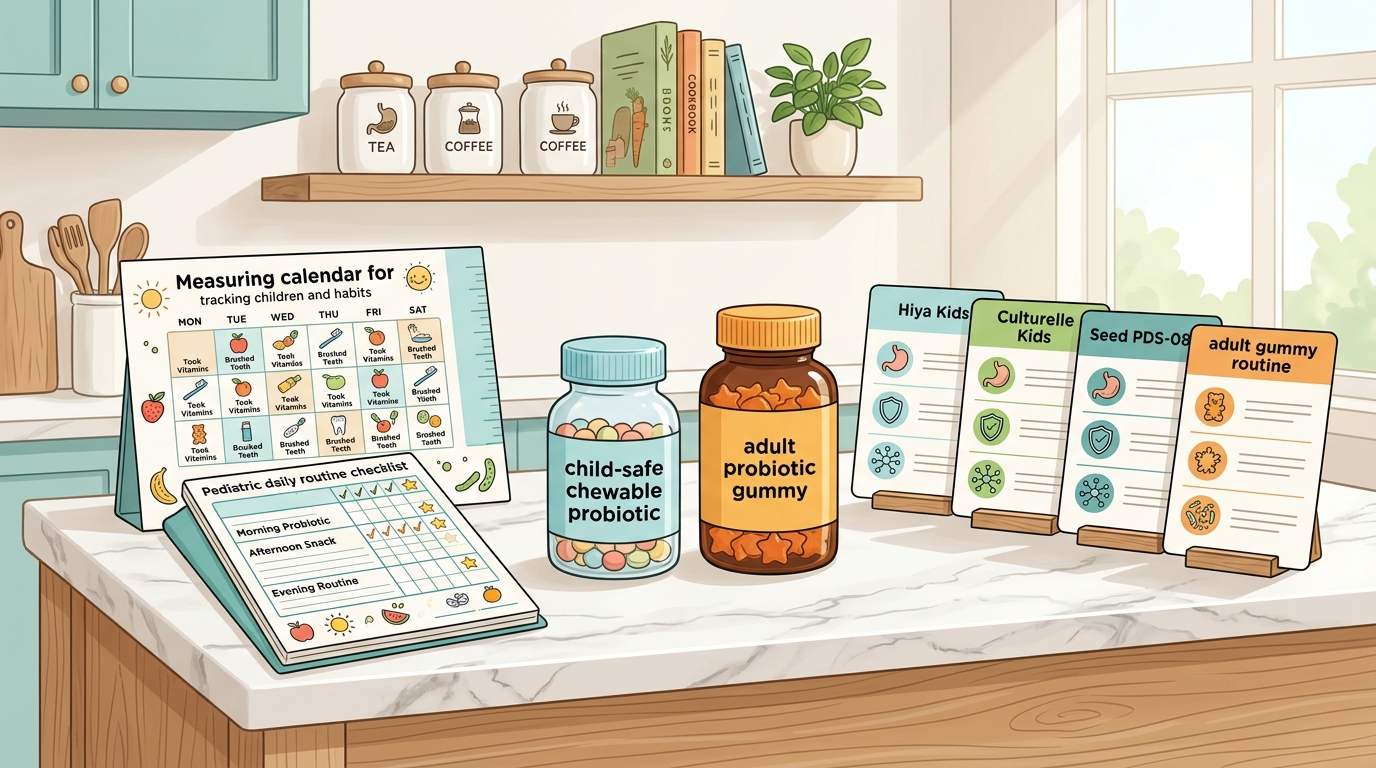
Hiya Kids Daily Probiotic is worth comparing if the buyer specifically wants a children-focused chewable with a 10 billion live-culture claim and no added sugar. Parents should still compare strain disclosure, pediatric fit, serving format, safety context, and clinician guidance. Yuve Probiotic Gummies are adult routine gummies, not a direct kids substitute.
How did we evaluate Hiya Kids probiotics?
Clean Digestive evaluated Hiya Kids Daily Probiotic by comparing pediatric fit, strain transparency, live-culture count, sweetener profile, format, and evidence standards against other probiotic options. Official brand pages, pediatric-oriented product pages, ISAPP definitions, and government supplement-safety references received more weight than Reddit testimonials. We excluded before-and-after claims, immune-treatment language, and any claim that a probiotic can diagnose, treat, cure, or prevent a child’s condition. This review has a limitation: children vary by age, immune status, medication use, allergy history, and digestive pattern, so a pediatrician or dietitian should guide probiotic use for medically complex children.
What should parents know before buying Hiya Kids Daily Probiotic?
Parents should know that Hiya Kids Daily Probiotic is built as a child-specific chewable, while many popular probiotic products are adult capsules, powders, or gummies. Hiya says its Kids Daily Probiotic provides 10 billion live cultures and zero added sugar in a daily chewable format (Hiya). That product positioning solves two practical issues: children often resist capsules, and added sugar can be unnecessary in a daily supplement. The harder question is evidence fit. Probiotic benefits are strain-specific, not category-wide. ISAPP defines probiotics as live microorganisms that confer a health benefit when administered in adequate amounts (ISAPP). A parent should therefore check whether the label lists strain codes, guarantees live count through expiration, gives clear age directions, and avoids claims that sound like treatment.
Affiliate disclosure: Some links below are affiliate links. This does not influence our evaluation criteria or recommendations.
How does Hiya compare with Culturelle, Seed PDS-08, and Yuve?
Hiya, Culturelle Kids, Seed PDS-08, and Yuve Probiotic Gummies serve different buyers. Hiya focuses on a no-added-sugar children’s chewable with a 10 billion live-culture claim. Culturelle Kids products commonly center Lactobacillus rhamnosus GG; the Culturelle pediatric professional page lists Kids Purely Probiotics as delivering 5 billion CFU of L. rhamnosus GG (Culturelle HCP). Seed PDS-08 is positioned as a pediatric synbiotic, while Seed’s adult DS-01 is a separate 24-strain adult product. Yuve Probiotic Gummies fit adults who want a vegan daily gummy routine from the digestive health collection. Yuve should not be framed as a children’s probiotic replacement unless the product label and a clinician support use for that child.
| Option | Main fit | Best for | Key caveat |
|---|---|---|---|
| Hiya Kids Daily Probiotic | Children’s chewable probiotic | Parents wanting no added sugar and chewable format | Verify strain-level label details |
| Culturelle Kids | L. rhamnosus GG pediatric format | Buyers prioritizing a named pediatric strain | Product form varies by SKU |
| Seed PDS-08 | Pediatric synbiotic positioning | Families comparing premium synbiotic options | Higher-friction subscription style |
| Yuve Probiotic Gummies | Vegan adult probiotic gummy routine | Adults wanting daily gummy adherence | Not a direct kids probiotic substitute |
Where does Yuve fit in a family probiotic routine?
Yuve fits best when the buyer is an adult or household decision-maker comparing simple daily probiotic routines for themselves. Yuve Probiotic Gummies emphasize vegan format, daily adherence, and low-friction supplement behavior. That is a different use case from a pediatric chewable. A parent shopping for a child should prioritize age directions, pediatric strain evidence, allergen profile, sugar alcohols, choking risk, and pediatrician guidance. An adult shopping for themselves can compare Yuve against capsule brands by serving format, live culture disclosure, dietary fit, and consistency. This distinction matters because “family probiotic” can blur two separate decisions. Children need child-appropriate directions; adults need products they will repeat. The cleanest buying decision is to avoid swapping a kid-focused product and an adult routine gummy as if they are the same category.
What safety questions matter for children?

Safety questions matter more for children than for adults because age, immune status, and medical history change the risk profile. The National Center for Complementary and Integrative Health notes that probiotics are generally considered safe for healthy people, but risk can be higher for people with serious illnesses or weakened immune systems (NCCIH). Parents should ask whether the child has immune compromise, a central line, severe illness, premature birth history, food allergies, or a medication plan that changes gut symptoms. Parents should also inspect excipients, sweeteners, dyes, and serving size. A probiotic label should make the product easy to evaluate, not harder. If a child has persistent diarrhea, constipation, blood, poor growth, severe pain, fever, or vomiting, the next step is medical care rather than another supplement comparison.
Which probiotic format is best for each use case?
Best for a child who refuses capsules: a chewable or powder with age-appropriate directions and transparent strains. Best for parents prioritizing a named pediatric strain: Culturelle Kids with L. rhamnosus GG is easier to evaluate than a vague blend. Best for a no-added-sugar kids chewable comparison: Hiya Kids Daily Probiotic belongs on the shortlist. Best for a premium pediatric synbiotic comparison: Seed PDS-08 deserves review, especially if the buyer values synbiotic positioning. Best for an adult vegan gummy routine: Yuve Probiotic Gummies fit better than a child-specific chewable. The “best” product is not one universal bottle. The best product is the one whose age fit, strain disclosure, dose, format, and safety context match the actual user.
What questions do buyers ask about Hiya Kids probiotics?
Is Hiya Kids Daily Probiotic sugar free?
Hiya states that its Kids Daily Probiotic contains zero added sugar. Parents should still read the full Supplement Facts panel for sweeteners, flavors, allergens, and serving directions.
Is Hiya better than Culturelle Kids?
Hiya and Culturelle Kids are not the same product. Hiya emphasizes a no-added-sugar chewable and 10 billion live cultures, while Culturelle Kids is strongly associated with L. rhamnosus GG.
Can adults take kids probiotics?
Adults can sometimes take child-labeled products, but the dose and format may not match adult goals. Adults usually get cleaner comparisons from adult probiotic products.
Can kids take adult probiotic gummies?
Parents should not assume adult probiotic gummies fit children. Age directions, choking risk, dose, sweeteners, and clinician guidance matter.
Are probiotics necessary for every child?
No. A child with a balanced diet, normal digestion, and no specific clinician-guided reason may not need a daily probiotic supplement.
Related reading: Best Vitamins for a 12-Year-Old: What Parents Should Compare Before Buying.
Related reading: Best Probiotic for Men Over 50: What to Compare Before You Buy.
What is the practical next step?
The practical next step is to decide who the probiotic is for. If the buyer is choosing for a child, compare Hiya Kids Daily Probiotic, Culturelle Kids, and Seed PDS-08 by age directions, strain transparency, live-culture guarantee, allergens, sugar, and pediatrician fit. If the buyer is an adult looking for a vegan daily routine, compare Yuve Probiotic Gummies and other adult products by format, consistency, and dietary fit. Mixing those decisions creates bad comparisons. The label should answer the user, age, dose, organism, and purpose before the bottle earns a place in a daily routine.
Leave a Reply