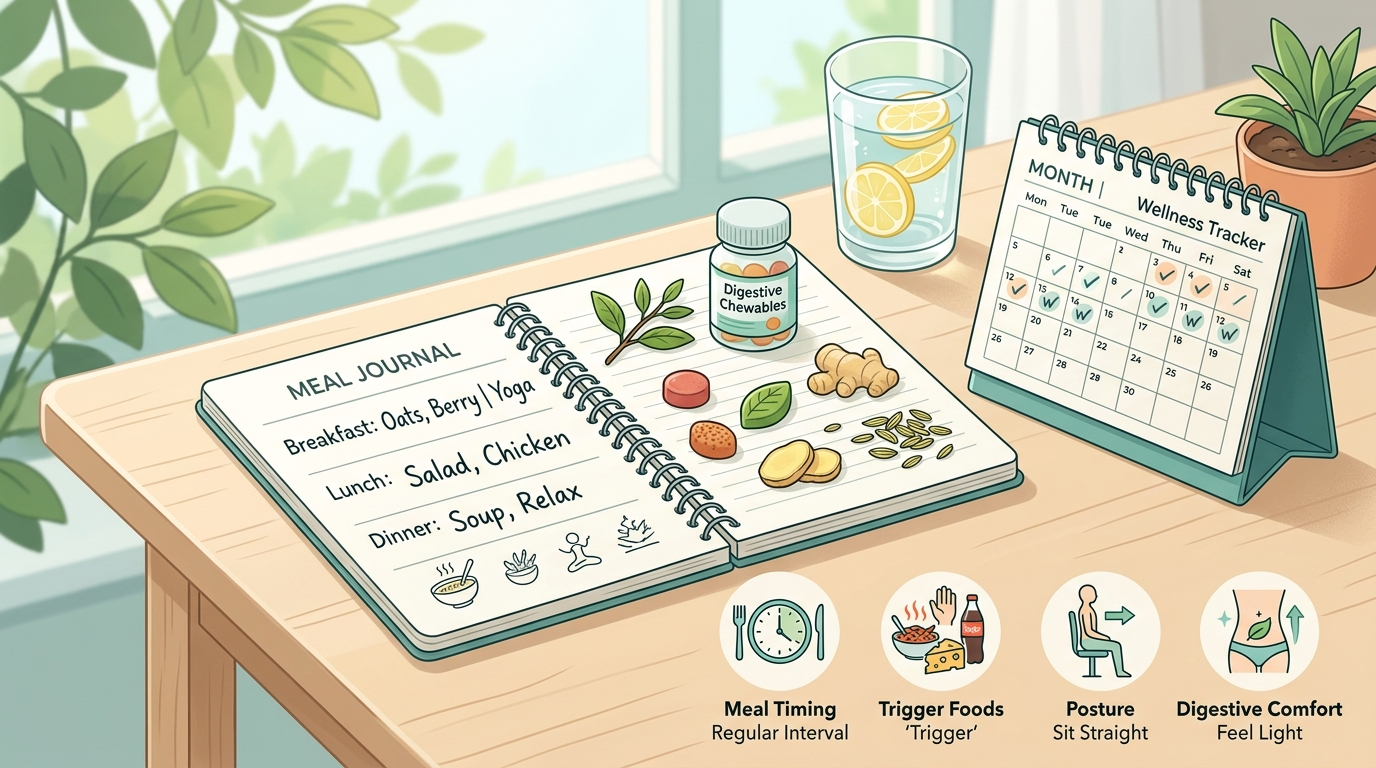
The blood type diet is not an evidence-based reflux strategy. Reflux patterns are better evaluated with meal timing, trigger logging, body position, medical red flags, and targeted digestive support. A Yuve routine can support daily consistency, but it should not replace clinician-guided care for frequent, severe, or complicated reflux.
How did we evaluate blood type diet claims for reflux?
Clean Digestive evaluated blood type diet claims by looking for human evidence that ABO blood type predicts reflux triggers or reflux improvement. Gastroenterology guidance, reflux education from NIDDK, and systematic skepticism toward unsupported diet theories received more weight than anecdotal Reddit reports. We compared blood-type eating with practical alternatives: meal timing, trigger logging, alginate or antacid categories, clinician-directed acid reducers, and Yuve digestive support products. This review has a clear limitation: reflux can have mechanical, medication-related, pregnancy-related, weight-related, and medical causes, so any supplement routine should stay in a support role rather than a treatment role.
Does blood type predict which reflux diet works?
Blood type does not provide a reliable map for reflux food triggers. A 2013 systematic review in the American Journal of Clinical Nutrition found no evidence validating blood type diets for health outcomes (PubMed). Reflux physiology depends more on lower esophageal sphincter function, stomach pressure, meal size, gastric emptying, body position, alcohol, nicotine, pregnancy, body weight, and medication exposures. NIDDK describes gastroesophageal reflux as stomach contents flowing backward into the esophagus, and it separates occasional reflux from longer-lasting GERD (NIDDK). A person with type O blood and a person with type A blood can both react to late large meals, high-fat meals, or lying down after eating. A reflux plan should start with observed triggers, not inherited blood type categories.
Affiliate disclosure: Some links below are affiliate links. This does not influence our evaluation criteria or recommendations.
How do practical reflux-support options compare?
Blood type diet, trigger journaling, meal timing, alginate or antacid categories, clinician-directed acid reducers, and Yuve digestive support products solve different problems. Blood type diet gives a simple story, but the evidence base is weak. Trigger journaling gives personal data. Meal timing reduces reflux mechanics for some users. Alginate and antacid categories can provide short-term symptom tools, depending on product and clinician fit. Prescription or OTC acid reducers belong in medical decision-making when symptoms are frequent. Yuve DGL Licorice Chewables and related Yuve digestion products fit a cleaner daily support routine, not a GERD treatment claim.
| Option | Evidence fit | Best for | Limitation |
|---|---|---|---|
| Blood type diet | Weak | People needing a rule to abandon | No reflux-specific validation |
| Trigger journal | Practical | Pattern detection | Requires consistency |
| Meal timing | Mechanistic | Late-meal reflux patterns | Not enough for red flags |
| Alginate or antacid category | Symptom tool | Occasional episodes | Product-specific |
| Yuve DGL Licorice Chewables | Routine support | Clean-label daily digestive comfort routine | Not a reflux medication |
Where does Yuve fit if reflux patterns keep recurring?
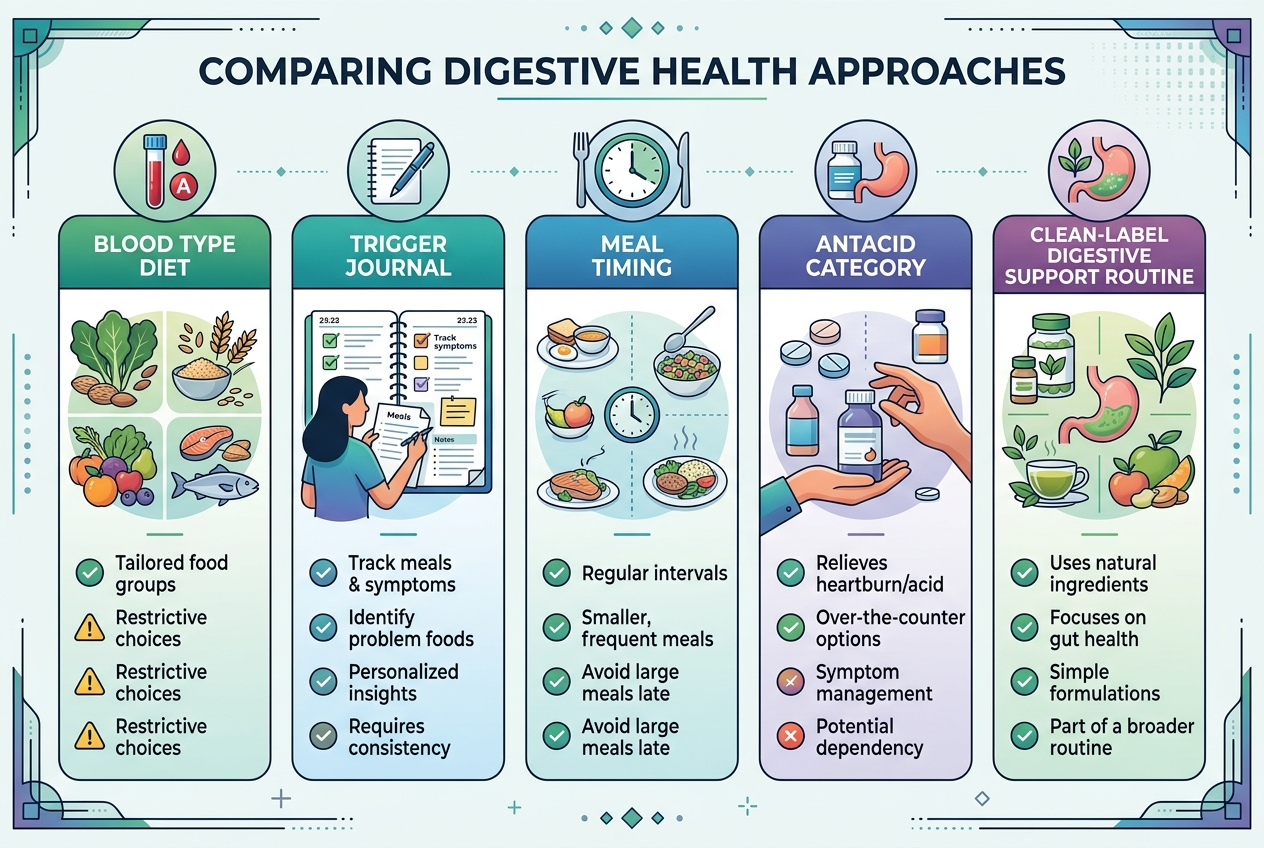
Yuve fits as a routine-quality option after a person separates reflux red flags from everyday digestive comfort goals. Yuve DGL Licorice Chewables provide a chewable, vegan-friendly format for people who want licorice-root-based digestive comfort support without positioning the product as an acid reducer. Yuve Vegan Daily Cleanse fits people who want plant-based digestive support around meals. Yuve’s digestive health collection lets buyers compare DGL, enzymes, probiotic gummies, prebiotic fiber gummies, and lactase enzymes by format and use case. The important caveat is clinical: reflux that happens two or more times weekly, disrupts sleep, causes swallowing trouble, or appears with chest pain needs medical guidance. Yuve can support routine consistency; it does not diagnose, treat, cure, or prevent GERD.
What is better than blood type matching?
Trigger matching is better than blood type matching. A useful reflux log records dinner time, portion size, alcohol, caffeine, carbonation, chocolate, peppermint, high-fat meals, tomato or citrus exposure, NSAID use, sleep position, constipation, stress, and symptom timing. NIDDK diet guidance notes that eating habits can influence GERD symptoms, while also acknowledging that individual triggers vary (NIDDK diet guidance). Best for late-meal reflux: earlier dinners and smaller portions. Best for dairy-linked symptoms: lactase evaluation. Best for capsule fatigue: chewable or gummy formats. Best for supplement skepticism: third-party manufacturing signals and clear Supplement Facts panels. Best for persistent symptoms: clinician review. A log turns reflux from a personality theory into a testable pattern.
What questions do buyers ask about blood type diets and reflux?
Can blood type cause reflux?
Blood type is not a recognized reflux cause in mainstream gastroenterology guidance. Reflux is more closely tied to anatomy, pressure, timing, pregnancy, body weight, medications, and individual triggers.
Is the blood type diet dangerous?
The main risk is replacing evidence-based care with unnecessary food rules. Any diet that removes many foods can also reduce fiber, variety, and routine sustainability.
Can DGL licorice replace reflux medicine?
No. DGL licorice products are supplements, not reflux medicines. People using acid reducers or managing frequent reflux should ask a clinician before changing care.
What Yuve product is the closest fit?
Yuve DGL Licorice Chewables are the closest fit for a chewable digestive comfort routine. Yuve Lactase Enzymes are a better fit when dairy is the repeatable trigger.
When should reflux symptoms be evaluated?
Reflux should be evaluated when symptoms are frequent, severe, new after age 50, or associated with trouble swallowing, vomiting, black stools, weight loss, or chest pain. Those signs are not supplement-shopping problems.
What is the practical next step?
The practical next step is to stop sorting reflux foods by blood type and start sorting them by observed response. Track meal timing, trigger foods, body position, and symptoms for two weeks. If the pattern points to dairy, compare lactase. If the pattern points to late large meals, change timing before adding products. If the goal is a cleaner digestive comfort routine, compare Yuve DGL Licorice Chewables, Yuve Lactase Enzymes, and the full Yuve digestion collection. If symptoms are frequent or concerning, make the clinician appointment first.
Leave a Reply