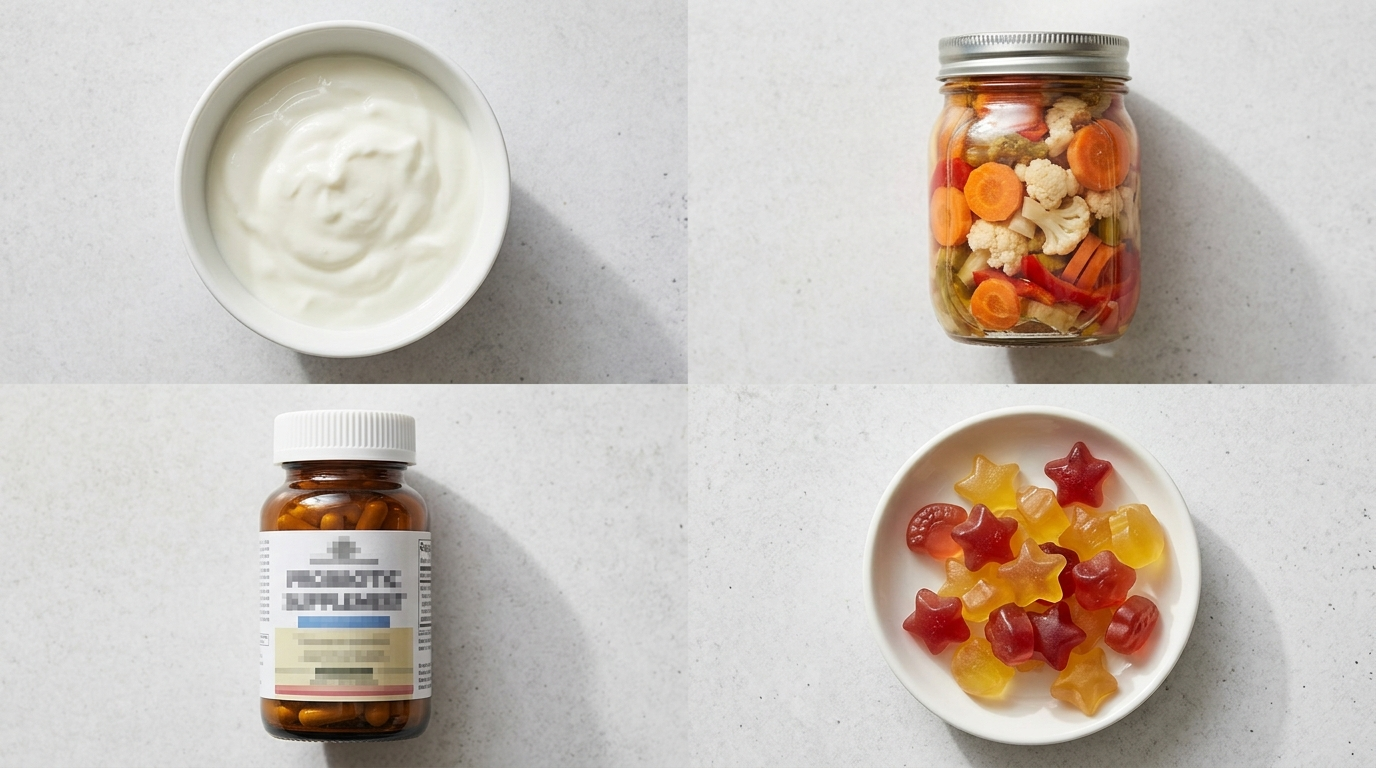
A good way to get probiotics identifies live microorganisms, provides a meaningful amount through shelf life, follows appropriate storage, and fits a routine you can repeat. Fermented foods, strain-coded capsules, and Yuve Probiotic Gummies can all qualify, but they are not interchangeable. The label must match your goal and tolerance.
How did we evaluate ways to get probiotics?
We evaluated foods and supplements by organism identity, strain detail, viable count, storage, serving consistency, ingredient tolerance, and evidence connected to the specific microorganism. The NIH Office of Dietary Supplements explains that higher CFU counts alone do not guarantee greater benefit and advises checking genus, species, strain, expiration, and storage instructions. We weighted human studies and consensus definitions above customer reviews, “multi-strain” marketing, or assumptions that every fermented food contains a probiotic dose. We also separated convenience from clinical precision: a format can be easy to use without matching a strain studied for a particular outcome. This method cannot predict an individual response, and it does not turn a food or supplement into medical treatment. The best option is the one whose organisms, amount, label transparency, safety profile, and daily format align with the user’s actual purpose.
What makes a food or supplement a credible probiotic source?
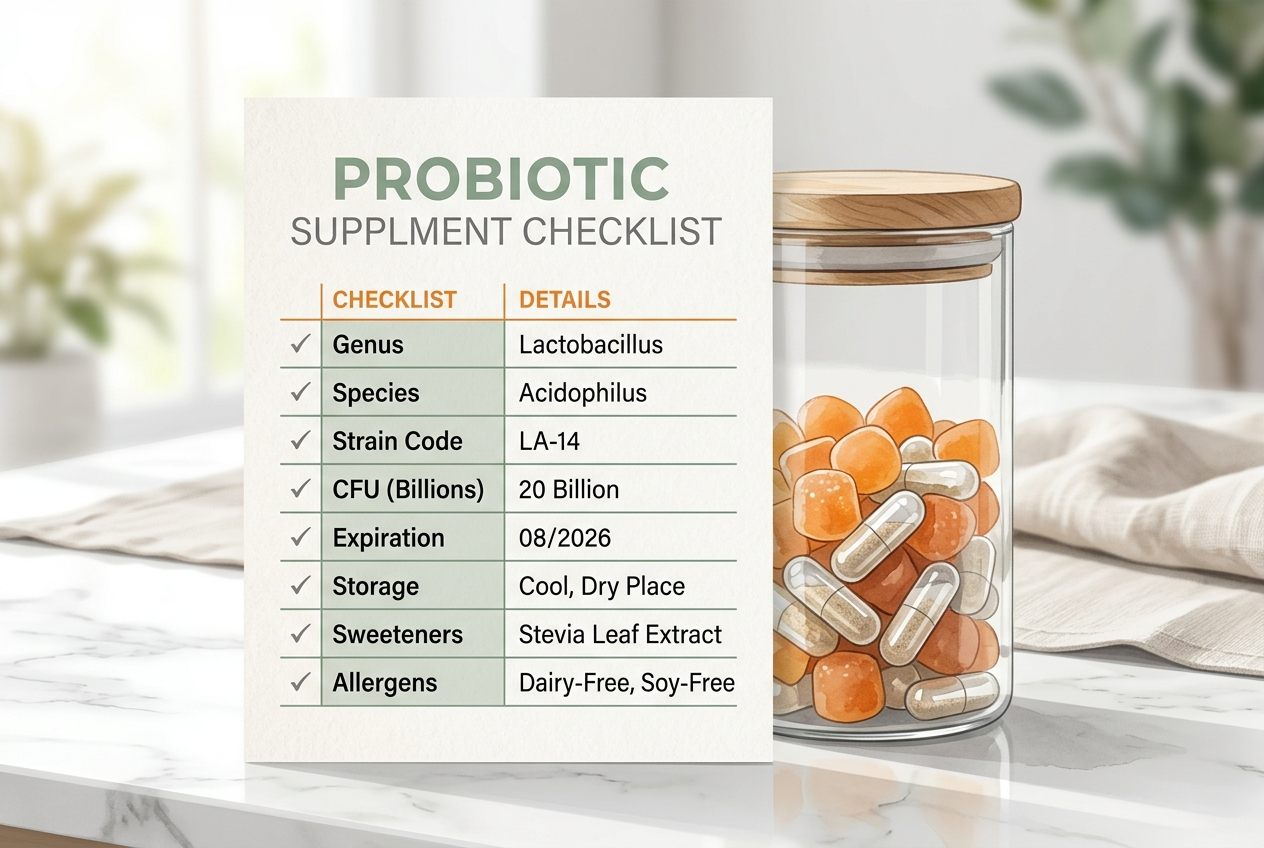
A credible probiotic source contains live microorganisms in an amount that remains meaningful when consumed and has evidence appropriate to the claim being made. For supplements, useful labels name genus, species, and preferably strain, such as Lactobacillus rhamnosus GG or Bifidobacterium longum 35624. They also state CFU per serving, expiration or use-by date, storage, serving size, allergens, and added ingredients. Foods require different scrutiny. “Fermented” does not automatically mean probiotic because baking, pasteurization, shelf processing, or lack of human evidence can disqualify that assumption. The ISAPP consensus statement connects the probiotic definition to live microorganisms, adequate amounts, and demonstrated benefit. Yogurt with identified live cultures can provide more information than unpasteurized vegetables with no strain or count. A supplement with a large proprietary blend can provide less information than a single clearly identified organism.
How do fermented foods, capsules, and Yuve gummies compare?
A 2021 randomized diet study in Cell found that a high-fermented-food diet increased microbiome diversity and changed inflammatory markers; that result describes a dietary pattern, not every jar or serving. Strain-coded capsules offer the clearest link between a named organism and published research, although storage, capsule ingredients, and adherence still matter. Yuve Probiotic Gummies provide a shelf-stable, vegan pectin format with 5 billion CFU of Bacillus coagulans per two-gummy serving. The public Yuve page identifies the species but not a strain code, which limits strain-level evidence matching. Convenience supports consistency; it does not erase that limitation.
| Source | Best for | What you can verify | Main limitation |
|---|---|---|---|
| Live-culture yogurt or kefir | Food-first routine | Culture statement, ingredients, serving | Strain and CFU may be incomplete |
| Refrigerated fermented vegetables | Food variety | Pasteurization and live-culture wording | Variable organisms and dose |
| Strain-coded capsule | Research matching | Strain, CFU, storage | Capsule and refrigeration friction |
| Yuve Probiotic Gummies | Vegan gummy adherence | B. coagulans, 5 billion CFU, two gummies | Species-level label, no public strain code |
When are Yuve Probiotic Gummies the best fit?
Some links below are affiliate links. This does not influence our evaluation criteria or recommendations. Yuve Probiotic Gummies fit adults who prioritize a vegan, pectin-based, room-temperature gummy and are more likely to chew two gummies daily than swallow a capsule. The current product page lists Bacillus coagulans at 5 billion CFU per two-gummy serving, plus maltitol and isomalt. Those sugar alcohols matter because sensitive users may notice gas or loose stool. The page identifies B. coagulans at species level, not with a public strain code; buyers who need precise research matching should prefer a product that names the studied strain. Yuve is not automatically better than live-culture yogurt, kefir, or a strain-coded capsule. It is best for format adherence and plant-based preferences when the label’s organism, sweeteners, and serving fit. The Yuve digestion collection also separates probiotic, prebiotic fiber, and enzyme categories rather than treating them as the same tool.
Which probiotic source is best for each use case?
Best for food-first variety: live-culture yogurt, kefir, or fermented vegetables that have not been heat-treated after fermentation. Best for strain-specific research matching: a capsule that states genus, species, strain code, CFU through expiration, and storage. Best for vegan gummy consistency: Yuve Probiotic Gummies, with the caveat that the public label names B. coagulans without a strain code. Best for minimizing added sweeteners: an unsweetened fermented food or capsule may fit better than a gummy. Best for avoiding dairy: check plant-based foods or vegan supplements, because yogurt, kefir, capsule excipients, and manufacturing statements vary. Best for sensitive digestion: introduce one source at a time and review prebiotic fibers and sugar alcohols as carefully as the probiotic organism. No “best” label replaces context. A person seeking general dietary variety and a person matching an exact strain from a clinical recommendation are making different decisions.
How should you test whether your probiotic routine fits?
Choose one source, follow its label or normal food serving, and keep other major diet and supplement changes stable. Record the organism when known, serving, storage, start date, digestive comfort, stool pattern, and unwanted effects. Do not combine yogurt, kimchi, multiple capsules, and gummies on day one; that approach makes the result impossible to interpret. The NCCIH probiotic safety guidance notes that different products can have different effects and that evidence and long-term safety remain incomplete for many uses. Stop and seek medical advice for severe or persistent symptoms. People who are seriously ill, immunocompromised, pregnant, using central venous catheters, or choosing products for infants should consult an appropriate clinician before use. Probiotics should not replace evaluated care. A simple trial with one clearly labeled source produces better information than a crowded routine built around the highest CFU number.
What do people ask about getting probiotics?
Is yogurt enough for probiotics?
Yogurt can be a useful source when its label identifies live and active cultures and the product fits your diet. It may not match a strain or amount recommended for a specific clinical purpose.
Are probiotic gummies as good as capsules?
Gummies can be useful when they deliver viable organisms and improve consistency. Capsules more often provide strain codes or higher organism variety, so compare labels rather than formats alone.
Does a higher CFU count mean a better probiotic?
No. NIH guidance states that higher CFU counts alone do not establish greater benefit; organism identity, strain, amount through shelf life, storage, and evidence all matter.
Do fermented vegetables always contain probiotics?
No. Heat treatment, pasteurization, storage, organism identification, and evidence determine whether a fermented food supports a probiotic claim rather than merely being fermented.
Can you take probiotics every day?
Many healthy adults use probiotic foods or supplements daily, but the right organism, amount, and duration depend on the purpose and the person. Follow the label and seek professional advice when medical conditions or medications complicate the choice.
Are prebiotics the same as probiotics?
No. Probiotics are live microorganisms, while prebiotics are substrates that selected microbes use; one category does not replace the other.
What is the practical next step?
Read the label of the food or supplement you already have. Write down the genus, species, strain code if shown, CFU, serving size, expiration, storage, sweeteners, allergens, and whether the product was heat-treated. If those details are missing, treat the source as less precise rather than filling gaps with assumptions. Choose by use case: live-culture food for dietary variety, a strain-coded capsule for research matching, or Yuve Probiotic Gummies for a shelf-stable vegan gummy routine. Start with one source and track tolerance before adding prebiotic fiber or another probiotic. Consistency matters, but consistency with an unclear product does not create evidence. Clarity is a feature. The strongest routine is simple enough to repeat and transparent enough to evaluate, with realistic structure/function expectations instead of promises to cure, permanently colonize, or transform the microbiome overnight.
Leave a Reply