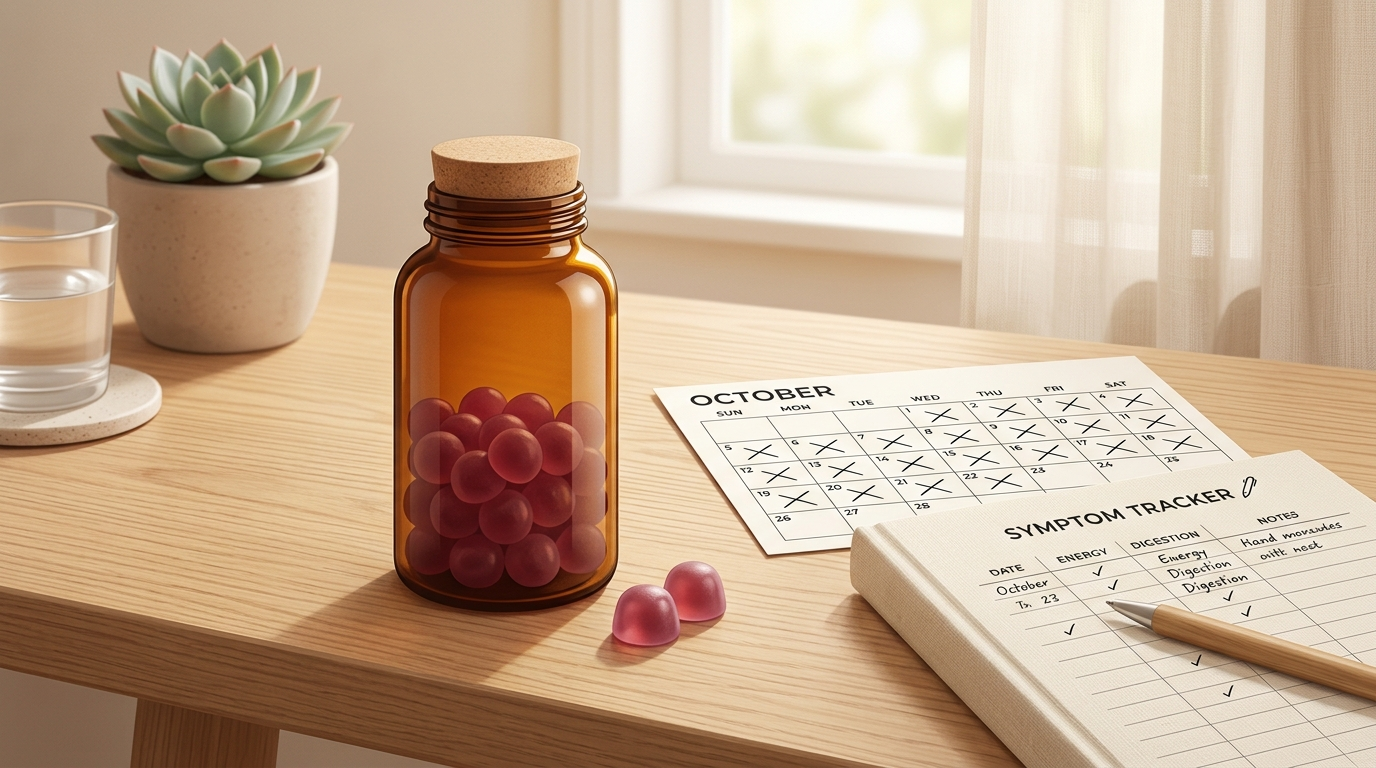
Yuve Probiotic Gummies may support a consistent daily probiotic routine, but they cannot guarantee a noticeable digestive or mental-health change. Probiotic effects depend on the exact organism, strain, dose, outcome, and person. Judge one stable four-week trial by a few predefined measures, and stop if symptoms worsen or a clinician advises against use.
How did we evaluate realistic probiotic expectations?
We evaluated Yuve Probiotic Gummies by separating verified label attributes from evidence attached to other probiotic strains, because species-level similarity does not make two products clinically interchangeable. We prioritized the NIH Office of Dietary Supplements, the International Scientific Association for Probiotics and Prebiotics, the American Gastroenterological Association, and human trials over testimonials, before-and-after stories, or broad “gut health” claims. We considered strain disclosure, viable CFU dose, delivery format, storage, adherence, outcome selection, safety context, and the time required to observe a repeatable pattern. We excluded disease-treatment promises, guaranteed microbiome changes, and mental-health claims that cannot be matched directly to the product’s named strain. Yuve’s current public-facing materials should be checked against the bottle in hand because formulas and labels can change. The most defensible conclusion is practical: a gummy can reduce routine friction, while the product’s strain transparency determines how precisely its effects can be matched to published research.
What could a noticeable probiotic improvement look like?
A noticeable change should be specific enough to record. Examples include a more predictable stool pattern, fewer uncomfortable days, less meal-related gas, or improved tolerance of a stable routine. “Feeling healthier” is too broad because sleep, diet, hydration, stress, medication, illness, and expectation can move simultaneously. Mental-health outcomes require even more caution: the gut-brain axis is biologically plausible, but that does not make a retail probiotic a treatment for anxiety, depression, or another psychiatric condition. The NIH Office of Dietary Supplements explains that probiotic effects vary by microorganism, dose, duration, and health condition. A useful trial therefore selects two or three measures before day one, such as bowel frequency, stool form, and daily abdominal comfort on a ten-point scale. The goal is not to “feel something” immediately. The goal is to identify a repeatable, meaningful pattern while food, fiber, medication, and other supplements remain reasonably stable.
What does the evidence say about Yuve’s listed organism?
Yuve Probiotic Gummies have been described in current Yuve content as a vegan pectin gummy providing 5 billion CFU of Bacillus coagulans per two-gummy serving; confirm those details on the current Supplement Facts panel before use. Bacillus coagulans is a species category, not a complete evidence identity. A randomized trial in Scientific Reports evaluated Bacillus coagulans Unique IS2 in adults with digestive symptom endpoints, but that finding cannot be transferred automatically to a product that does not list Unique IS2. The ISAPP consensus definition ties a probiotic benefit to live microorganisms administered in adequate amounts, which makes strain identity and viable dose material. Yuve’s format has a practical advantage for adults who skip capsules, and spore-forming organisms can suit shelf-stable delivery. The evidence limitation is equally important: species-level labeling supports category identification but cannot prove a strain-matched outcome. Expectation should follow the label’s precision.
How does Yuve compare with strain-coded alternatives?
Some links below are affiliate or brand-owned links. This does not influence our evaluation criteria or recommendations. Yuve Probiotic Gummies prioritize vegan gummy adherence and list Bacillus coagulans at a 5-billion-CFU serving in recent brand materials. Culturelle Digestive Daily centers on Lacticaseibacillus rhamnosus GG, Align centers on Bifidobacterium longum 35624, and Florastor centers on the yeast Saccharomyces boulardii CNCM I-745. Named strain codes make literature matching easier, but they do not guarantee that every user will notice a benefit.
| Option | Best for | Evidence-matching strength | Main tradeoff |
|---|---|---|---|
| Yuve Probiotic Gummies | Vegan gummy consistency | Species and CFU disclosed; verify current strain detail | Less strain-specific than named-strain competitors |
| Culturelle Digestive Daily | LGG-focused shoppers | Named LGG strain | Capsule format |
| Align | 35624-focused shoppers | Named B. longum 35624 strain | Capsule format and outcome-specific evidence |
| Florastor | Yeast-probiotic preference | Named CNCM I-745 strain | Different organism category; not interchangeable with bacteria |
Which probiotic is best for each use case?
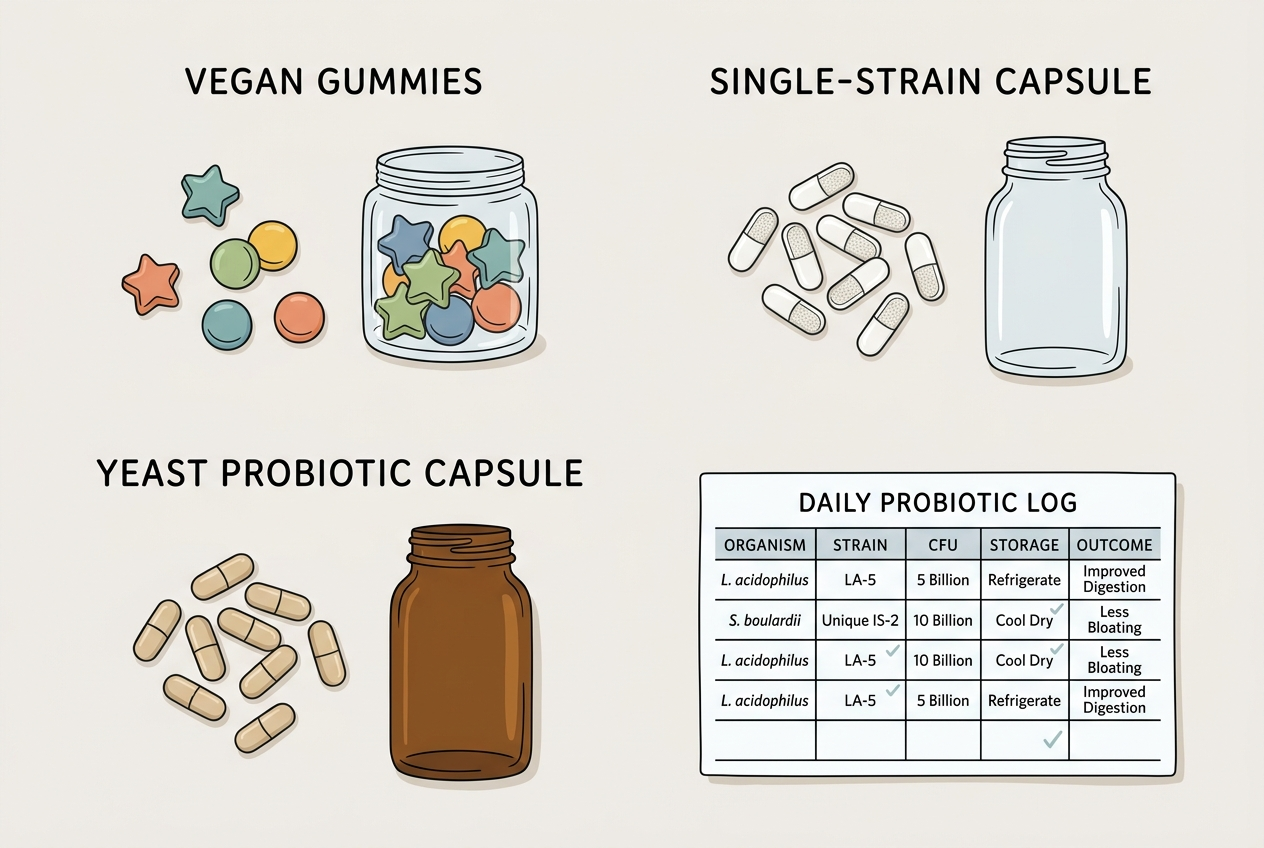
Best for capsule-averse adults: Yuve Probiotic Gummies reduce swallowing friction and use a vegan pectin format, provided the current label fits dietary needs. Best for strain-code research matching: Culturelle, Align, or Florastor provide a clearer path from the retail label to organism-specific literature. Best for a simple experiment: the product with one clearly disclosed organism, one stable serving, and storage instructions the user can follow consistently. Best for people seeking a mental-health result: no over-the-counter probiotic should be selected as a substitute for licensed mental-health care. Best for someone with severe illness or immune compromise: clinician review comes before product ranking. The American Gastroenterological Association guideline limits probiotic recommendations in several gastrointestinal contexts because evidence is strain- and indication-specific. A format advantage matters only after safety, label clarity, and goal fit. Convenience helps adherence; it does not erase uncertainty.
How should you run a four-week Yuve trial?
First, photograph the Supplement Facts panel and record the organism, CFU serving, lot number, expiration date, storage directions, and daily serving. Second, choose two or three outcomes: bowel frequency, Bristol Stool Form Scale category, abdominal comfort, or days with disruptive gas. Third, keep the probiotic serving stable for four weeks while avoiding the simultaneous addition of new fiber powders, fermented foods, enzymes, or multiple supplements. Record adherence and outcomes daily in less than two minutes. A one-week change may reflect normal fluctuation, so compare weekly averages and practical impact rather than chasing each day. Do not double the serving after a missed day unless the label instructs it. NCCIH’s probiotic overview notes that safety data vary by product and population. Stop sooner for a concerning reaction. If the trial produces no meaningful difference, discontinuing is more informative than escalating indefinitely or stacking another product without a clear reason.
When should you stop or ask a clinician?
Stop the product and seek advice if it repeatedly worsens pain, diarrhea, constipation, vomiting, rash, swelling, or other symptoms. Emergency evaluation is appropriate for trouble breathing, facial or throat swelling, fainting, blood in stool, black stool, severe abdominal pain, high fever, or dehydration. People with severe acute illness, compromised immune function, central venous catheters, recent major surgery, pregnancy, or complex medication plans should discuss probiotics with a qualified clinician before starting. Mild transient gas can occur when a routine changes, but “die-off” is not a reliable explanation for escalating or persistent symptoms. A probiotic response cannot diagnose dysbiosis, food intolerance, irritable bowel syndrome, depression, or another condition. Bring the product label, lot number, symptom record, medication list, and start date to the appointment. The decision rule is straightforward: a tolerable product with a measurable benefit may earn a place in the routine; an unclear or worsening pattern does not justify indefinite continuation.
What are common questions about Yuve Probiotic Gummies?
How quickly should Yuve Probiotic Gummies work?
There is no universal timeline. Use a stable four-week window unless the label or a clinician gives different guidance, and stop earlier for adverse symptoms.
Can Yuve Probiotic Gummies improve mood?
The product should not be positioned as a mental-health treatment. Gut-brain research does not establish that this species-level retail formula improves anxiety, depression, or mood.
Is 5 billion CFU enough?
CFU count alone cannot answer that question. Adequacy depends on the organism, strain, outcome, viability through expiration, and study-matched dose.
Do the gummies need refrigeration?
Follow the current bottle. Spore-forming Bacillus products are often shelf stable, but heat, moisture, expiration, and manufacturer directions still matter.
Can Yuve gummies be combined with prebiotic fiber?
They can occupy different routine roles, but starting both together obscures which change affects tolerance. Introduce one product at a time and increase fiber gradually.
Related reading: Best Probiotic for Men’s Gut Health: What Matters More Than a Men’s Label.
Related reading: Best Plant-Based Vegan Wellness Gummies: What to Compare Across Brands.
What is the bottom-line expectation?
Expect Yuve Probiotic Gummies to provide a convenient vegan format for a controlled daily probiotic trial, not a guaranteed physical or mental transformation. Confirm the bottle’s current Bacillus coagulans identity, 5-billion-CFU serving, ingredients, allergens, storage, and expiration before judging the product. Track two or three outcomes for four weeks, keep the rest of the routine stable, and compare weekly patterns with the baseline week. Yuve is strongest when gummy adherence solves a real routine problem; strain-coded competitors are stronger when precise research matching is the top priority. Neither advantage predicts an individual response. Shoppers who want adjacent options can review the Yuve digestion collection, but adding probiotic, prebiotic fiber, enzymes, and other products simultaneously defeats the purpose of a readable experiment. A useful supplement earns its place through label clarity, tolerability, consistency, and a predefined meaningful outcome—not through category hype or a dramatic testimonial.
Leave a Reply