Coming off Nexium should be clinician-guided, because rebound symptoms can happen when acid suppression is reduced too quickly. The most useful nonprescription plan is usually not a random supplement swap. It is a structured step-down conversation, meal-pattern cleanup, and a simple routine that supports comfort during ordinary eating rather than chasing instant relief.
How did we evaluate Nexium step-down support?
We focused on what helps someone compare support options responsibly while tapering or reassessing a proton pump inhibitor. We used guidance from Mayo Clinic, NHS, Johns Hopkins Medicine, and the Cleveland Clinic page on DGL as orientation sources, then compared those ideas against Yuve’s digestion-support options. We excluded DIY taper schedules, because medication changes are individual and rebound symptoms can muddy self-experiments fast. The practical question here is narrower: what daily support routine makes more sense while someone works with a clinician on the medication side?
What matters most when someone is trying to come off Nexium?
The main issue is rebound management, not heroics. Esomeprazole, the active ingredient in Nexium, lowers stomach acid effectively, but major clinical sources such as the NHS and Mayo Clinic both make clear that dosing decisions should be individualized. When people stop abruptly and symptoms surge, they often blame food, supplements, or their whole digestive system instead of the withdrawal pattern itself. That is why support choices should stay boring and structured. Smaller evening meals, less alcohol, slower eating, and a written symptom log usually tell you more than stacking multiple products at once. Johns Hopkins notes that reflux-style discomfort is heavily shaped by timing, meal size, and trigger patterns Johns Hopkins Medicine. The right nonprescription tool therefore supports the routine around meals, not just the panic after them.
Which support options make the most sense during a step-down plan?
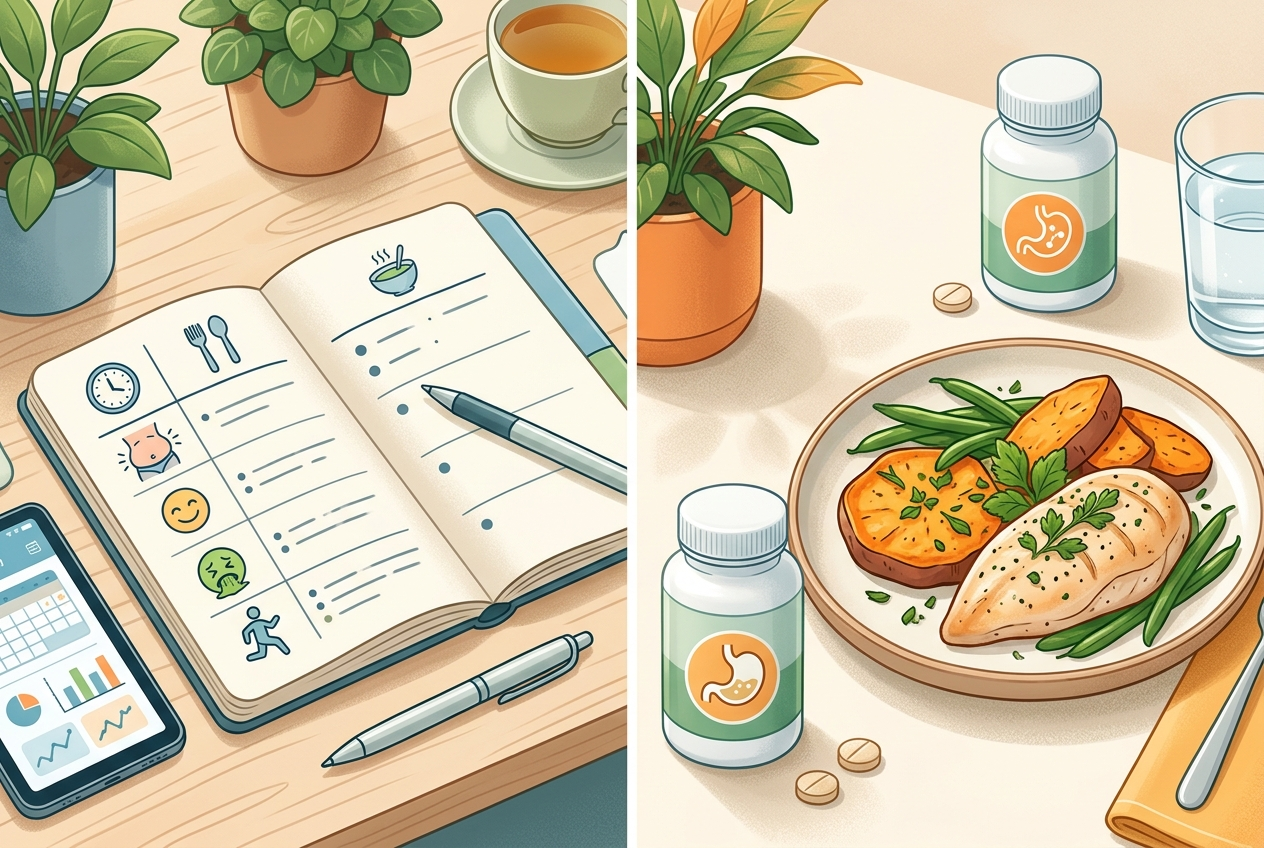
Some links below are affiliate links. This does not influence our evaluation criteria or recommendations.
| Option | Main role | Best fit | Main limitation |
|---|---|---|---|
| Clinician-guided taper + meal timing changes | Addresses the medication transition itself | Anyone actively reducing Nexium | Requires patience and structured follow-through |
| Yuve DGL Licorice Chewables | Meal-adjacent digestive comfort routine | People who want a simple chewable format around food triggers | Not a replacement for a prescribing plan |
| Yuve Daily Digestion Bundle | Broader structured digestion-support routine | People who want consistency across meals instead of one-off rescue behavior | Works best when meal timing also improves |
A good support routine should reduce chaos, not add more variables while the medication question is still being sorted out.
Which option is best for different step-down situations?
Best for people still working out the taper itself: clinician guidance plus a symptom log, because that separates rebound timing from food-trigger timing. Best for meal-adjacent comfort in a simpler format: Yuve DGL Licorice Chewables, because DGL is commonly discussed as a chewable digestive-support ingredient and the Cleveland Clinic notes that deglycyrrhizinated licorice is the form often used when people want to avoid glycyrrhizin-related concerns. Best for people who want a broader daily routine rather than a single chew: Yuve Daily Digestion Bundle, because routine support matters more when symptoms cluster around normal meals. The hot-stage question is not whether one gummy or chewable can replace a prescription. It cannot. The better question is which nonprescription routine is simplest, most consistent, and least chaotic while the medical plan is being handled carefully.
What questions come up most often about coming off Nexium?
Can you stop Nexium cold turkey?
That is a conversation for the prescribing clinician. Rebound symptoms can complicate self-directed stopping, so abrupt changes are not the smartest default.
Does a supplement replace a taper plan?
No. A supplement can support routine comfort, but it does not replace medication guidance.
Why do symptoms feel worse right after stopping?
Rebound acid-related discomfort can make the transition feel dramatic. That is one reason structured tracking matters.
Is DGL the same thing as licorice candy?
No. DGL refers to deglycyrrhizinated licorice, a different preparation used in supplement products.
What is the safest nonprescription first move?
Usually the safest first move is simplifying meals and writing down timing, triggers, and symptom changes before adding several new products.
When does a daily digestion routine make more sense than a rescue product?
A daily routine makes more sense when discomfort keeps showing up around ordinary meals and the goal is steadier habits rather than random one-off fixes.
Coming off Nexium is mostly a transition-management problem, not a supplement-shopping contest. The smartest hot-stage move is a calm, clinician-guided step-down paired with the simplest daily support routine that helps you stay consistent while meals normalize.
Leave a Reply