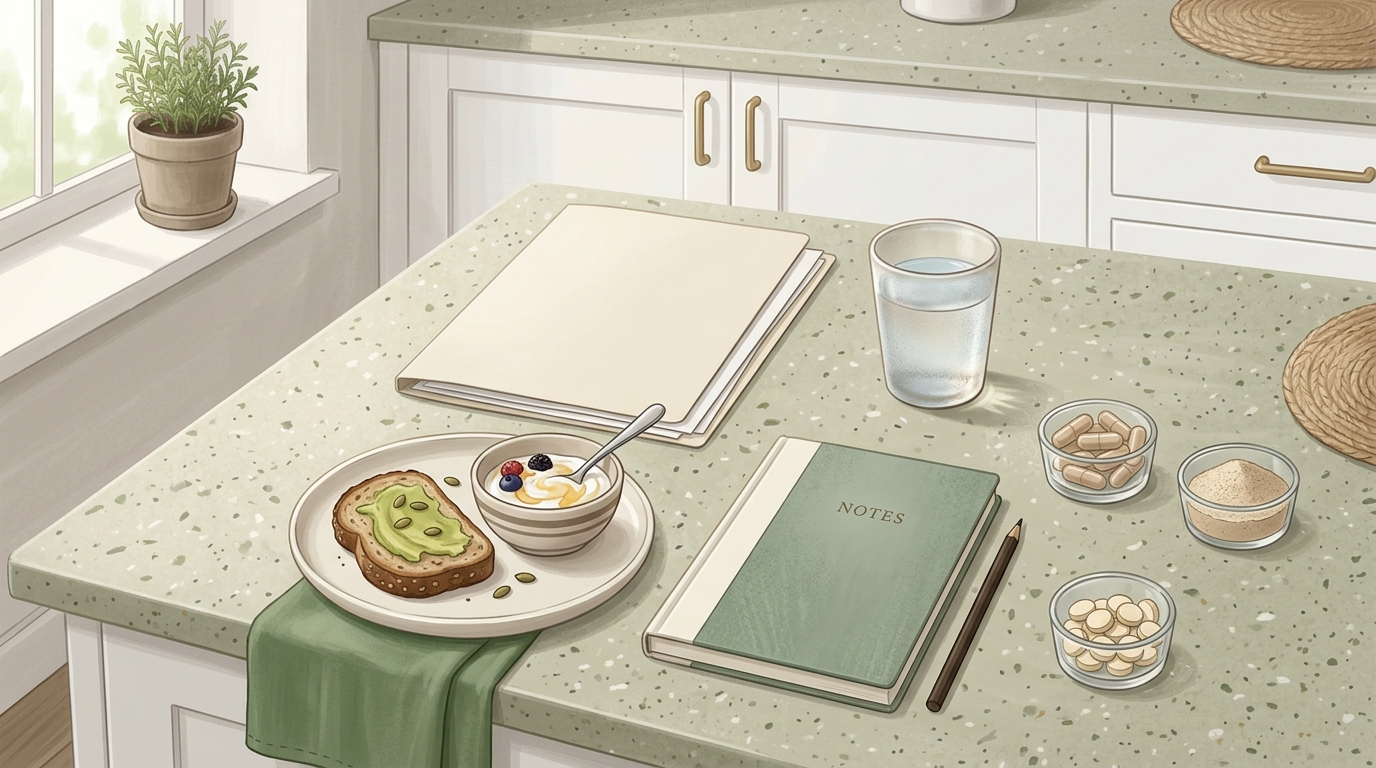
After an upper endoscopy, focus first on the written findings, pending biopsy results, medication instructions, and recovery warnings. A Yuve digestive routine can support everyday comfort only after that medical plan is clear. Use one product at a time, verify interactions, and never treat a supplement as an answer to reflux, Graves disease, or an unexplained symptom.
How did we evaluate post-endoscopy digestive routines?
We prioritized the National Institute of Diabetes and Digestive and Kidney Diseases, the American College of Gastroenterology GERD guideline, federal supplement-safety guidance, and current product labels. We evaluated each routine by its intended role, evidence quality, ingredient identity, timing burden, and risk of distracting from medical follow-up. We excluded claims that a supplement can treat reflux, gastritis, Graves disease, thyroid dysfunction, biopsy findings, or procedure complications. We also excluded routines that add several products simultaneously because they prevent useful attribution. An endoscopy story does not reveal the written findings, biopsy status, sedation instructions, medicine list, or reason for the procedure. Those missing facts materially change the decision. New chest pain, difficulty swallowing, vomiting blood, black stool, fainting, fever, persistent vomiting, severe worsening pain, or shortness of breath requires prompt medical guidance rather than a routine adjustment.
What should you do first after an upper endoscopy?
Follow the discharge instructions, confirm when normal eating and driving may resume, and obtain the written procedure report. Sedation can temporarily affect judgment and coordination, while throat irritation or bloating from introduced air may occur after the procedure. The NIDDK upper endoscopy guide explains that the clinician can inspect the esophagus, stomach, and duodenum and may collect tissue for biopsy. Ask whether biopsies were taken, when results should arrive, which medicines should continue, and what symptoms require a call. A smooth procedure does not equal a normal result, and a normal visual exam does not settle every cause of burning, nausea, or upper-abdominal discomfort. Keep the first day simple: use approved foods and fluids, follow medication instructions, and avoid launching a supplement experiment. Recovery rules vary by case. Medical findings define the lane; routine choices come afterward.
How should reflux findings shape the next routine?
The clinician’s interpretation should determine whether the plan addresses erosive esophagitis, nonerosive reflux, a hiatal hernia, another finding, or symptoms that require additional evaluation. The American College of Gastroenterology guideline supports condition-specific use of proton pump inhibitors and lifestyle measures such as avoiding meals close to bedtime and elevating the head of the bed for nighttime symptoms. Medication timing and duration should follow the prescriber, not a supplement label. A useful two-week log records meal size, dinner time, lying-down time, caffeine, alcohol, carbonated drinks, pain, regurgitation, sleep position, bowel pattern, and every medicine or supplement. That log can show whether symptoms cluster around late meals, large portions, missed medicines, or another repeatable context. Do not assume that every post-procedure sensation is “acid.” Patterns should be reviewed together. The report and response pattern should guide the next conversation.
How do Yuve digestive options compare after medical follow-up?
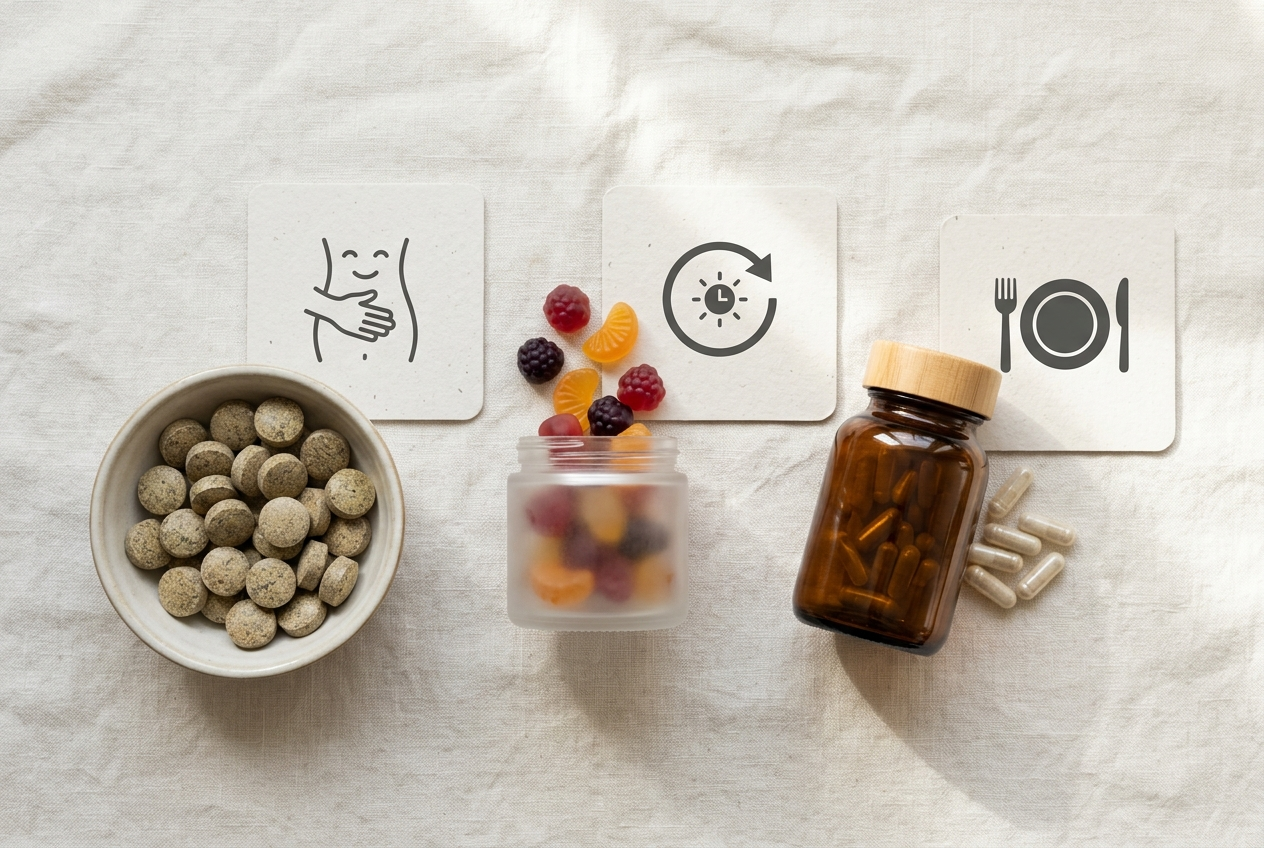
Some links below are affiliate links. This does not influence our evaluation criteria or recommendations. Yuve DGL Licorice Chewables provide 400 mg of deglycyrrhizinated licorice extract plus 100 mg of glycine per two-chewable serving for a plant-based digestive-comfort routine. Yuve Probiotic Gummies provide 5 billion CFU of Bacillus coagulans per two-gummy serving for a daily microbiome-support routine. Yuve Bromelain 500mg belongs in an enzyme-adjacent meal-support lane, not a reflux or endoscopy-recovery lane. The categories are not interchangeable.
| Option | Routine role | Best-fit preference | Main limitation |
|---|---|---|---|
| Yuve DGL Licorice Chewables | Botanical digestive-comfort support | Vegan chewable format | Not proven to treat reflux |
| Yuve Probiotic Gummies | Daily microbiome support | Capsule-free consistency | Strain effects cannot be generalized |
| Yuve Bromelain 500mg | Meal-adjacent enzyme support | Single-ingredient capsule | Does not explain upper-GI symptoms |
| Meal and symptom log | Pattern identification | Any clinician-directed plan | Does not diagnose a condition |
Which option is best for each post-endoscopy use case?
Best while biopsy results are pending: no new supplement, because preserving a stable baseline makes the follow-up easier to interpret. Best for a simple chewable comfort ritual after clinician clearance: Yuve DGL Licorice Chewables, with expectations limited to digestive-comfort support. Best for a capsule-free daily microbiome routine: Yuve Probiotic Gummies, provided the complete ingredient list and Bacillus coagulans format fit the user. Best for a meal-adjacent enzyme category: Yuve Bromelain 500mg, although bromelain does not replace evaluation of pain, reflux, or swallowing difficulty. Best for persistent nighttime symptoms: clinician-directed reflux care, earlier meals, and head-of-bed elevation rather than supplement stacking. Best for comparing all three categories: Yuve’s digestive health collection. Check every current label because formulas and serving directions can change over time. One clear goal and one variable produce better information than a multi-product “gut stack.”
Does an easy endoscopy mean the findings are normal?
An easy endoscopy describes the experience of the procedure, not the medical result. Sedation, a short procedure time, and mild recovery do not show whether the esophagus, stomach, or duodenum appeared normal. The written report may describe inflammation, a hiatal hernia, ulcers, polyps, retained food, or no visible abnormality. Biopsies can add information that the camera view alone cannot provide, and pathology often arrives after the patient has gone home. Ask the clinician to translate each finding into three practical points: what it means, whether treatment changes, and when follow-up should occur. If the examination is visually normal but symptoms continue, the next step may involve medication review, reflux monitoring, motility evaluation, or a functional gastrointestinal framework. A supplement cannot fill an unanswered diagnostic gap. Use the report, pathology, and clinician’s assessment before assigning meaning to the procedure.
Can DGL licorice replace reflux medicine?
DGL licorice cannot be treated as a replacement for prescribed reflux medicine. Deglycyrrhizinated licorice removes most glycyrrhizin, but the ingredient still belongs to a botanical-support category with limited product-specific evidence for digestive outcomes. The National Center for Complementary and Integrative Health states that high-quality evidence does not clearly support licorice for any health condition and that it remains unclear whether licorice alone affects digestive symptoms. NCCIH also warns that glycyrrhizin-containing licorice can cause serious adverse effects, especially in people with hypertension or heart or kidney conditions. Yuve DGL Licorice Chewables should therefore be evaluated by exact ingredient form, serving directions, current medicines, and individual risk. A clinician or pharmacist should review use during pregnancy and with corticosteroids, diuretics, blood-pressure medicines, heart medicines, or potassium concerns. The honest role is optional comfort support after medical clearance.
Can probiotics help after an endoscopy?
Probiotics are not required for routine endoscopy recovery and do not treat a biopsy finding, reflux, or procedure-related complication. A probiotic may fit later when the separate goal is a consistent microbiome-support routine. The NIH Office of Dietary Supplements explains that probiotic effects can be strain-specific and that one microorganism’s evidence cannot validate every product. Yuve Probiotic Gummies list Bacillus coagulans and 5 billion CFU per two-gummy serving; that label identifies a format and quantity, not a guaranteed outcome. Review added fibers, sweeteners, allergens, storage directions, and expiration because those features can influence tolerance and product quality. People with serious illness or compromised immune function should seek individualized advice before using live microorganisms. Start only after the post-procedure baseline is stable, add one product, and track the intended outcome. A probiotic routine should answer one defined question, not every digestive concern.
What should someone with Graves disease check before adding supplements?
Graves disease makes medication review especially important because the person may use antithyroid medicine, beta-blockers, thyroid hormone after definitive treatment, corticosteroids, or other therapies. The relevant interaction depends on the exact medicine, dose, thyroid status, and supplement ingredients. Bring the complete Supplement Facts panel to a pharmacist or endocrinology clinician rather than relying on the front label. Minerals, fibers, botanicals, and meal timing can affect some medication routines, while licorice-family products require extra caution with corticosteroids, blood-pressure concerns, potassium balance, heart conditions, and pregnancy. Do not describe digestive discomfort, palpitations, weakness, tremor, or weight change as a supplement-selection problem until the medical team has considered thyroid status and other causes. Keep medicine timing stable while evaluating any approved product. The safest post-endoscopy routine protects the existing Graves disease plan first and adds optional digestive support only when the interaction review is complete.
When should post-endoscopy symptoms get urgent attention?
Seek prompt medical help for chest pain, trouble breathing, difficulty or pain with swallowing, vomiting blood, black or tarry stool, fainting, fever, persistent vomiting, severe or worsening abdominal pain, or inability to keep fluids down. Those symptoms can reflect a complication or another serious problem and should not be managed with gummies, enzymes, licorice, antacids, or online advice. Contact the procedure team for concerns listed in the discharge instructions, even when the symptom is not on a general checklist. Mild throat irritation or temporary bloating may occur, but severity, progression, and duration matter. Record the time symptoms began, medicines taken, food and fluid intake, and whether biopsies or treatment occurred during the procedure. Do not drive after sedation until the instructions permit it. A product comparison belongs after urgent causes and procedure complications have been excluded. Safety triage comes before routine optimization.
What is the bottom line after an endoscopy?
The written endoscopy findings, biopsy results, medication plan, and recovery instructions should lead every next decision. A Yuve routine belongs only in the optional support layer: DGL chewables for a plant-based comfort format, probiotic gummies for a capsule-free microbiome routine, or bromelain for an enzyme-adjacent category. None treats reflux, Graves disease, or an endoscopy finding. Choose one product only after a clinician or pharmacist confirms that its ingredient list and timing fit the medical plan. Track one defined outcome for a fixed review period, and stop the experiment if symptoms worsen. Continue earlier meals, appropriate sleep positioning, and clinician-directed medication when those steps apply. Use the broader Yuve digestion collection to compare formats, not to build an indiscriminate stack. Keep the discharge instructions accessible. Clear findings, stable medicine timing, and one-variable testing produce the most useful routine.
Leave a Reply