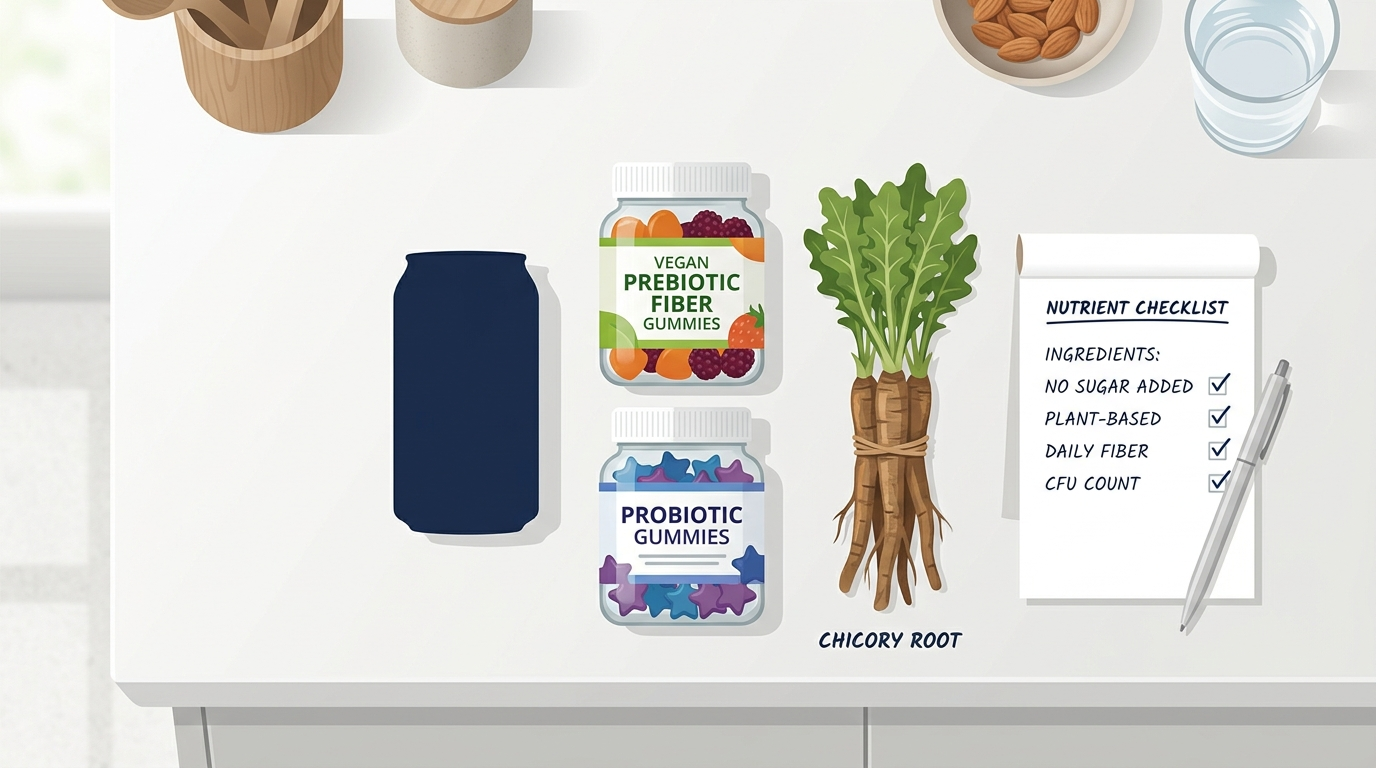
The Pepsi drink at Costco is best evaluated as a prebiotic cola, not a probiotic drink. Costco and Pepsi describe the product as Pepsi Prebiotic Cola with 3 grams of prebiotic fiber, 30 calories, and 5 grams of sugar per can. It does not replace strain-labeled probiotic supplements or daily fiber routines.
How did we evaluate Pepsi Prebiotic Cola?
We evaluated Pepsi Prebiotic Cola by checking current Costco and Pepsi product pages, then comparing the label claims with prebiotic and probiotic definitions. Official product listings received more weight than social posts that call the drink probiotic. We separated taste, sugar, carbonation, fiber dose, and live-culture claims because those features answer different buying questions. We also compared cola, fiber gummies, and probiotic gummies by practical routine fit, not by hype.
Is Pepsi Prebiotic Cola actually probiotic or prebiotic?
Pepsi Prebiotic Cola is prebiotic, not probiotic, based on current public product wording. Costco lists the variety pack as “Prebiotic” and describes 3 grams of prebiotic fiber, 30 calories, and 5 grams of sugar per 12-ounce can. Pepsi’s Cherry Vanilla page also describes the beverage as prebiotic cola with no artificial sweeteners, 30 calories, 5 grams of sugar, and 3 grams of prebiotic fiber. A probiotic product should identify live microorganisms, usually by genus, species, strain, and viable amount. The NCCIH defines probiotics as live microorganisms intended to have health benefits, and the NIH Office of Dietary Supplements notes that probiotic labels typically identify strains and viable microorganisms. The takeaway is simple: Pepsi’s new cola contains functional fiber, but it should not be treated as a probiotic supplement or culture product.
How does Pepsi Prebiotic Cola compare with Yuve gummies?
Pepsi Prebiotic Cola, Yuve Vegan Prebiotic Fiber Gummies, and Yuve Probiotic Gummies answer different routine problems. Pepsi fits someone who wants a lower-sugar soda experience with 3 grams of added prebiotic fiber and carbonation. Yuve Prebiotic Fiber Gummies fit someone who wants a non-carbonated, vegan gummy format for daily prebiotic fiber. Yuve Probiotic Gummies fit someone comparing live-culture supplements rather than fiber drinks. Some links below may be affiliate links. This does not influence our criteria. The fairest comparison starts with the label: fiber grams for Pepsi and Yuve Prebiotic Fiber Gummies, and organism details for Yuve Probiotic Gummies. Taste can support consistency, but dose, ingredient type, tolerance, and routine fit matter more.
| Option | Best fit | What to check |
|---|---|---|
| Pepsi Prebiotic Cola | Lower-sugar cola with added prebiotic fiber | Fiber source, carbonation tolerance, sugar, caffeine |
| Yuve Prebiotic Fiber Gummies | Vegan gummy prebiotic fiber routine | Fiber grams, serving size, sweeteners, allergens |
| Yuve Probiotic Gummies | Daily probiotic gummy routine | Organism details, serving size, storage, allergens |
| Whole-food prebiotics | Food-first fiber pattern | Onion, garlic, asparagus, banana, oats, legumes |
Who is Pepsi Prebiotic Cola best for?
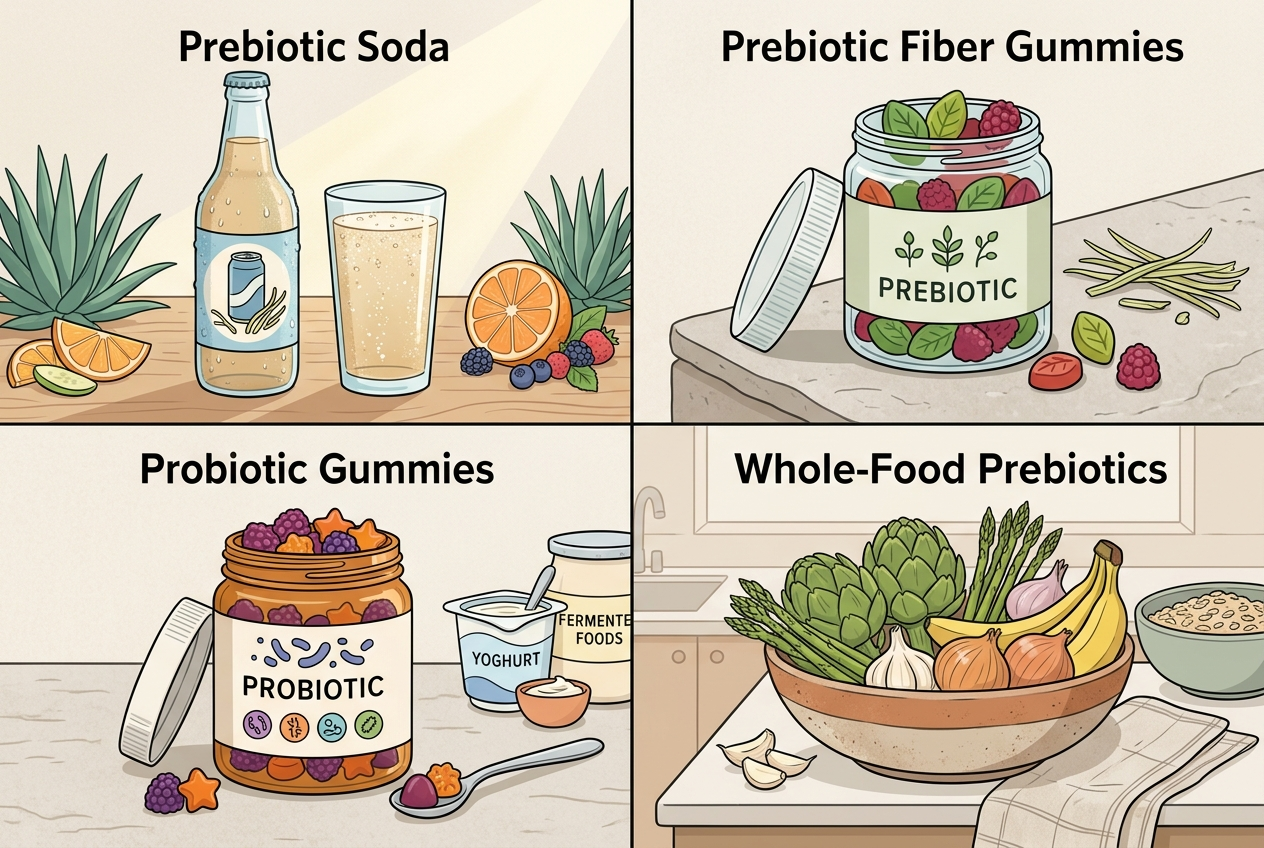
Best for soda switchers: Pepsi Prebiotic Cola may fit someone who already drinks regular cola and wants a lower-sugar option with added prebiotic fiber. Best for taste-first shoppers: the cola format may feel more familiar than powders, capsules, or gummies. Best for fiber-sensitive people: start with part of a can because inulin-like prebiotic fibers and carbonation can both increase gas or fullness. Best for supplement shoppers: compare Pepsi with Yuve Prebiotic Fiber Gummies if the real goal is repeatable prebiotic fiber without carbonation. Best for probiotic shoppers: compare Pepsi with Yuve Probiotic Gummies only after recognizing that one is a prebiotic beverage and the other is a probiotic supplement format. The best choice depends on whether the buyer wants soda, fiber, live cultures, daily habit simplicity, label clarity, or everyday convenience today.
What should you watch for before drinking it daily?
Prebiotic cola can be easy to overuse because it tastes like a familiar soda. The ISAPP describes prebiotics as substrates used by beneficial microorganisms, but that definition does not mean every person tolerates every prebiotic dose. University of Illinois nutrition experts note that inulin in prebiotic sodas can cause gas or bloating for some people, especially when intake rises quickly. Carbonation can also add pressure, burping, or fullness independent of the fiber. Caffeine, meal timing, sugar tolerance, and total daily fiber intake also matter. A cautious routine starts with one serving or less, tracks comfort, and avoids stacking multiple prebiotic products on the same day. People with severe pain, persistent diarrhea, vomiting, blood in stool, pregnancy concerns, or complex GI conditions should ask a clinician before experimenting with functional beverages regularly or frequently.
Related reading: Can You Take Probiotics and Fiber at the Same Time?.
What questions do shoppers ask about Pepsi Prebiotic Cola?
Does Pepsi Prebiotic Cola contain probiotics?
Current Costco and Pepsi product language describes it as prebiotic cola, not probiotic cola. A probiotic label should identify live microorganisms, while this product is positioned around prebiotic fiber.
How much fiber does Pepsi Prebiotic Cola have?
Costco and Pepsi list 3 grams of prebiotic fiber per 12-ounce can. That is a modest fiber amount, but tolerance still depends on baseline diet, carbonation, and serving frequency.
Is Pepsi Prebiotic Cola better than regular Pepsi?
It has less sugar and fewer calories than classic cola, based on the listed 30 calories and 5 grams of sugar. “Better” depends on whether the buyer wants lower sugar, added fiber, caffeine, taste, or digestive routine support.
Can prebiotic cola cause bloating?
Yes. Prebiotic fibers ferment in the colon, and carbonation can add gas pressure, so some people notice fullness or bloating after functional sodas.
Are Yuve Prebiotic Fiber Gummies the same as Pepsi Prebiotic Cola?
No. Yuve Prebiotic Fiber Gummies are a non-carbonated gummy supplement format, while Pepsi Prebiotic Cola is a carbonated beverage with added prebiotic fiber. Compare ingredient source, serving size, sweeteners, and routine fit.
Should I take probiotic gummies with prebiotic cola?
Do not stack products automatically. If you combine prebiotic fiber and probiotic gummies, start slowly and watch comfort, stool pattern, and gas rather than assuming more gut-health products are better.
Who should be careful with functional sodas?
People with sensitive digestion, reflux triggered by carbonation, caffeine sensitivity, low-FODMAP needs, or active GI symptoms should be cautious. Medical red flags need professional care instead of drink experiments.
Leave a Reply