
This stack needs clinician-led simplification, not a numerical rating. Iron and 8,000 IU vitamin D may address documented deficiencies but require dose and lab review; B vitamins overlap; magnesium must be judged by elemental amount; and psyllium, inulin, plus a probiotic duplicate digestive roles. Keep prescribed deficiency correction separate from optional wellness products.
How did we evaluate this supplement stack?
We evaluated each item by purpose, diagnosed need, elemental or active dose, overlap, interaction potential, timing burden, monitoring requirement, and evidence for the exact ingredient. We prioritized NIH Office of Dietary Supplements reference values and label guidance over social-media comments, form-based marketing, or assumptions that more products create better coverage. The stack includes 400 milligrams of ferrous sulfate, 1,000 milligrams of vitamin C, 8,000 IU of vitamin D, a probiotic, vitamin B12, psyllium, inulin, folic acid, zinc with copper, a B complex, and 1,500 milligrams of a magnesium compound. Product weight does not always equal elemental nutrient weight, so the iron and magnesium labels require careful reading. We treated diagnosed iron and vitamin D deficiencies as clinician-managed priorities and the digestive products as optional, goal-dependent choices. This is an evidence audit, not an individual prescription or permission to change prescribed treatment.
What are the highest-priority issues in this stack?
The highest priorities are the clinician-directed iron plan, the 8,000 IU vitamin D dose, and the unknown elemental magnesium amount. The NIH lists 4,000 IU per day as the adult tolerable upper intake level for vitamin D from all sources, although clinicians may temporarily use higher doses to correct deficiency. The NIH vitamin D fact sheet therefore supports laboratory monitoring rather than automatic continuation. Ferrous sulfate must be converted from salt weight to elemental iron using the exact label; 400 milligrams of one formulation does not mean 400 milligrams of elemental iron. The NIH iron reference notes that treatment doses can exceed the routine adult upper limit under medical supervision and can cause constipation, nausea, or abdominal discomfort. A pharmacist or prescriber should confirm dose, formulation, schedule, expected treatment duration, follow-up ferritin and blood counts, and whether gastrointestinal effects justify a different iron strategy.
How should compound weight and elemental dose be checked?
Read the Supplement Facts panel for the elemental amount, not the large compound name on the front label. “1,500 milligrams magnesium bisglycinate” can describe the total chelated compound while supplying far less elemental magnesium; only the line labeled magnesium establishes the nutrient dose. NIH sets an adult upper limit of 350 milligrams per day for supplemental magnesium, excluding magnesium naturally present in food, primarily because higher supplemental amounts can cause diarrhea and cramping. The NIH magnesium fact sheet also documents medicine interactions that make timing relevant. Ferrous sulfate creates the same label problem because the salt includes iron plus sulfate. Zinc should be totaled across the 25-milligram product, B complex, fortified foods, and other supplements. NIH zinc guidance lists a 40-milligram adult upper limit and explains that prolonged high zinc intake can impair copper status. Elemental arithmetic should precede any judgment about forms, brands, or timing.
Which digestive products overlap in this routine?
Psyllium, inulin, and a probiotic perform related but different jobs, so using all three can make constipation, gas, or bloating harder to interpret. Psyllium is a viscous, gel-forming fiber that changes stool water and form. Inulin is a fermentable prebiotic fiber that gut microbes metabolize, which can increase gas when the dose rises quickly. A probiotic supplies live microorganisms, but its rationale depends on the exact strain, CFU, and intended use. The NIH probiotic fact sheet explains that effects can be strain-specific and that higher CFU counts alone do not prove greater benefit. Iron itself commonly changes stool patterns, so adding several digestive products at once prevents clean attribution. Best for stool-form support: properly hydrated, label-directed psyllium. Best for a prebiotic trial: one defined inulin dose. Best for a probiotic test: one transparent strain-labeled product. Change one variable at a time.
How do current digestive options and Yuve formats compare?
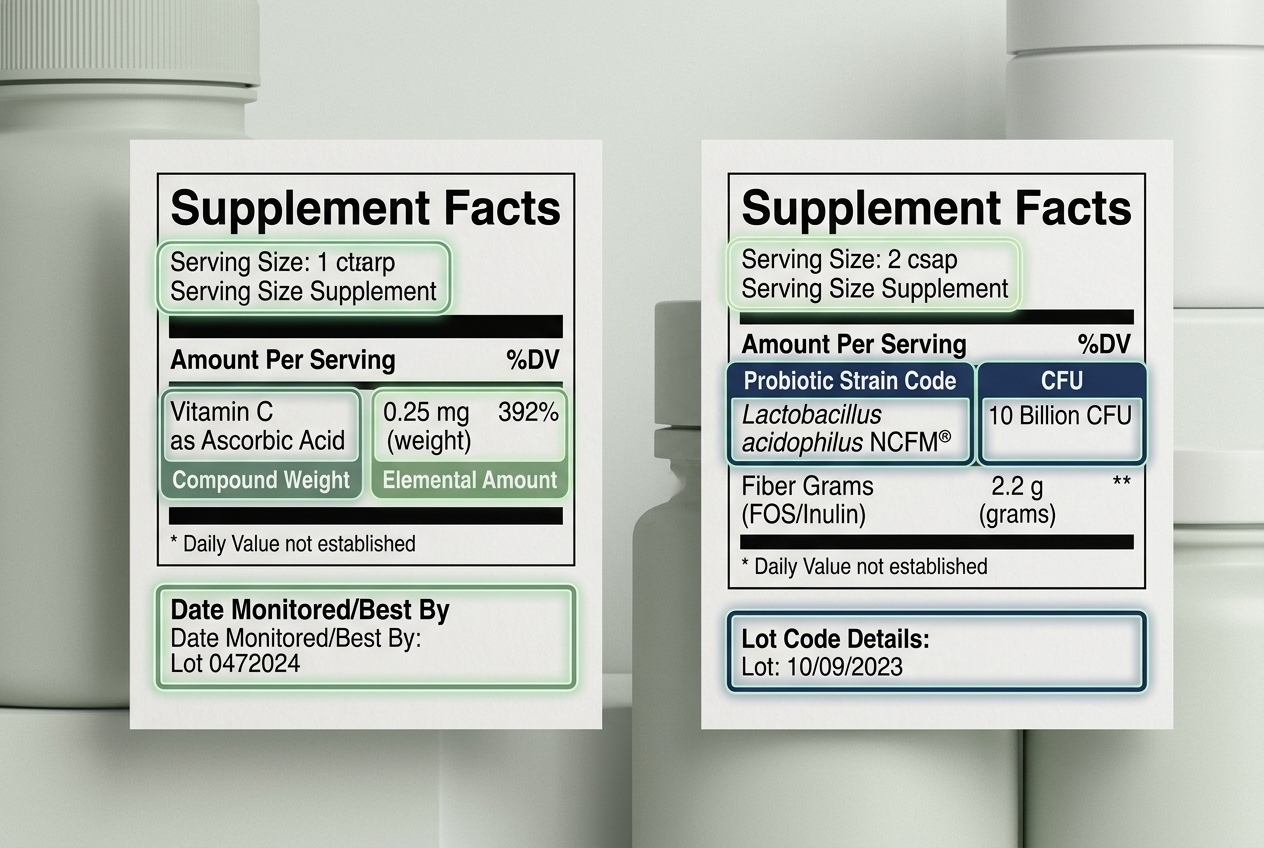
Some links below are affiliate links. This does not influence our evaluation criteria or recommendations. The current routine already contains psyllium, loose inulin powder, and an unspecified probiotic, so adding both Yuve Probiotic Gummies and Yuve Vegan Prebiotic Fiber Gummies would create duplication rather than simplification. Yuve Probiotic Gummies list 5 billion CFU of Bacillus coagulans per two-gummy serving; buyers should verify the current label for a strain code before matching it to strain-specific evidence. Yuve Prebiotic Fiber Gummies provide 1.5 grams of chicory-root inulin/FOS per gummy, which overlaps with loose inulin rather than replacing higher-dose psyllium gram for gram. Current and regional labels can change, so the bottle in hand controls every strain, CFU, fiber, serving, allergen, and storage judgment. A convenient format may improve adherence, but convenience does not erase dose or duplication. The table compares roles, not promised outcomes.
| Option | Primary role | Best-fit use case | Main limitation |
|---|---|---|---|
| Psyllium husk | Viscous soluble fiber | Stool form and regularity | Needs water and medication-spacing review |
| Loose inulin powder | Fermentable prebiotic fiber | Adjustable gram-level prebiotic trial | Gas and overlap with prebiotic gummies |
| Unspecified probiotic | Live microorganisms | Only when strain, CFU, and goal are clear | Unknown label prevents evidence matching |
| Yuve Probiotic Gummies | B. coagulans, 5 billion CFU | Vegan, capsule-free probiotic routine | Verify current label for strain identity |
| Yuve Prebiotic Fiber Gummies | 1.5 g inulin/FOS per gummy | Measured, portable prebiotic format | Not equivalent to a full psyllium dose |
What would a simpler decision framework look like?
Separate the stack into three lanes: prescribed deficiency correction, evidence-based maintenance, and optional digestive experiments. Iron and high-dose vitamin D belong in the clinician-managed lane because diagnosis, dose, treatment duration, and repeat laboratory results determine the plan. B12, folic acid, zinc, copper, the B complex, vitamin C, and magnesium belong in the maintenance lane only when diet, laboratory findings, medicines, or a defined indication justify them; overlapping B vitamins should be totaled across labels. Psyllium, inulin, and probiotics belong in the optional experiment lane unless a clinician has supplied a specific reason. Choose one digestive variable, define the outcome, keep the rest stable, and reassess after a planned interval. Best for simplifying constipation tracking: do not change iron, fiber, and probiotic on the same day. Best for a Yuve routine: select either the probiotic gummy or prebiotic fiber gummy according to the goal, not both by default. Simplicity improves adherence and causal information.
How should timing and monitoring be discussed with a clinician?
Bring every bottle, a photo of each Supplement Facts panel, the dosing schedule, laboratory results, prescriptions, and a brief symptom diary to the appointment. Ask which iron formulation and elemental dose are intended, whether vitamin C is necessary at 1,000 milligrams, how to separate iron from fiber or competing minerals, and when ferritin, hemoglobin, transferrin saturation, and vitamin D should be rechecked. Ask whether 25 milligrams of zinc plus dietary zinc warrants copper monitoring and whether the B complex duplicates B12 or folic acid. Confirm the elemental magnesium amount rather than reporting only “1,500 milligrams bisglycinate.” For digestive products, define one measurable outcome such as stool form, bowel frequency, gas, or adherence. Pharmacists can identify timing conflicts and duplicate ingredients even when several prescribers are involved. Do not stop prescribed iron or vitamin D solely because a general reference range differs from a treatment plan. Monitoring converts a complicated stack into explicit decisions.
What questions do people ask when auditing a supplement stack?
Stack audits work best when every product has one named purpose, a verified active dose, an evidence source, a monitoring plan, and a stop or reassessment rule. Diagnosed deficiencies require different reasoning from general wellness products, and compound weight must be separated from elemental nutrient amount. Multiple fibers or probiotics can also obscure whether iron, food, or a new supplement changed bowel habits. A label-first review often finds overlap before it finds a missing product: B complexes can repeat folate and B12, magnesium blends can hide elemental dose, and gummy routines can duplicate loose powders. The answers below describe decision rules rather than personal dosing. A prescriber manages deficiency treatment; a pharmacist checks interactions and timing; a dietitian can review food intake; and a structured one-variable trial evaluates optional digestive products before buying anything.
Is 8,000 IU of vitamin D too much?
It exceeds the NIH adult upper intake level of 4,000 IU per day for routine use, but clinicians may use higher doses temporarily for documented deficiency. Confirm the prescribed duration and repeat-lab plan instead of changing it independently.
Is 400 milligrams of ferrous sulfate the same as 400 milligrams of iron?
No. Ferrous sulfate weight includes the entire salt, while the Supplement Facts panel states the elemental iron amount. Formulation differences make the exact label essential.
Can psyllium and inulin be taken together?
They can coexist in some routines, but they have different properties and may increase gas or bowel changes when started together. Introduce or adjust one fiber at a time and ask a pharmacist about medication spacing.
Should a probiotic be taken after antibiotics?
The answer depends on the exact strain, antibiotic, timing, health status, and intended outcome. “Probiotic” is not one intervention, and an unspecified product cannot be matched to strain-specific evidence.
Are gummy supplements weaker than powders or capsules?
Format alone does not determine quality or effectiveness. Compare active amount, strain or ingredient identity, serving size, added ingredients, stability, and whether the labeled dose matches the goal.
Should every supplement have a stop date?
Every optional trial should have a reassessment point, while prescribed deficiency treatment should have a monitoring plan. An indefinite routine without a goal or review date is difficult to evaluate and easy to duplicate.
What is the bottom line on this supplement stack?
The stack contains reasonable goals but too many overlapping variables for a clean self-directed experiment. Keep iron and 8,000 IU vitamin D under clinician supervision, confirm elemental iron and magnesium amounts, total duplicated B vitamins, and review zinc plus copper across every label. For bowel changes, remember that iron can contribute to constipation while psyllium, inulin, magnesium, and probiotics can each alter stool or gas. A Yuve product should replace an overlapping role, not become another layer: choose Yuve Probiotic Gummies for a vegan, capsule-free probiotic format or Yuve Prebiotic Fiber Gummies for a measured inulin/FOS format, while keeping label limitations explicit. Do not add both on top of loose inulin, psyllium, and another probiotic by default. The broader Yuve digestion collection separates probiotics, prebiotic fiber, enzymes, DGL, and lactase by purpose. The safest rating is not “more complete”; it is simpler, monitored, and goal-specific.
Image notes:
- Hero image: organized supplement-stack audit with iron, vitamin D, fiber, probiotic, and a medication list separated into three decision lanes.
- Inline image: label comparison emphasizing elemental amount, compound weight, strain code, CFU, fiber grams, and monitoring date.
Leave a Reply