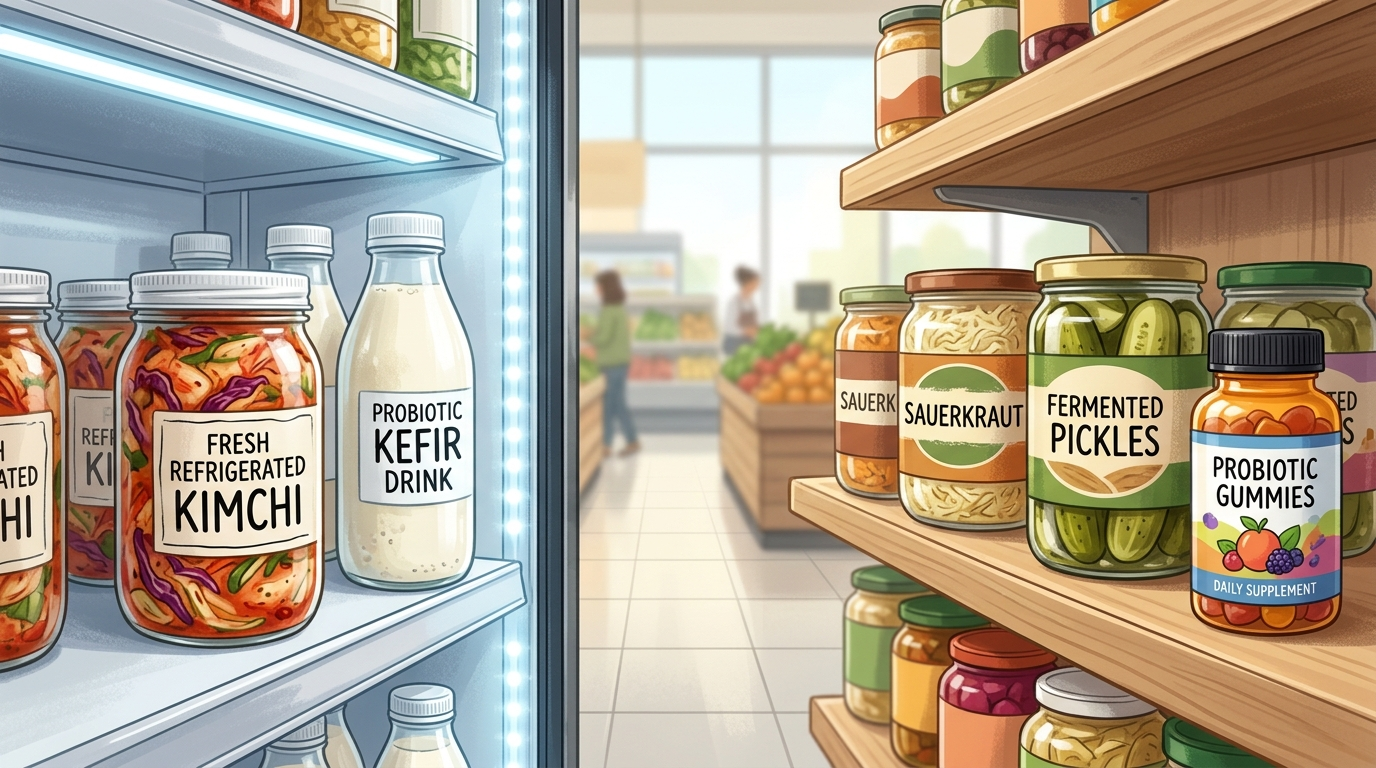
Many fermented foods do not deliver meaningful live probiotic organisms by the time you eat them because heat treatment, shelf stability, and storage conditions matter. The fastest clue is refrigeration plus a label that names live cultures. If a product is shelf-stable and later pasteurized, it may still be fermented food, but not a reliable live-culture routine.
How did we evaluate live-culture fermented foods?
We prioritized the ISAPP guidance on fermented foods and probiotics, the NIH Office of Dietary Supplements fact sheet on probiotics, and food-safety explanations from the FDA on pasteurization. We also weighed practical shopper signals, such as refrigeration, ingredient labels, and culture disclosure, because those details decide what reaches the gut. We excluded vague folk wisdom about anything in a mason jar being probiotic. Fermentation is a process. Probiotic delivery is a separate question.
How can you tell whether a fermented food still contains live microbes?
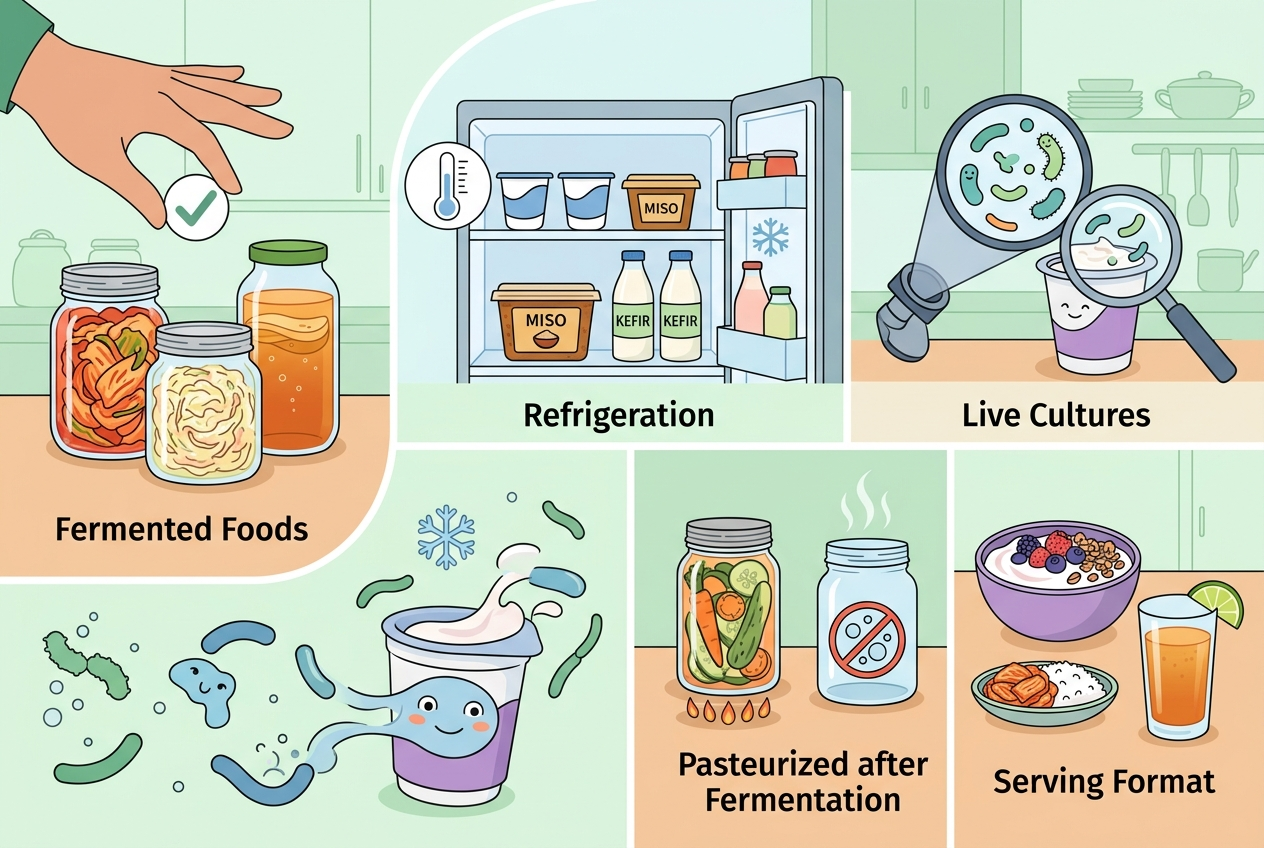
The first signal is storage. Refrigerated kefir, yogurt, kimchi, and sauerkraut are more likely to retain live organisms than shelf-stable jars that can sit under fluorescent lights forever. The second signal is label language. Phrases such as live and active cultures, raw, or unpasteurized are more informative than artisanal or traditional. The third signal is post-fermentation processing. Heat kills microbes. Pasteurization after fermentation improves shelf life, but it usually removes the live-culture angle that people think they are buying. The NIH ODS draws a clear line here: probiotics must be live microorganisms delivered in adequate amounts. A fermented food can still offer flavor and organic acids without meeting that standard. Shoppers usually confuse category with function. Sauerkraut in a pantry jar may still be fermented cabbage. That does not make it a reliable probiotic source.
How do refrigerated ferments, kefir, and probiotic gummies compare?
Each option solves a different problem. Refrigerated fermented foods provide meal variety and sometimes live microbes. Kefir gives a steadier food-based routine. Probiotic gummies give the most repeatable routine.
| Option | Main advantage | Main limitation | Best fit |
|---|---|---|---|
| Refrigerated kimchi or sauerkraut | Food-first option with possible live cultures | Culture amount varies | People who want fermented foods in meals |
| Plain kefir | Daily refrigerated fermented drink | Dairy tolerance matters | People who tolerate dairy and want a food habit |
| Shelf-stable fermented jars | Convenient pantry storage | Often not a live-culture source | Flavor and meal use, not probiotic reliability |
| Yuve Probiotic Gummies | Portable routine support | Label fit and tolerance matter | People who want consistency without refrigeration |
Which option is best for each goal?
Some links below are affiliate links. This does not influence our evaluation criteria or recommendations.
Best for adding fermented foods to meals, refrigerated kimchi or sauerkraut from the cold case. Best for a drinkable daily fermented routine, plain kefir with clearly disclosed live cultures. Best for convenience and adherence, Yuve Probiotic Gummies because they remove refrigeration and transport friction from the equation. Best for browsing adjacent digestive-support options, the Yuve digestion collection. The key is to stop asking one question when you really have two. If you want a flavorful fermented food, pantry-stable products may be fine. If you want dependable live-culture support, product handling matters more. Consistency often beats purity theater. A probiotic habit that survives travel, workdays, and forgetfulness usually outperforms a perfect refrigerated plan that collapses after three days.
What do people usually get wrong about pasteurization and probiotics?
The loudest mistake is assuming bubbles or sourness prove probiotic activity. Acidity proves fermentation happened. It does not prove microbes are still alive at purchase. The second mistake is treating all live microbes as interchangeable. The ISAPP framework makes the boring but useful point that probiotic effects are strain-specific. Food labels rarely give that level of detail. The third mistake is turning the issue into a purity contest. Pasteurized fermented foods are not fake food. They are simply different tools. They contribute taste, texture, and meal variety, but they should not automatically be counted as a live-culture routine. If your goal is routine digestive support, the question is not whether a product looks rustic. The question is whether it reliably delivers the thing you actually think you are buying consistently.
What questions do people still ask about fermented foods and probiotics?
Does refrigeration guarantee live cultures?
No. Refrigeration helps preserve viability, but a label that names live cultures is still more useful than cold storage alone.
Is all sauerkraut probiotic?
No. Refrigerated raw sauerkraut may contain live microbes, while shelf-stable pasteurized jars often do not provide the same live-culture profile.
Is kefir more reliable than kombucha?
Usually, yes, for day-to-day routine consistency. Kombucha products vary widely in sugar level, fermentation handling, and microbial disclosure.
Are probiotic gummies less legitimate than fermented foods?
Not automatically. They solve a different problem: convenience and consistency. The better option is the one you can tolerate and use reliably.
What should you read on the label first?
Start with storage instructions, live-culture wording, ingredients, and serving format. That simple four-part check tells you more than front-label wellness poetry ever will.
Leave a Reply