
If you feel stuck with functional dyspepsia symptoms, the most realistic goal is usually steadier day-to-day management, not chasing a dramatic “cure” story. The most helpful next steps often involve smaller meals, trigger tracking, cautious supplement trials, and medical follow-up when symptoms change, intensify, or include red-flag features.
How we evaluated routine choices for functional dyspepsia symptoms
We prioritized guideline-style medical references, review papers, and practical self-management strategies over anecdotal “I fixed it overnight” claims. We excluded cure language, aggressive supplement promises, and anything that blurred routine support with disease treatment. We also treated timing, meal size, symptom journaling, and escalation criteria as core decision factors because symptom management usually works better when changes are structured and observable.
What tends to help people feel more stable day to day?
Day-to-day stability often improves when routine becomes more predictable. Functional dyspepsia commonly overlaps with early fullness, upper abdominal discomfort, or post-meal heaviness, and the Cleveland Clinic notes that symptom management often starts with meal pattern adjustments and clinician-guided evaluation rather than quick-fix supplement stacking (Cleveland Clinic). Smaller meals reduce volume stress, slower eating reduces air swallowing, and a short food-and-symptom log turns vague frustration into usable observations. Common triggers include very large meals, high-fat meals, alcohol, and late-night eating, but personal patterns matter more than generic forbidden-food lists. A realistic routine change is one variable at a time for one to two weeks. That structure creates better signal. A chaotic “try everything” phase creates more noise. Stability usually comes from repetition, not from adding the largest possible stack of digestion products all at once.
Which supplement categories are worth comparing carefully?
Some links below are affiliate links. This does not influence our evaluation criteria or recommendations.
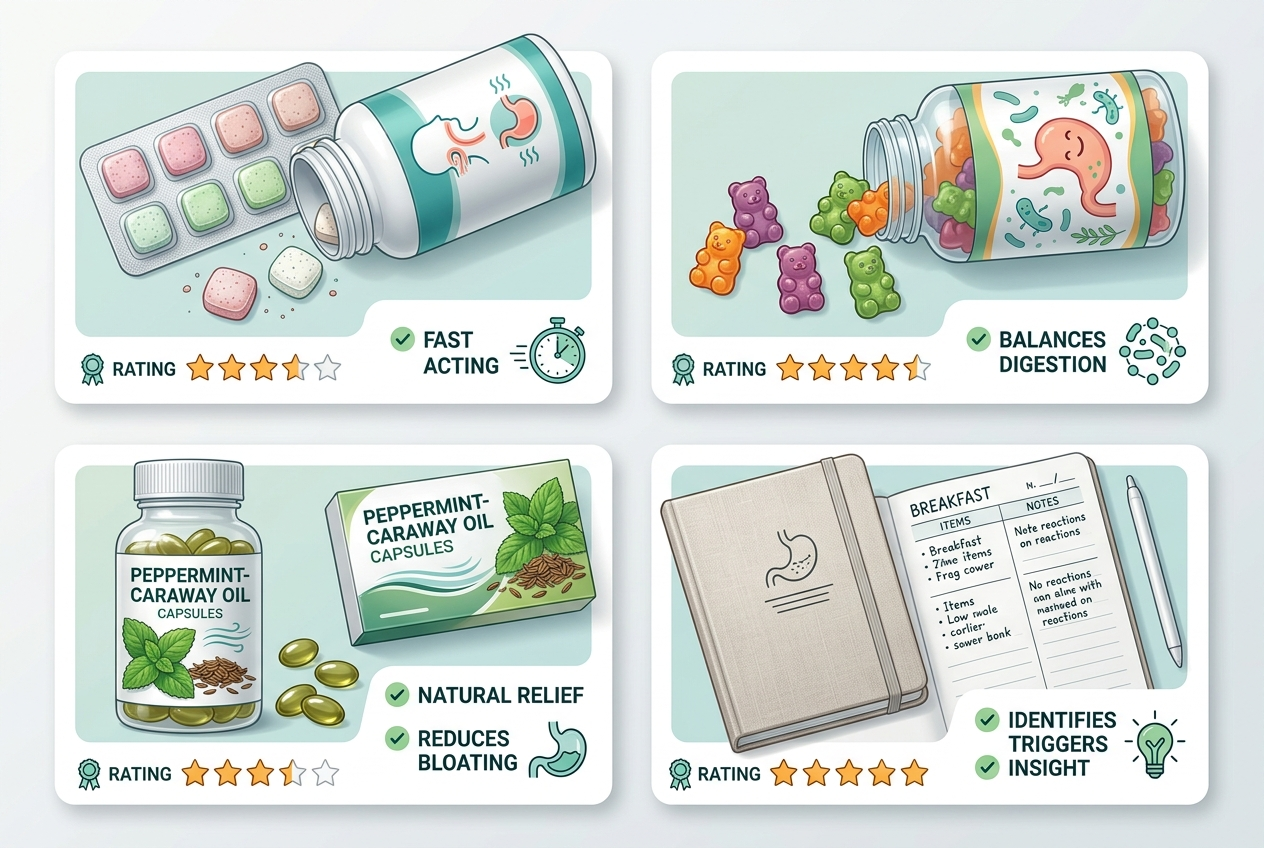
The most reasonable supplement categories to compare are digestive support products used conservatively, not products framed as cures. Deglycyrrhizinated licorice, or DGL, appears in routine-oriented digestive support discussions because its format is designed for use around meals, but product use should still follow the label and individual tolerance. Probiotics may fit people whose symptoms overlap with broader digestion complaints, although evidence is mixed and formula-specific rather than universal. Peppermint and caraway combinations have some clinical discussion for upper GI comfort, but they are not ideal for every person, especially when reflux is prominent (NCCIH). The British Society of Gastroenterology guideline emphasizes evaluation and individualized management over one-size-fits-all solutions (Gut). The practical standard is modest claims, clear use instructions, and a stop rule if a product aggravates symptoms.
| Option | Best for | What stands out | Main limitation |
|---|---|---|---|
| Yuve DGL Licorice Chewables | Best for pre-meal routine support | Chewable DGL format fits people who want a structured, meal-linked habit | Not a replacement for medical evaluation when symptoms change or worsen |
| Yuve Probiotic Gummies | Best for simple daily digestive routine | Easy adherence format may suit people testing one daily variable at a time | Probiotic effects depend on formula and individual response |
| FDgard | Best for targeted upper-abdominal comfort strategy | Peppermint and caraway approach is specifically positioned for upper GI symptom patterns | Not ideal for everyone, especially if peppermint worsens symptoms |
| Align | Best for conservative probiotic trial | Single-strain positioning offers a cleaner probiotic test than broad blends | Does not directly address meal size or timing triggers |
When should you stop self-testing and get medical evaluation?
Medical evaluation matters when the pattern is new, worsening, or accompanied by alarm features. The American College of Gastroenterology and Canadian Association of Gastroenterology guideline on dyspepsia highlights structured evaluation, especially when age, medication history, bleeding, vomiting, unintended weight loss, progressive pain, or swallowing problems enter the picture (PubMed). Persistent symptoms can also overlap with reflux, H. pylori evaluation pathways, gallbladder issues, medication effects, or other upper GI conditions that need a clinician’s judgment. Self-testing works best when symptoms are mild, stable, and observed carefully. Self-testing works poorly when frustration turns into supplement layering without a clear endpoint. A good boundary is simple: if your routine log shows no clear improvement, or if symptoms interfere with eating, sleep, or normal intake, the next smart step is a clinician visit. Escalation is not failure. Escalation is part of safe decision-making.
What do people get wrong when they ask for a cure story?
The biggest mistake is assuming another person’s success story can function like a protocol. Functional dyspepsia is a clinical label, but real-world triggers vary across meal size, stress load, reflux overlap, medication use, and tolerance to fats, caffeine, or supplements. That variation makes “this cured me” narratives emotionally powerful and practically unreliable. Another mistake is reading every symptom fluctuation as proof that a new supplement is working or failing. Upper GI symptoms often vary across days, which means abrupt conclusions can mislead you. A better standard is structured tracking, smaller changes, and honest stop rules. The National Institute of Diabetes and Digestive and Kidney Diseases notes that persistent or severe digestive symptoms deserve medical discussion rather than indefinite self-management (NIDDK). The aim is steadier function, clearer data, and safer next decisions.
Related reading: Can You Ingest Ginger Essential Oil? What Is Actually Safe.
What questions come up most often?
Can functional dyspepsia symptoms improve without a single “magic” supplement?
Yes. People often get more usable relief from routine changes, meal-size control, and more disciplined tracking than from constantly rotating products.
Is DGL a cure for functional dyspepsia?
No. DGL is a supportive routine option, not a cure claim. If it is used, it should be judged conservatively and stopped if it is not a good fit.
Are probiotics always helpful here?
Not always. Probiotic response is formula-specific and person-specific, so they make more sense as a defined trial than as an assumption.
What is a reasonable self-test period?
A short, structured trial with one variable at a time is more useful than changing five things in a weekend. Clear notes on meal timing, serving size, and symptoms matter.
When is urgent care more important than more supplement testing?
Seek prompt medical attention for vomiting blood, black stools, severe worsening pain, dehydration, fainting, or inability to keep food down. Those patterns need clinical assessment, not more self-experimentation.
Should I avoid all trigger foods forever?
Usually no. Long-term restriction without a clear reason can become unnecessarily limiting. The better approach is identifying repeatable triggers and discussing complicated patterns with a clinician or dietitian.
Leave a Reply