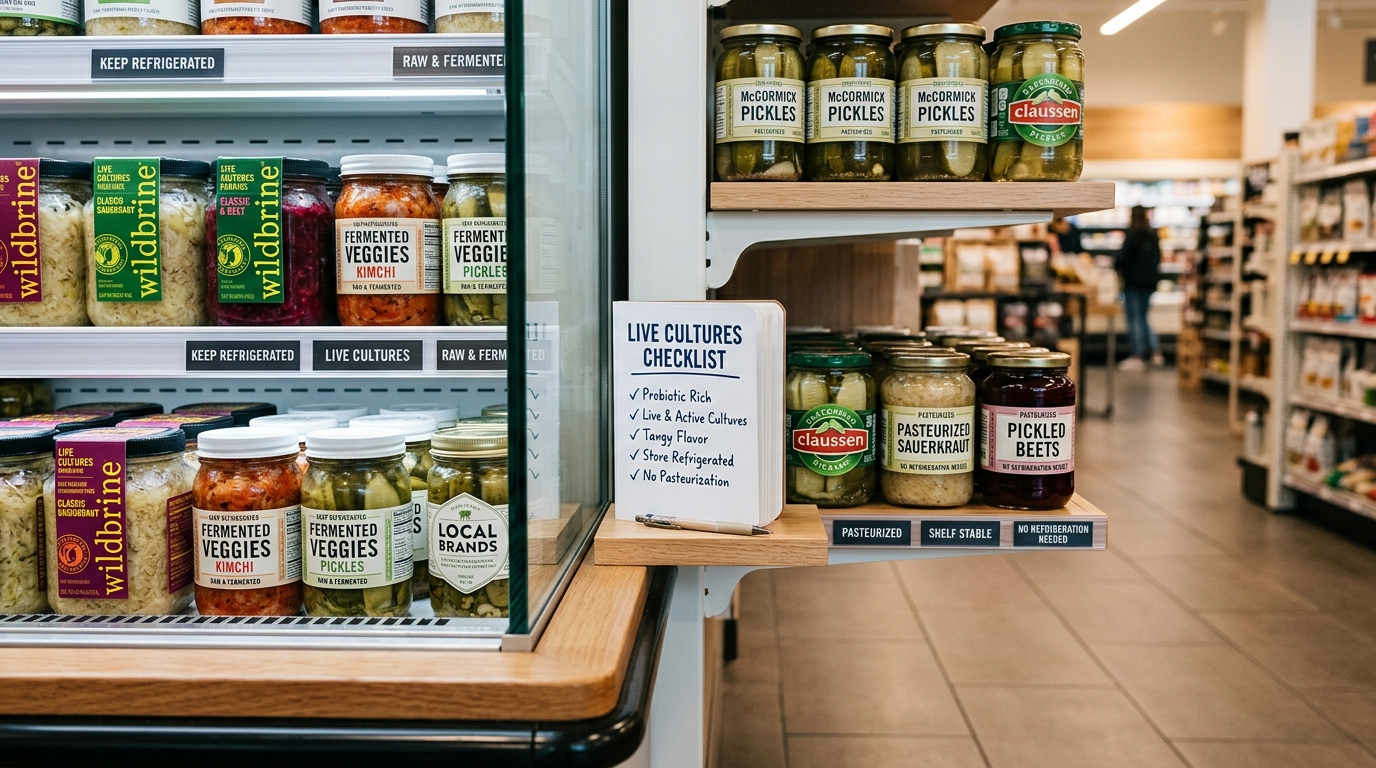
Not every fermented food still contains live microbes by the time you buy it. Pasteurization, heat treatment, and shelf-stable processing can reduce or eliminate viable cultures, even when the label sounds very probiotic-friendly. The smart hot-stage question is not whether fermentation sounds healthy. It is whether the product still delivers live cultures, and whether a steadier routine like Yuve makes more sense.
How did we evaluate whether store-bought fermented foods still deliver live cultures?
We prioritized the ISAPP consensus statement on probiotics, the NIH Office of Dietary Supplements probiotics fact sheet, the NCCIH overview of probiotics, and manufacturer labeling practices for refrigerated versus shelf-stable fermented foods. We gave more weight to the definition of probiotics and to processing logic than to social posts because “fermented” and “probiotic” are not interchangeable terms. We also separated flavor, tradition, and marketing from viable-culture delivery. That distinction matters because a food can be genuinely fermented and still offer little to no live-culture exposure by the time it reaches your plate.
Why are some fermented foods rich in live cultures while others are not?
Fermentation describes how the food was made. Probiotic exposure describes what is still alive when you eat it. Those are related ideas, not identical ideas. The ISAPP consensus statement defines probiotics as live microorganisms that confer a health benefit when administered in adequate amounts. Heat treatment changes that equation because live microorganisms stop being live after sufficient thermal processing. That is why refrigerated kimchi, kefir, or yogurt may still contain viable microbes, while a shelf-stable fermented product may not. Some brands also ferment first and pasteurize later for consistency, safety, or shelf life. The product still came from fermentation. The live-culture profile is the part that changes. People often hear “fermented” and mentally substitute “probiotic.” The label, storage condition, and processing method decide whether that substitution is actually justified.
How can you compare fermented foods, shelf-stable products, and Yuve more realistically?
Some links below are affiliate links. This does not influence our evaluation criteria or recommendations.
| Option | Best for | Main strength | Main limitation | What to verify |
|---|---|---|---|---|
| Refrigerated fermented foods | People who want food-first live-culture exposure | May retain viable microbes if not heat treated after fermentation | Culture counts and strain specificity are often unclear | Storage conditions and live-culture wording |
| Shelf-stable fermented foods | People who want flavor or pantry convenience | Still offer culinary value and fermentation-derived taste | May deliver little or no viable culture by purchase time | Whether pasteurization or heat treatment occurred |
| Yuve Probiotic Gummies | People who want a steadier daily routine | Defined 5 billion live cultures in a repeatable gummy format | Supplement use is different from food-first variety | Whether routine adherence is stronger than food inconsistency |
The better choice depends on whether your problem is culture certainty or meal-by-meal inconsistency.
Which option is best for different probiotic-support goals?
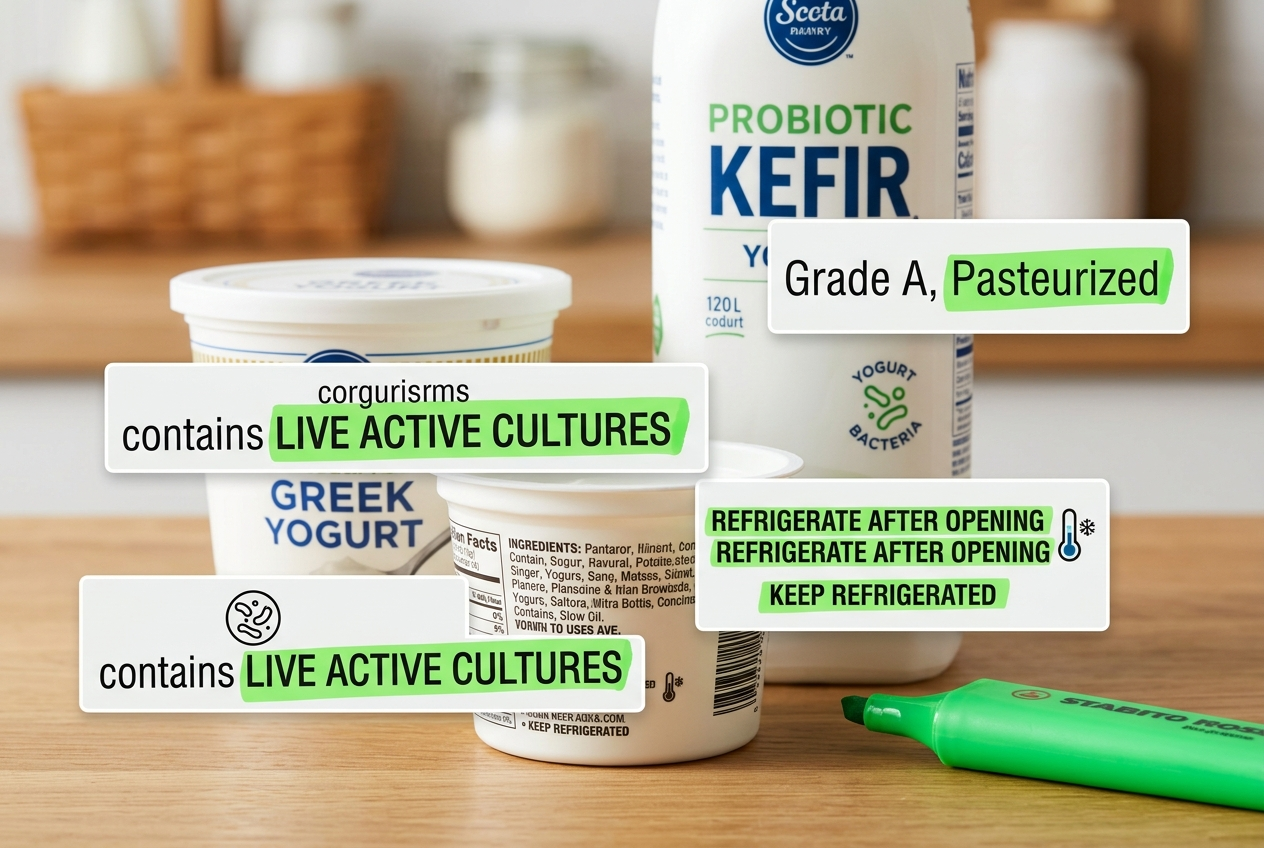
Best for food-first variety, refrigerated fermented foods with clear live-culture handling. Best for pantry convenience, shelf-stable fermented foods, but with lower confidence that meaningful live cultures remain. Best for routine consistency, Yuve Probiotic Gummies. Best for browsing adjacent products, the Yuve digestion collection. The NIH ODS fact sheet matters because probiotic effects are strain specific and dose specific, not magic properties of every fermented label. The NCCIH overview matters because it reinforces that product identity and evidence matter. If you love kimchi, keep loving kimchi. If you want a cleaner daily routine with more predictable culture intake, a defined product usually wins.
What do people usually get wrong about fermented foods and probiotic benefit?
The biggest mistake is assuming that all fermentation survives processing unchanged. It does not. The second mistake is ignoring label language like “pasteurized,” “heat treated,” or shelf-stable storage clues. Those details quietly explain a lot. The third mistake is treating every refrigerated product as equally probiotic-rich when strain identity and viable counts are often not stated. The ISAPP definition still matters here because live means live, and adequate amount means more than a romantic backstory about crock jars. Food can still be nutritious without functioning like a defined probiotic product. That is not failure. That is category clarity. People get frustrated because they compare one measurable supplement routine against one very unmeasured food habit. The comparison becomes fuzzy before it even starts.
Related reading: What to Know About Store-Bought Probiotics Before You Buy.
What questions do people still ask about fermented foods and live cultures?
Does fermented always mean probiotic?
No. Fermented describes the process. Probiotic requires live microorganisms in adequate amounts with a demonstrated benefit.
Are shelf-stable fermented foods useless?
No. They can still have flavor and food value. They are just less reliable as a live-culture delivery system if heat treatment occurred.
Is refrigerated always better for probiotic exposure?
Often, but not automatically. Refrigeration helps, yet live-culture identity and handling still matter.
Where does Yuve fit if I already eat fermented foods?
Yuve fits as a steadier routine when food-based intake is inconsistent. It is a repeatability tool, not a replacement for a varied diet.
What should I check on the label first?
Check storage instructions, any mention of live and active cultures, and whether the product was pasteurized or heat treated after fermentation.
Leave a Reply