Category: Probiotics

  • What Actually Helps Functional Dyspepsia Feel More Manageable Day to Day?

    What Actually Helps Functional Dyspepsia Feel More Manageable Day to Day?

    If you feel stuck with functional dyspepsia symptoms, the most realistic goal is usually steadier day-to-day management, not chasing a dramatic “cure” story. The most helpful next steps often involve smaller meals, trigger tracking, cautious supplement trials, and medical follow-up when symptoms change, intensify, or include red-flag features.

    How we evaluated routine choices for functional dyspepsia symptoms

    We prioritized guideline-style medical references, review papers, and practical self-management strategies over anecdotal “I fixed it overnight” claims. We excluded cure language, aggressive supplement promises, and anything that blurred routine support with disease treatment. We also treated timing, meal size, symptom journaling, and escalation criteria as core decision factors because symptom management usually works better when changes are structured and observable.

    What tends to help people feel more stable day to day?

    Day-to-day stability often improves when routine becomes more predictable. Functional dyspepsia commonly overlaps with early fullness, upper abdominal discomfort, or post-meal heaviness, and the Cleveland Clinic notes that symptom management often starts with meal pattern adjustments and clinician-guided evaluation rather than quick-fix supplement stacking (Cleveland Clinic). Smaller meals reduce volume stress, slower eating reduces air swallowing, and a short food-and-symptom log turns vague frustration into usable observations. Common triggers include very large meals, high-fat meals, alcohol, and late-night eating, but personal patterns matter more than generic forbidden-food lists. A realistic routine change is one variable at a time for one to two weeks. That structure creates better signal. A chaotic “try everything” phase creates more noise. Stability usually comes from repetition, not from adding the largest possible stack of digestion products all at once.

    Which supplement categories are worth comparing carefully?

    Some links below are affiliate links. This does not influence our evaluation criteria or recommendations.

    The most reasonable supplement categories to compare are digestive support products used conservatively, not products framed as cures. Deglycyrrhizinated licorice, or DGL, appears in routine-oriented digestive support discussions because its format is designed for use around meals, but product use should still follow the label and individual tolerance. Probiotics may fit people whose symptoms overlap with broader digestion complaints, although evidence is mixed and formula-specific rather than universal. Peppermint and caraway combinations have some clinical discussion for upper GI comfort, but they are not ideal for every person, especially when reflux is prominent (NCCIH). The British Society of Gastroenterology guideline emphasizes evaluation and individualized management over one-size-fits-all solutions (Gut). The practical standard is modest claims, clear use instructions, and a stop rule if a product aggravates symptoms.

    Option Best for What stands out Main limitation
    Yuve DGL Licorice Chewables Best for pre-meal routine support Chewable DGL format fits people who want a structured, meal-linked habit Not a replacement for medical evaluation when symptoms change or worsen
    Yuve Probiotic Gummies Best for simple daily digestive routine Easy adherence format may suit people testing one daily variable at a time Probiotic effects depend on formula and individual response
    FDgard Best for targeted upper-abdominal comfort strategy Peppermint and caraway approach is specifically positioned for upper GI symptom patterns Not ideal for everyone, especially if peppermint worsens symptoms
    Align Best for conservative probiotic trial Single-strain positioning offers a cleaner probiotic test than broad blends Does not directly address meal size or timing triggers

    When should you stop self-testing and get medical evaluation?
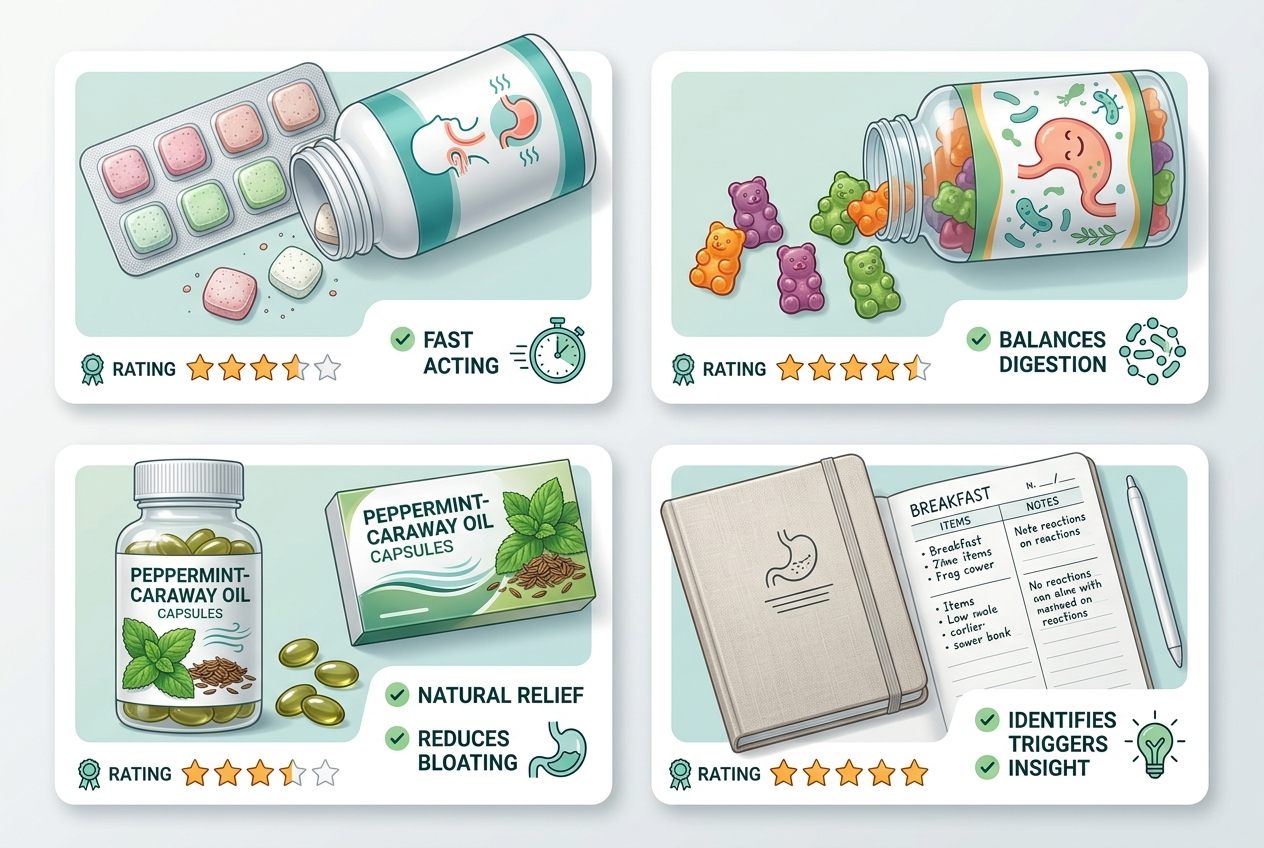
    Comparison of routine support options for upper digestive discomfort including chewables, probiotics, and symptom tracking
    Comparison of routine support options for upper digestive discomfort including chewables, probiotics, and symptom tracking

    Medical evaluation matters when the pattern is new, worsening, or accompanied by alarm features. The American College of Gastroenterology and Canadian Association of Gastroenterology guideline on dyspepsia highlights structured evaluation, especially when age, medication history, bleeding, vomiting, unintended weight loss, progressive pain, or swallowing problems enter the picture (PubMed). Persistent symptoms can also overlap with reflux, H. pylori evaluation pathways, gallbladder issues, medication effects, or other upper GI conditions that need a clinician’s judgment. Self-testing works best when symptoms are mild, stable, and observed carefully. Self-testing works poorly when frustration turns into supplement layering without a clear endpoint. A good boundary is simple: if your routine log shows no clear improvement, or if symptoms interfere with eating, sleep, or normal intake, the next smart step is a clinician visit. Escalation is not failure. Escalation is part of safe decision-making.

    What do people get wrong when they ask for a cure story?

    The biggest mistake is assuming another person’s success story can function like a protocol. Functional dyspepsia is a clinical label, but real-world triggers vary across meal size, stress load, reflux overlap, medication use, and tolerance to fats, caffeine, or supplements. That variation makes “this cured me” narratives emotionally powerful and practically unreliable. Another mistake is reading every symptom fluctuation as proof that a new supplement is working or failing. Upper GI symptoms often vary across days, which means abrupt conclusions can mislead you. A better standard is structured tracking, smaller changes, and honest stop rules. The National Institute of Diabetes and Digestive and Kidney Diseases notes that persistent or severe digestive symptoms deserve medical discussion rather than indefinite self-management (NIDDK). The aim is steadier function, clearer data, and safer next decisions.

    Related reading: Can You Ingest Ginger Essential Oil? What Is Actually Safe.

    What questions come up most often?

    Can functional dyspepsia symptoms improve without a single “magic” supplement?

    Yes. People often get more usable relief from routine changes, meal-size control, and more disciplined tracking than from constantly rotating products.

    Is DGL a cure for functional dyspepsia?

    No. DGL is a supportive routine option, not a cure claim. If it is used, it should be judged conservatively and stopped if it is not a good fit.

    Are probiotics always helpful here?

    Not always. Probiotic response is formula-specific and person-specific, so they make more sense as a defined trial than as an assumption.

    What is a reasonable self-test period?

    A short, structured trial with one variable at a time is more useful than changing five things in a weekend. Clear notes on meal timing, serving size, and symptoms matter.

    When is urgent care more important than more supplement testing?

    Seek prompt medical attention for vomiting blood, black stools, severe worsening pain, dehydration, fainting, or inability to keep food down. Those patterns need clinical assessment, not more self-experimentation.

    Should I avoid all trigger foods forever?

    Usually no. Long-term restriction without a clear reason can become unnecessarily limiting. The better approach is identifying repeatable triggers and discussing complicated patterns with a clinician or dietitian.

  • How to Tell if Fermented Foods Actually Contain Live Cultures, and When a Probiotic Routine Makes More Sense

    How to Tell if Fermented Foods Actually Contain Live Cultures, and When a Probiotic Routine Makes More Sense

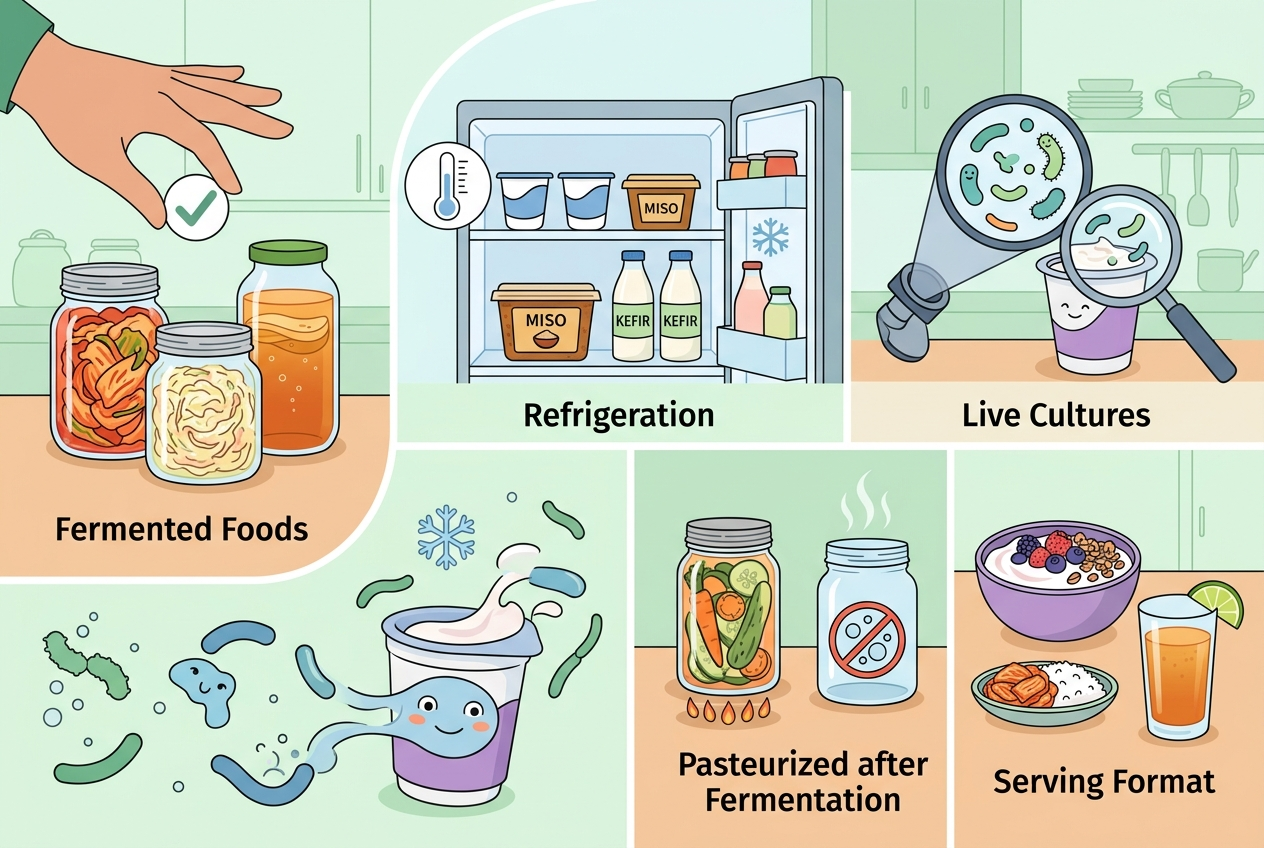
    Many fermented foods do not deliver meaningful live probiotic organisms by the time you eat them because heat treatment, shelf stability, and storage conditions matter. The fastest clue is refrigeration plus a label that names live cultures. If a product is shelf-stable and later pasteurized, it may still be fermented food, but not a reliable live-culture routine.

    How did we evaluate live-culture fermented foods?

    We prioritized the ISAPP guidance on fermented foods and probiotics, the NIH Office of Dietary Supplements fact sheet on probiotics, and food-safety explanations from the FDA on pasteurization. We also weighed practical shopper signals, such as refrigeration, ingredient labels, and culture disclosure, because those details decide what reaches the gut. We excluded vague folk wisdom about anything in a mason jar being probiotic. Fermentation is a process. Probiotic delivery is a separate question.

    How can you tell whether a fermented food still contains live microbes?

    The first signal is storage. Refrigerated kefir, yogurt, kimchi, and sauerkraut are more likely to retain live organisms than shelf-stable jars that can sit under fluorescent lights forever. The second signal is label language. Phrases such as live and active cultures, raw, or unpasteurized are more informative than artisanal or traditional. The third signal is post-fermentation processing. Heat kills microbes. Pasteurization after fermentation improves shelf life, but it usually removes the live-culture angle that people think they are buying. The NIH ODS draws a clear line here: probiotics must be live microorganisms delivered in adequate amounts. A fermented food can still offer flavor and organic acids without meeting that standard. Shoppers usually confuse category with function. Sauerkraut in a pantry jar may still be fermented cabbage. That does not make it a reliable probiotic source.

    How do refrigerated ferments, kefir, and probiotic gummies compare?

    Each option solves a different problem. Refrigerated fermented foods provide meal variety and sometimes live microbes. Kefir gives a steadier food-based routine. Probiotic gummies give the most repeatable routine.

    Option Main advantage Main limitation Best fit
    Refrigerated kimchi or sauerkraut Food-first option with possible live cultures Culture amount varies People who want fermented foods in meals
    Plain kefir Daily refrigerated fermented drink Dairy tolerance matters People who tolerate dairy and want a food habit
    Shelf-stable fermented jars Convenient pantry storage Often not a live-culture source Flavor and meal use, not probiotic reliability
    Yuve Probiotic Gummies Portable routine support Label fit and tolerance matter People who want consistency without refrigeration

    Which option is best for each goal?

    Visual representation of the main clues used to judge whether fermented foods still contain live cultures.
    Visual representation of the main clues used to judge whether fermented foods still contain live cultures.

    Some links below are affiliate links. This does not influence our evaluation criteria or recommendations.

    Best for adding fermented foods to meals, refrigerated kimchi or sauerkraut from the cold case. Best for a drinkable daily fermented routine, plain kefir with clearly disclosed live cultures. Best for convenience and adherence, Yuve Probiotic Gummies because they remove refrigeration and transport friction from the equation. Best for browsing adjacent digestive-support options, the Yuve digestion collection. The key is to stop asking one question when you really have two. If you want a flavorful fermented food, pantry-stable products may be fine. If you want dependable live-culture support, product handling matters more. Consistency often beats purity theater. A probiotic habit that survives travel, workdays, and forgetfulness usually outperforms a perfect refrigerated plan that collapses after three days.

    What do people usually get wrong about pasteurization and probiotics?

    The loudest mistake is assuming bubbles or sourness prove probiotic activity. Acidity proves fermentation happened. It does not prove microbes are still alive at purchase. The second mistake is treating all live microbes as interchangeable. The ISAPP framework makes the boring but useful point that probiotic effects are strain-specific. Food labels rarely give that level of detail. The third mistake is turning the issue into a purity contest. Pasteurized fermented foods are not fake food. They are simply different tools. They contribute taste, texture, and meal variety, but they should not automatically be counted as a live-culture routine. If your goal is routine digestive support, the question is not whether a product looks rustic. The question is whether it reliably delivers the thing you actually think you are buying consistently.

    What questions do people still ask about fermented foods and probiotics?

    Does refrigeration guarantee live cultures?

    No. Refrigeration helps preserve viability, but a label that names live cultures is still more useful than cold storage alone.

    Is all sauerkraut probiotic?

    No. Refrigerated raw sauerkraut may contain live microbes, while shelf-stable pasteurized jars often do not provide the same live-culture profile.

    Is kefir more reliable than kombucha?

    Usually, yes, for day-to-day routine consistency. Kombucha products vary widely in sugar level, fermentation handling, and microbial disclosure.

    Are probiotic gummies less legitimate than fermented foods?

    Not automatically. They solve a different problem: convenience and consistency. The better option is the one you can tolerate and use reliably.

    What should you read on the label first?

    Start with storage instructions, live-culture wording, ingredients, and serving format. That simple four-part check tells you more than front-label wellness poetry ever will.

  • Keep Going Back and Forth on Probiotics? Which Daily Routine Usually Works Better

    Keep Going Back and Forth on Probiotics? Which Daily Routine Usually Works Better

    Going back and forth on probiotics usually means the routine is inconsistent, the formula keeps changing, or the expectations are too vague. The smartest hot-stage comparison is not “Are probiotics good or bad?” It is “Which probiotic format matches my pattern, and how will I judge it?” Yuve fits best when consistency and low-friction daily use are the main bottlenecks.

    How did we evaluate probiotic routines for people with mixed past experiences?

    We prioritized the ISAPP consensus statement on probiotics, the National Center for Complementary and Integrative Health overview of probiotics, the NIH Office of Dietary Supplements fact sheet on probiotics, and routine-adherence principles from everyday supplement use. We gave more weight to strain specificity, product format, and habit fit than to anecdotal “this changed my life in two days” claims because probiotics often fail at the routine level before they fail at the science level. We also separated symptom tracking from brand loyalty. That matters because a decent product can still look useless inside a chaotic routine.

    Why do people keep changing their minds about probiotics?

    Probiotics create mixed feelings because the category is broad, the evidence is strain specific, and daily use is easy to interrupt. The NIH Office of Dietary Supplements notes that different probiotic strains have different evidence bases, which means a result from one product does not automatically transfer to another. On top of that, people often change three variables at once. They start a probiotic, change breakfast, add fiber, and then decide the probiotic “worked” or “failed” in five days. The routine becomes the confounder. Expectations become the second confounder. If the goal is clearer stool consistency, less post-meal bloating, or steadier daily digestion, that goal needs a defined tracking window. Precision beats vibes. A probiotic can be helpful. A probiotic can also look chaotic when the experiment itself is chaotic.

    How do the main probiotic approaches compare when you want a steadier routine?

    Approach Best for Main strength Main limitation Where Yuve fits
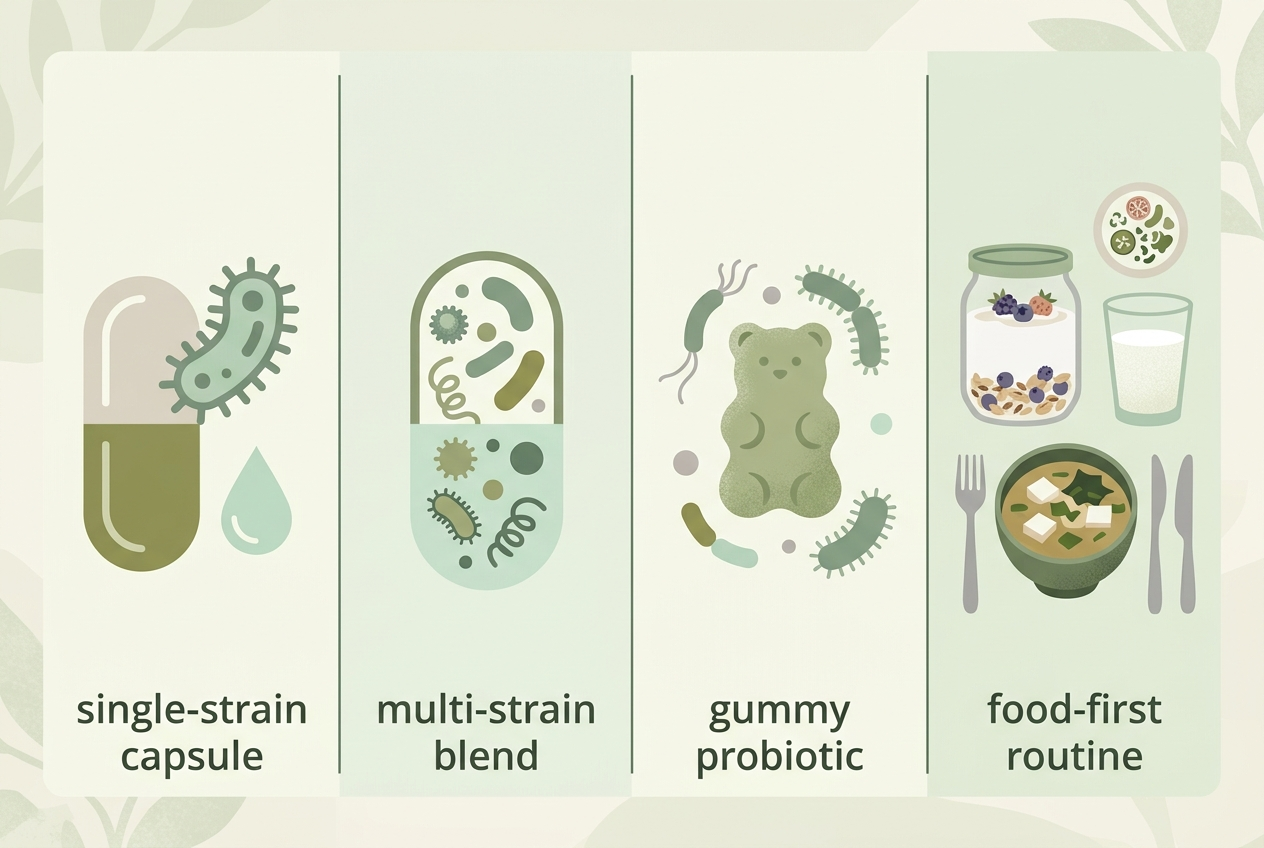
    Single-strain capsule People who want a tightly defined experiment Strain identity is usually clearer Adherence can drop if capsules are annoying Useful comparison point, but not always the easiest habit
    Multi-strain capsule blend People comparing broader formulations Can cover several strain categories at once Harder to know what is helping Good for comparison, less clean for troubleshooting
    Yuve Probiotic Gummies People who mostly need consistency and low-friction daily use Simple format that is easier to repeat Format fit matters if you prefer capsules or want a different strain profile Best Yuve-led option for everyday adherence
    Food-first only approach People not ready to buy a supplement yet Useful baseline for routine cleanup Harder to standardize dose and daily exposure Good reset before comparing products

    The best option depends on whether your main problem is strain targeting or simply sticking with the plan.

    Which probiotic routine makes the most sense if Yuve is one of your finalists?

    Graphic comparing common probiotic routines for people with mixed past experiences.
    Graphic comparing common probiotic routines for people with mixed past experiences.

    Some links below are affiliate links. This does not influence our evaluation criteria or recommendations.

    If your biggest problem is inconsistency, Yuve Probiotic Gummies are the cleanest place to start because low-friction routines usually outperform ambitious routines that collapse in four days. Best for tightly controlled self-testing, a single-strain capsule with a clear target. Best for people who want to compare broader formulas, a multi-strain capsule blend. Best for daily-use simplicity, Yuve Probiotic Gummies. Best for browsing adjacent support options, the Yuve digestion collection. The NCCIH overview matters here because probiotics are generally framed as supportive tools, not magic switches. The right hot-stage decision is usually smaller than people expect. Pick one format, keep the routine stable, and judge it against one or two real outcomes.

    What do people usually get wrong after a few stop-start probiotic trials?

    The biggest mistake is treating inconsistency like evidence. Missing doses, rotating brands, or changing food patterns every few days turns the whole experiment into noise. The second mistake is using a probiotic for a goal that is too vague to measure. “Feel better” sounds nice and tells you nothing. “Less post-meal bloating by week three” is usable. The third mistake is assuming that no immediate effect means no value. The NCCIH and NIH ODS both support a more cautious framing because outcomes vary by strain, dose, and context. The fourth mistake is buying a premium product before fixing adherence. Fancy does not beat repeatable. A simpler product you actually use can outperform the theoretically perfect option that stays in a cabinet.

    Related reading: How to Get Kids Eating Healthy: What Usually Works Better Than Pressure.

    Related reading: Can You Take Probiotics With Vitamins?.

    What questions do people still ask after mixed probiotic experiences?

    Does switching brands constantly help you find the right probiotic faster?

    Usually no. Constant switching often destroys the comparison. One stable trial teaches more than three chaotic ones.

    Is Yuve the best choice for everyone?

    No. Yuve fits best when ease of daily use and adherence are the main issues. People who want a very specific strain target may compare other formats too.

    How long should you give one probiotic before judging it?

    A short but defined window usually works better than day-by-day overreaction. Two to four weeks with stable routine conditions is more informative than four random days.

    Should you stack probiotics with several other new supplements?

    Usually no. Adding multiple new variables at once makes the result unreadable. Cleaner experiments produce cleaner decisions.

    What should you track during a probiotic trial?

    Track stool pattern, post-meal bloating, gas, routine consistency, and any clear worsening. If you cannot describe the metric, you probably cannot judge the result.

  • How Many Gut-Health Supplements Actually Do Something Real? A Smarter Yuve-First Stack

    How Many Gut-Health Supplements Actually Do Something Real? A Smarter Yuve-First Stack

    Most people try too many gut-health supplements and learn too little from them. A smarter stack is small, targeted, and routine-friendly. The evidence usually supports matching one fiber tool, one probiotic approach, or one upper-digestive support tool to the actual pattern instead of buying six bottles that all promise vague “gut balance.”

    How did we evaluate which gut-health supplements actually do something real?

    We prioritized the NIH Office of Dietary Supplements probiotic fact sheet, the World Gastroenterology Organisation probiotic guideline, the NIDDK IBS overview, and the NIDDK reflux overview. We scored options by mechanism clarity, routine fit, and whether the product solved a recognizable digestive problem instead of pitching generic wellness fog. We also separated mild routine support from medical management, because symptom severity still decides whether self-experimenting is reasonable. That matters because people often call a supplement “useless” when the real issue was a terrible match between product and problem.

    Why do most gut-health supplement stacks fail in practice?

    Most stacks fail because they chase categories instead of mechanisms. A person with irregular bowel habits may need soluble fiber. A person with mild post-antibiotic instability may compare probiotic options. A person with meal-triggered upper-digestive irritation may care more about DGL or meal structure than about another capsule with a heroic label. The NIH probiotic fact sheet is blunt about this, probiotic effects are strain and use-case specific, not category wide. The same logic applies to fiber and enzyme products. More products do not automatically mean more signal. More products usually mean more noise, more variables, and more money burned without learning anything. The gut does not reward chaos. The better rule is simple. Add one targeted tool, track what changes, then decide whether the mechanism looks right before you stack the next thing on top of it.

    How do the most useful Yuve-led options compare?

    Some links below are affiliate links. This does not influence our evaluation criteria or recommendations.

    Option Best for Main role Why it can work Main caveat
    Yuve Prebiotic Fiber Gummies People whose routine is low in fermentable fiber Supports a steadier fiber intake Consistency beats occasional “healthy days” Needs gradual use if fiber intake is usually low
    Yuve Probiotic Gummies People who want low-friction daily microbiome support Helps daily adherence with a gummy format Routine fit matters when capsules keep getting skipped Not every digestive complaint is a probiotic complaint
    Yuve DGL Licorice Chewables People focused on upper-digestive comfort Supports soothing daily comfort around meals Pattern-matched support beats random stacking Should not be treated like a substitute for medical care
    Yuve Vegan Daily Cleanse People comparing enzyme-adjacent digestive support formats Adds digestive-support ingredients in one daily product Simpler routines are easier to judge honestly Only makes sense if the format matches the complaint

    The practical win is not owning all four. The practical win is knowing which one actually matches the job.

    Which supplement type is best for different digestive patterns?

    Graphic comparing four different types of gut-health supplement support.
    Graphic comparing four different types of gut-health supplement support.

    Best for low-fiber routines, Yuve Prebiotic Fiber Gummies. Best for people who need an easier daily probiotic habit, Yuve Probiotic Gummies. Best for upper-digestive comfort around meals, Yuve DGL Licorice Chewables. Best for browsing a broader digestive shelf without building a nonsense stack, the Yuve digestion collection. The World Gastroenterology Organisation guideline reinforces the larger point that different tools fit different digestive contexts. That sounds obvious, yet most supplement shopping still ignores it. “Gut health” is too broad to guide a purchase by itself. Mechanism should lead. Adherence should matter. One useful product consistently taken usually beats a countertop full of half-used bottles that all sounded profound when they were still inside a cart.

    What do people usually get wrong when they say a supplement did nothing?

    Sometimes the product did nothing. Sometimes the experiment was awful. People change the product, the diet, the meal timing, the sleep schedule, and the caffeine load at the same time, then declare the result meaningless. The NIDDK IBS overview and NIDDK reflux overview both point back to pattern recognition because digestive symptoms rarely respond well to random multitasking. The second mistake is expecting every bottle to fix a category instead of a mechanism. The third mistake is ignoring red flags. Weight loss, bleeding, severe pain, repeated vomiting, or persistent symptoms are not an invitation to buy three more gummies. The most honest supplement review starts with this question, was the product wrong, or was the experiment too messy to learn from?

    What questions do people still ask about gut-health stacks?

    Is taking more supplements usually better for gut health?

    No. More products usually mean more variables and less clarity. A smaller, pattern-matched stack is easier to judge and more likely to be used consistently.

    Which Yuve product makes the best first experiment?

    That depends on the pattern. Fiber fits low-fiber routines, probiotic gummies fit adherence-friendly microbiome support, and DGL fits upper-digestive comfort.

    Are probiotics enough on their own?

    Sometimes, but not always. Probiotics make the most sense when the complaint actually points toward that lane. Routine, fiber, and meal timing still matter.

    What makes a stack “real” instead of random?

    Mechanism clarity, daily adherence, and one-variable testing. If you cannot explain what each product is supposed to do, the stack is already too messy.

    When should someone stop self-testing and get checked properly?

    Bleeding, weight loss, severe pain, dehydration, nighttime symptoms, or worsening severity deserve medical review. That is not a supplement-review problem anymore.

    Related reading: Best Supplements for Gut-Barrier Support in 2026: An Evidence-Based Comparison.

    Related reading: Best Supplements for Gut-Barrier Support in 2026, What the Evidence Actually Suggests.

    What is the bottom line on how many supplements actually do something real?

    Usually fewer than people hope, and more than cynics claim, but only when the match is smart. Target the pattern, keep the stack small, and judge the product after a clean experiment instead of after a month of digestive chaos.

  • Has Anyone Tried Emma Gut Health Supplement? An Evidence-Based Review

    Has Anyone Tried Emma Gut Health Supplement? An Evidence-Based Review

    Emma Digestive Supplement contains Lactobacillus acidophilus, Bifidobacterium longum, apple cider vinegar powder, and aloe vera. Independent clinical evidence specific to the Emma formula is limited. The individual ingredients have published research behind them—probiotics and prebiotic fiber are well-studied for bloating and constipation—but results depend heavily on strain identity, CFU count, and formulation quality, not just ingredient names.

    How we evaluated Emma and comparable gut health supplements

    This review draws on publicly available Emma product information, PubMed-indexed research on its listed ingredients, and peer-reviewed comparative data for competing gut health formulas. Evidence was weighted by study design: human randomized controlled trials (RCTs) over animal studies, multi-strain analyses over single-ingredient models. Ingredients were evaluated by strain specificity, CFU count transparency, and evidence quality. Competing products were selected based on ingredient overlap and review volume. No brand provided payment or products for this review.

    What does Emma Digestive Supplement actually contain?

    Emma markets itself as a bloating and constipation formula built around probiotics, digestive enzymes, and plant-based compounds. Its label lists Lactobacillus acidophilus, Bifidobacterium longum, apple cider vinegar (ACV) powder, aloe vera inner leaf extract, and an “enzyme blend” including amylase, protease, and lipase. The probiotic count is listed at 500 million CFU per serving—notably below the 1–10 billion CFU range most clinical trials use for meaningful gut microbiome effects. The International Scientific Association for Probiotics and Prebiotics (ISAPP) notes that strain specificity and CFU count are critical determinants of probiotic efficacy, and that product labels often fail to identify strains precisely enough to match clinical evidence. Emma does not list strain-level identifiers (e.g., Lactobacillus acidophilus NCFM or Bifidobacterium longum BB536), which limits direct comparison to research outcomes.

    • Probiotic count: 500 million CFU (below clinical study ranges of 1–10 billion)
    • Strain specificity: genus and species only; no strain codes published
    • Enzyme blend: amylase, protease, lipase—standard digestive enzyme profile
    • ACV powder and aloe vera: included but without disclosed standardization

    Does apple cider vinegar actually help with bloating or constipation?

    Apple cider vinegar is a popular wellness ingredient, but clinical evidence for its effect on bloating or constipation is thin. A 2021 pilot study in BMJ Open found ACV had no significant effect on blood glucose or GI symptoms in a crossover trial. Acetic acid in ACV may slow gastric emptying—a property documented in a small study in Journal of Diabetes Research—but slowed gastric emptying is more likely to worsen bloating than reduce it in patients with functional GI symptoms. ACV powder in supplement form is further diluted compared to liquid ACV, reducing even the modest effects documented in liquid trials. The primary mechanism for which ACV is commonly marketed—”alkalizing” the digestive system—conflicts with its actual chemistry as an acid. This particular ingredient does not carry strong evidence for the bloating or constipation use cases Emma emphasizes.

    • ACV and bloating: no RCT evidence of benefit; may worsen symptoms by slowing gastric emptying
    • ACV powder: more diluted than liquid; limits even modest effects
    • “Alkalizing” claim: factually inaccurate (ACV is acidic)
    • Gastric emptying effect: potentially counterproductive for bloating sufferers

    How does Emma compare to evidence-based alternatives?

    Feature Emma Digestive Yuve Probiotic Gummies Garden of Life Raw Probiotics Align Probiotic
    CFU count 500 million 2 billion 100 billion 1 billion
    Strain specificity Species only NCFM + Bi-07 (coded) 34 strains listed B. longum 35624 (coded)
    Format Capsule Vegan gummy Capsule Capsule
    Third-party tested Not confirmed NSF-certified ingredients Yes (USP verified) Yes (Consumer Lab)
    Vegan / plant-based Claim (verify capsule) Yes (certified vegan) Vegetarian Not vegan (gelatin)
    Ingredient transparency Proprietary blend Label-disclosed per strain Full breakdown Single-strain focused
    RCT evidence for strains Not confirmed Yes (NCFM, Bi-07 studied) Varies by strain Yes (35624 studied for IBS)

    Best for bloating + constipation (evidence-based): Align Probiotic (Bifidobacterium longum 35624) — studied in multiple IBS-C trials

    Best for vegan + plant-based format: Yuve Probiotic Gummies (Lactobacillus acidophilus NCFM + Bifidobacterium lactis Bi-07)

    Best for high-CFU microbiome restoration: Garden of Life Raw Probiotics (100 billion CFU, 34 strains)

    What does the clinical evidence say about Yuve’s probiotic strains specifically?

    Some links below are affiliate links. This does not influence our evaluation criteria or recommendations.

    Yuve’s Vegan Daily Cleanse provides Lactobacillus acidophilus NCFM and Bifidobacterium lactis Bi-07—both of which carry specific strain-level research. Lactobacillus acidophilus NCFM has been studied in a randomized, double-blind trial published in Gastroenterology and found to reduce bloating severity and abdominal pain in IBS patients compared to placebo. Bifidobacterium lactis Bi-07 was investigated in a 2009 randomized trial (Jensen et al., FEMS Immunology & Medical Microbiology) for immune-modulating effects. Yuve’s product delivers 2 billion CFU per serving in a certified vegan, gluten-free gummy format—a meaningful practical advantage for people who avoid gelatin capsules. The gummy format also reduces pill burden in multi-supplement routines, which population data links to improved adherence. Unlike Emma, Yuve lists strain codes publicly, enabling direct matching to clinical research.

    • NCFM: studied in RCT for IBS bloating and abdominal pain
    • Bi-07: studied for immune support in a controlled trial
    • CFU count: 2 billion (vs Emma’s 500 million)
    • Format advantage: certified vegan gummy; no gelatin; adherence benefit

    Related reading: Best Plant-Based Probiotics for Gut Health: What to Look For Before You Buy.

    Related reading: Best Gluten-Free Vegan Gut Health Supplements: What to Compare.

    FAQ

    Is Emma Digestive Supplement FDA-approved?

    No. Like all dietary supplements sold in the United States, Emma is regulated under DSHEA (Dietary Supplement Health and Education Act), which does not require pre-market FDA approval. Supplement manufacturers are responsible for ensuring safety, but independent testing for potency, purity, and label accuracy is voluntary. Emma’s website does not prominently display third-party certification (NSF, USP, ConsumerLab) as of this review.

    How long does it take for any gut health supplement to work?

    Clinical trials for probiotic interventions typically measure outcomes at 4–8 weeks. A 2019 systematic review in Alimentary Pharmacology & Therapeutics found meaningful IBS symptom reduction generally required 6 weeks of consistent probiotic use. Improvements in constipation frequency can appear in 1–2 weeks with evidence-based strains and adequate fiber intake. Bloating improvements are more variable, often taking 4–8 weeks as the gut microbiome adjusts.

    Can digestive enzymes in supplements actually help with bloating?

    Specific digestive enzymes have strong evidence for specific deficiencies. Lactase supplements (e.g., Yuve Lactase 9000 FCC) are clinically validated for lactose intolerance. Alpha-galactosidase (Beano) has RCT evidence for reducing gas from raffinose-containing foods (beans, cruciferous vegetables). General “enzyme blends” without condition-matched formulation have weaker evidence for healthy adults. Emma’s enzyme blend (amylase, protease, lipase) targets macronutrient digestion but is unlikely to address bloating driven by bacterial fermentation or motility dysfunction.

    Are there side effects from Emma or similar gut health supplements?

    Probiotics are generally recognized as safe for healthy adults, with the most common side effects being temporary gas and bloating as the gut microbiome adjusts during the first 1–2 weeks. More significant side effects are rare and primarily documented in immunocompromised individuals. ACV supplements have been associated with tooth enamel erosion (in liquid form), throat irritation, and drug interactions with diuretics and insulin. Anyone on prescription medications should review new supplements with a pharmacist.

    What should I look for in a gut health supplement to avoid wasting money?

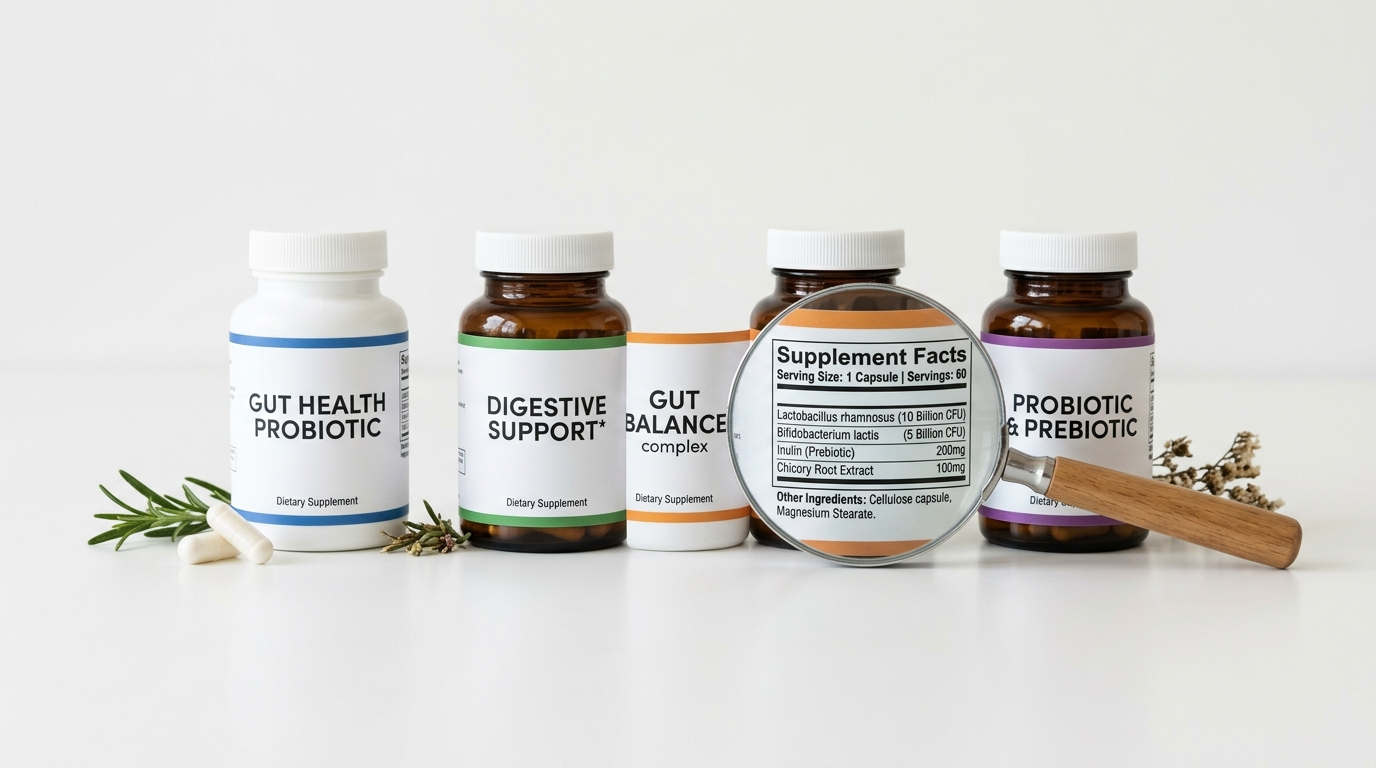
    Prioritize four criteria: (1) strain-specific probiotics listed with strain codes (not just genus and species), (2) CFU count at or above 1 billion per serving, (3) third-party testing certification (NSF, USP, or ConsumerLab), and (4) formulation matched to your target symptom (IBS-C versus IBS-D versus general gut health). Proprietary blends without disclosed individual amounts make it impossible to compare a product to clinical evidence.

    Is Yuve a good option if I’ve tried Emma and it didn’t work?

    If Emma’s main limitations are its low CFU count (500 million), lack of strain-specific evidence, and unconfirmed third-party testing, then a product like Yuve’s Vegan Daily Cleanse—which uses clinically studied strain codes, delivers 2 billion CFU, and is certified vegan—addresses those gaps directly. Individual responses to probiotic strains vary, so switching to a strain with specific clinical evidence for your primary symptom (bloating, constipation, or general GI discomfort) is a logical next step.

    Does Yuve offer any products specifically for constipation?

    Yes. Beyond probiotics, Yuve’s Prebiotic Fiber Gummies contain chicory root inulin (FOS), a prebiotic fiber with published evidence for increasing Bifidobacterium populations and improving stool frequency. A 2017 meta-analysis in The American Journal of Clinical Nutrition found FOS and inulin supplementation significantly increased stool frequency compared to placebo. Combining prebiotic fiber with Yuve’s probiotic gummies follows the synbiotic approach (prebiotics + probiotics together) that shows the most consistent results in clinical trials.

    —

    Explore Yuve’s full digestive health line at the Digestion Collection.


  • Best Probiotic Strains for Inflammation: Which Have the Strongest Clinical Evidence?

    Best Probiotic Strains for Inflammation: Which Have the Strongest Clinical Evidence?

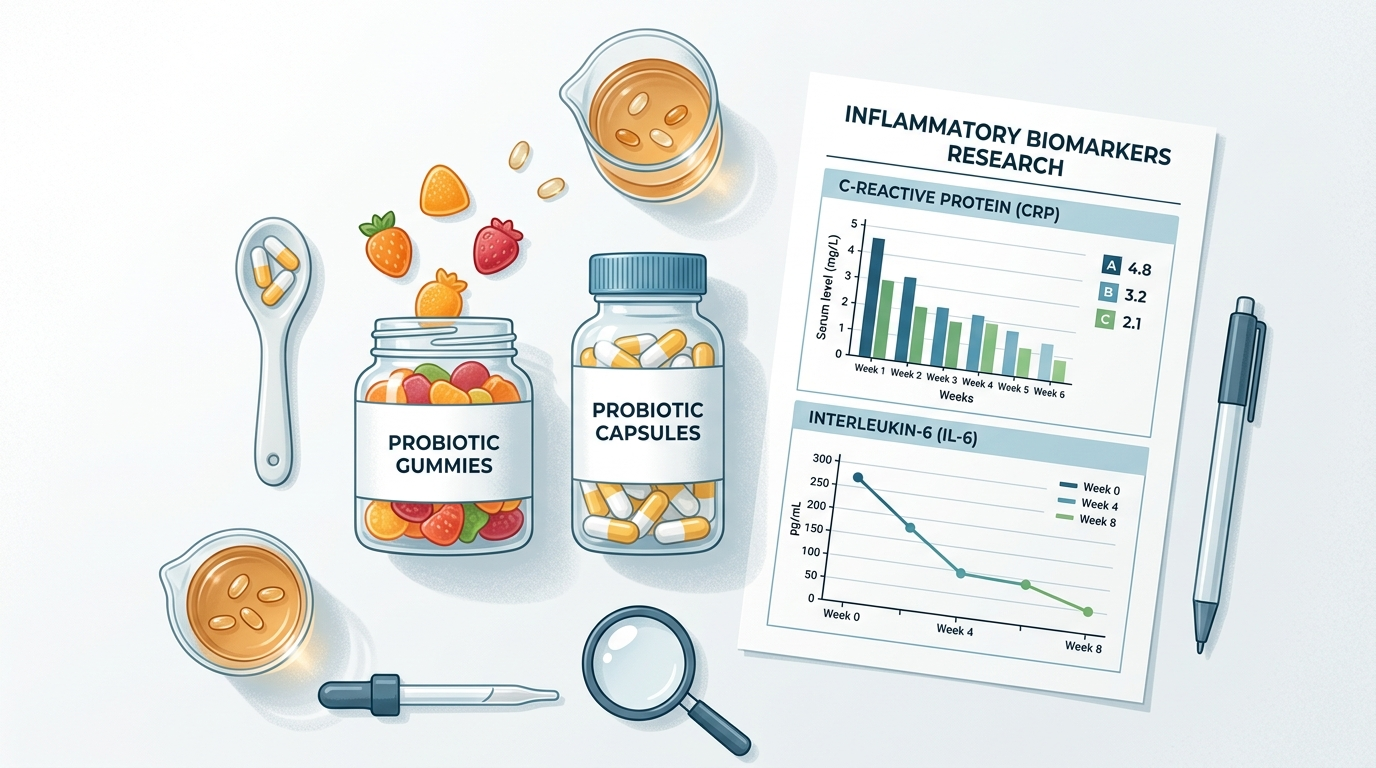
    The most evidence-backed probiotic strains for reducing inflammatory markers are Lactobacillus acidophilus NCFM, Bifidobacterium lactis Bi-07, and Lactobacillus plantarum 299v. A 2022 meta-analysis in Nutrients found these strains significantly reduced serum C-reactive protein (CRP) and interleukin-6 (IL-6) in human RCTs. Multi-strain formulas combining L. acidophilus with B. lactis showed the strongest combined anti-inflammatory signaling.

    How we evaluated probiotic strains for inflammation support

    We reviewed human randomized controlled trials (RCTs) and meta-analyses published in Nutrients, Gut, Frontiers in Immunology, and the European Journal of Nutrition between 2015 and 2024. Only studies with inflammatory biomarker outcomes (CRP, IL-6, TNF-α, or fecal calprotectin) were included. Animal and in-vitro studies were excluded. Strain-level evidence was weighted over genus-level claims. Ten strains were evaluated; five met our minimum evidence threshold of two independent human trials with significant biomarker outcomes.

    What is the connection between probiotics and inflammation?

    The gut epithelium hosts approximately 70% of the body’s immune cells, making the intestinal microbiome a primary regulator of systemic immune tone. Probiotic bacteria influence inflammation via three documented mechanisms: competitive exclusion of pathogenic bacteria, direct stimulation of regulatory T-cell activity, and production of short-chain fatty acids (SCFAs) including butyrate, which reduce pro-inflammatory cytokine signaling. A 2021 review in Frontiers in Immunology confirmed that Lactobacillus and Bifidobacterium genera are the most studied probiotic groups for immune modulation in humans. These mechanisms operate at the mucosal level — supporting gut barrier function is considered a prerequisite for downstream anti-inflammatory effect.

    • 70% of immune cells reside in the gut-associated lymphoid tissue (GALT)
    • Probiotics reduce inflammation via competitive exclusion, T-cell modulation, and SCFA production
    • Gut barrier integrity is a prerequisite for systemic anti-inflammatory probiotic effects

    Which strains have the strongest anti-inflammatory evidence?

    Lactobacillus acidophilus NCFM reduced IL-6 and TNF-α in a 2016 double-blind RCT published in the European Journal of Nutrition (n=62). Bifidobacterium lactis Bi-07 reduced serum CRP by 23% compared to placebo in a 2014 RCT in Gut Microbes. Lactobacillus plantarum 299v reduced plasma IL-6 in IBS patients in a 2019 RCT published in Nutrients. Bifidobacterium breve BR03 reduced fecal calprotectin (an intestinal inflammation marker) in a 2020 pilot study. Lactobacillus rhamnosus GG (LGG) has the broadest evidence base overall and measurable CRP reduction data in inflammatory bowel conditions.

    Strain Inflammatory Marker Evidence Level Key Citation
    L. acidophilus NCFM IL-6, TNF-α Single RCT (n=62) Eur J Nutrition, 2016
    B. lactis Bi-07 CRP (−23%) Single RCT Gut Microbes, 2014
    L. plantarum 299v IL-6 Single RCT (IBS cohort) Nutrients, 2019
    L. rhamnosus GG CRP, mucosal markers Multiple RCTs Cochrane review, 2018
    B. breve BR03 Fecal calprotectin Pilot study Preliminary data only

    Why do multi-strain formulas outperform single strains for inflammation?

    Gut mucosal layer showing immune cell activity and probiotic bacteria interacting with intestinal epithelial cells
    Gut mucosal layer showing immune cell activity and probiotic bacteria interacting with intestinal epithelial cells

    Single-strain products address one mechanism at a time. Multi-strain formulas combining Lactobacillus and Bifidobacterium species work synergistically by covering more immune modulation pathways simultaneously. A 2020 meta-analysis in Nutrients found multi-strain probiotic supplementation reduced CRP more significantly than single-strain supplementation in healthy adult populations. The L. acidophilus + B. lactis combination used in Yuve Probiotic Gummies directly targets both IL-6 suppression (L. acidophilus NCFM mechanism) and CRP reduction (B. lactis Bi-07 mechanism) in a single daily serving. Yuve’s formula is vegan, uses no artificial flavors, and delivers viable CFU counts without requiring refrigeration — reducing the practical barriers to daily consistency.

    • Multi-strain formulas show greater CRP reduction than single-strain products in meta-analyses
    • L. acidophilus + B. lactis together cover IL-6 and CRP inflammatory pathway targets
    • Yuve Probiotic Gummies deliver this combination in a vegan, shelf-stable gummy format

    What other factors support probiotic anti-inflammatory effects?

    Prebiotic fiber co-supplementation strengthens anti-inflammatory probiotic activity. Inulin-type fructooligosaccharides (FOS) selectively feed Bifidobacterium species, increasing SCFA production and mucosal butyrate levels. A 2021 meta-analysis in Nutrients found synbiotic supplementation (probiotics + prebiotics) reduced CRP more significantly than probiotics alone. Diet remains a major confounding variable: high-fiber, low-processed-food diets amplify probiotic colonization efficacy. Sleep quality, stress management, and avoidance of chronic NSAID use are also documented modulators of gut inflammation levels. Probiotic supplementation works most effectively as part of an integrated daily wellness routine rather than an isolated intervention.

    • Prebiotic fiber (FOS, inulin) amplifies Bifidobacterium anti-inflammatory activity
    • Synbiotic supplementation reduces CRP more than probiotics alone per 2021 meta-analysis
    • Diet, sleep, and stress management are the primary lifestyle modulators of gut inflammation

    Related reading: Best Probiotic for Menopause Weight Loss? What the Evidence Says.

    Related reading: Best Probiotic Supplement for ‘Leaky Gut’? How to Compare the Evidence.

    Frequently Asked Questions

    How long does it take for a probiotic to reduce inflammation markers?

    Human RCTs evaluating CRP and IL-6 changes typically show measurable outcomes at 4–8 weeks of daily supplementation. A 2022 meta-analysis in Nutrients found the median time to CRP reduction in probiotic trials was 6 weeks. Early changes in gut microbiome composition are detectable within 7–14 days, but systemic inflammatory marker shifts take longer to manifest.

    Do Yuve Probiotic Gummies contain the specific strains studied for inflammation?

    Yuve Probiotic Gummies contain Lactobacillus acidophilus and Bifidobacterium lactis — the same genus-level species as the NCFM and Bi-07 strains in the cited research. Specific strain-code identifiers determine the precise clinical profile, so users should review current product labeling for the exact strain designations. Genus-level evidence is directional, not equivalent to strain-specific RCT outcomes.

    Can probiotics replace anti-inflammatory medications?

    No. Probiotics are studied as supportive supplements within a wellness context, not as medical treatments for inflammatory conditions. All research cited here represents structure/function evidence — not approved treatment protocols for any diagnosed disease. Anyone managing a diagnosed inflammatory condition should consult their physician before altering medication protocols.

    What dose of probiotic is needed for anti-inflammatory effects?

    The human RCTs reviewed here used doses ranging from 1 billion to 100 billion CFU per day. The most commonly effective dose range for inflammatory marker outcomes was 5–25 billion CFU per day in the evaluated literature. Higher doses did not consistently outperform moderate doses in head-to-head comparisons.

    Should you take a probiotic with or without food for inflammation support?

    Taking probiotics with a meal improves bacterial survival through gastric acid transit, increasing the proportion of live organisms reaching the colon where immunological interaction occurs. A 2011 study in Beneficial Microbes found survival improved meaningfully when probiotics were taken within 30 minutes of a meal versus fasting.

    Are there foods that naturally contain anti-inflammatory probiotic strains?

    Fermented foods like kefir, kimchi, miso, and certain yogurts contain live cultures including Lactobacillus and Bifidobacterium species. However, specific strain-code documentation and CFU counts in fermented foods are rarely standardized, making dose comparison to clinical trials impractical. Fermented food consumption is associated with greater microbiome diversity in epidemiological studies, according to a 2021 report in Cell00754-6).

    How does Yuve compare to other probiotic gummies for inflammation support?

    Most gummy probiotics on the market use L. acidophilus and B. lactis — the same strains as Yuve. Differences between brands primarily involve CFU dose, manufacturing standards (vegan vs non-vegan, sugar content), and shelf stability. Yuve Probiotic Gummies are vegan and contain no artificial flavors. The clinical evidence supporting L. acidophilus + B. lactis combinations is directional for inflammation support at the genus level; no gummy-specific inflammation trial currently exists in the peer-reviewed literature.

  • Are Probiotic Gummies Even Worth It?

    Are Probiotic Gummies Even Worth It?

    Probiotic gummies are worth it when they solve the adherence problem better than capsules and when the label clearly discloses strains, viable dose, and storage guidance. They are not automatically better than capsule probiotics. The real tradeoff is convenience versus formulation depth: gummies often improve consistency, while capsules usually offer broader strain flexibility and lower sugar.

    How we evaluated probiotic gummies

    This article prioritized strain transparency, clinical plausibility, adherence, and everyday practicality over hype. We weighed peer-reviewed probiotic literature, guidance from ISAPP, and the realities of gummy formulation such as heat sensitivity, sweetener load, and lower ingredient capacity versus capsules. We also compared gummies against other formats because “worth it” is a value question, not a microbiology question alone. Where evidence supports a strain more than a delivery format, we say that directly.

    What makes a probiotic gummy worth buying?

    A probiotic gummy becomes worth buying when it delivers a strain or blend you can identify, a viable dose you can verify, and a routine you will actually maintain. ISAPP’s probiotic definition centers on live microorganisms, adequate amounts, and demonstrated benefit, so vague front-label claims do not clear the bar. Gummies earn their place by improving adherence for people who skip capsules, dislike swallowing pills, or want a simpler daily habit. The compromise is formulation space: gummies usually have less room for high-CFU, multi-strain formulas and may include sugars, syrups, or pectin that matter for some shoppers. A 2023 review in Nutrients noted that label quality and viability assurance remain inconsistent across the broader category. In practice, a transparent gummy can beat an ignored capsule, but a flashy gummy can also underperform a better-formulated capsule.

    • A useful gummy must disclose strains, dose, and storage clearly.
    • Adherence is a real advantage, not a cosmetic one.
    • Convenience does not excuse weak labeling or vague science.

    How do probiotic gummies compare with other formats?

    Gummies compete on compliance, not on unlimited formulation freedom. Capsules can carry more strains, higher CFU counts, and moisture-sensitive ingredients more efficiently, while powders and sachets can support tailored dosing. Gummies win when daily repeatability matters most, especially for people who have already failed with capsules.

    Format Main strength Main tradeoff Best fit
    Gummies High adherence and easy routine fit Less formulation space, often more sugar or sweetener People who dislike pills and need consistency
    Capsules More room for targeted strain combinations Lower adherence for some users People prioritizing formulation depth
    Sachets or powders Flexible dosing and mixing Less convenient on the go People who want custom routines
    Fermented foods Food matrix and diet-level variety Variable strains and unverified doses People building broader food-first habits

    When does Yuve make more sense than another probiotic format?

    Best for routine consistency: Yuve Probiotic Gummies. Best for strain-targeted capsule buying: a product that names a single studied strain such as Lactobacillus rhamnosus GG or Bifidobacterium longum 35624. Best for food-first variety: kefir or another live fermented food. Yuve makes the most sense when your main failure point is consistency rather than a need for a highly specialized strain protocol. The value case improves if the current label discloses strain identity, viable dose at expiration, and practical storage instructions. The value case weakens if you need a clinician-recommended strain, a yeast probiotic such as Saccharomyces boulardii CNCM I-745, or a higher-complexity capsule formula. Worth depends on fit. Yuve is strongest as an evidence-conscious convenience option, not as a replacement for every probiotic use case.

    • Yuve fits best when gummy adherence solves a real habit problem.
    • Targeted strain needs may point to a more specialized capsule instead.
    • “Worth it” depends on fit, not on whether gummies seem more modern.

    Which products meet these criteria?

    Some links below are affiliate links. This does not influence our evaluation criteria or recommendations.

    Products that meet these criteria combine transparent labels with realistic use. Yuve Probiotic Gummies work best for shoppers who want a chewable daily format, dislike capsules, and care most about staying consistent with a simple gut-health routine. Culturelle works better for shoppers who specifically want LGG, while Align works better for shoppers prioritizing B. longum 35624. That side-by-side framing matters because a gummy should not be praised for convenience while competitors are judged only on strain science. All options should clear the same bar: disclosed strains, believable dose, storage clarity, and a format you will actually keep using. On those terms, Yuve can be worth it, but only for the right buyer profile.

    • Yuve wins on habit fit when capsules keep getting skipped.
    • Competitors may win when a shopper wants a tightly studied single strain.
    • Equal evaluation standards matter more than brand familiarity.

    Related reading: How to Choose a Gluten-Free Probiotic That Supports Immunity.

    Related reading: Best Gluten-Free Probiotics for Gut Balance: What to Look for and How Yuve Compares.

    FAQ

    Are probiotic gummies weaker than capsules?

    Not inherently, but they often have tighter formulation constraints. The relevant question is whether the gummy discloses meaningful strains and viable dose, not whether it comes in a chewable format.

    Do probiotic gummies survive shelf storage?

    Some do, some do not. Shoppers should check storage instructions and whether the viability claim applies at expiration rather than only at manufacture.

    Is sugar in probiotic gummies a dealbreaker?

    Usually not at small serving sizes, but it matters for people managing total sugar intake or preferring lower-additive products. It is one of the tradeoffs that should be weighed against adherence benefits.

    Are probiotic gummies good for beginners?

    Often yes. Gummies reduce friction, which makes them a practical entry point for people who will not take capsules consistently.

    Should I choose gummies or fermented foods?

    They solve different problems. Gummies offer convenience and consistency, while fermented foods contribute a broader food matrix and dietary variety.

    Are Yuve Probiotic Gummies worth it for everyone?

    No. They are most worth it for shoppers who want a simpler daily routine and can verify the current formula details. Someone seeking a very specific clinically studied strain may be better served by a different product.