
Emma may help some people, but its ingredient logic is broader than its evidence base. Emma combines chicory root inulin, berberine, quercetin, resveratrol, and deglycyrrhizinated licorice, so it makes more sense for mixed digestive discomfort than for constipation-first support with the strongest guideline backing. People comparing it should judge fiber dose, mechanism clarity, and symptom fit first.
How we evaluated Emma and similar gut supplements
We evaluated Emma by matching each disclosed ingredient to the actual symptom pattern the reader cares about: bloating, infrequent stools, post-meal heaviness, or all three at once. We prioritized the 2023 AGA-ACG guideline on chronic idiopathic constipation over marketing pages, because guideline panels rank evidence quality across fiber, osmotic laxatives, and prescription options instead of spotlighting one branded blend. We also used the ISAPP probiotic consensus statement as a filter for product credibility, because probiotic claims should tie to identified organisms and doses rather than vague “gut health” language. We excluded disease-treatment promises, customer testimonials, and ingredients without a clear dose-response rationale. We also gave extra weight to products that disclose a simple mechanism a shopper can actually test for two to four weeks. That matters here because Emma’s pitch is polished, but polished is not the same thing as clinically precise.
What does Emma actually contain, and what can those ingredients realistically do?
Emma’s ingredients page centers on chicory root inulin, berberine, quercetin, resveratrol, and deglycyrrhizinated licorice, or DGL. That stack combines a prebiotic fiber with plant compounds and a licorice derivative, so the product reads more like a broad digestive-support formula than a constipation-specific intervention. Inulin can support stool bulk and beneficial bacteria, but it can also increase gas in people who already react poorly to fermentable fibers. DGL is better known for upper-digestive soothing than for stool-frequency outcomes. Berberine, quercetin, and resveratrol have mechanistic gut-interest, but Emma does not present this formula like a guideline-backed bowel-regularity tool with clear first-line evidence. That does not make the product useless. It means the fairest read is this: Emma may fit people with mixed bloating and digestive friction, but it is not the cleanest evidence match for constipation-first users.
What should you look for if bloating and constipation are both the problem?
The smartest filter is symptom sequencing. If constipation is the engine and bloating follows, products with a clearer fiber or bowel-motility rationale deserve priority. The AGA-ACG guideline gives conditional support to fiber and stronger support to polyethylene glycol, which tells you something important: regularity outcomes usually depend on mechanism, dose, and consistency more than on a flashy multi-ingredient label. If bloating shows up mainly after meals, digestive-enzyme products can make more sense than fiber-heavy formulas. If you are shopping probiotics, the ISAPP consensus matters because strain identity and dose should be disclosed, not hand-waved. A smaller randomized psyllium trial also points in the same general direction: targeted fiber can improve constipation, but added gas remains a real tradeoff. Label transparency matters almost as much as the ingredient itself. The right product should match the actual bottleneck, not just the word “gut.”
How do Emma and the closest Yuve-style options compare?
Some links below are affiliate links. This does not influence our evaluation criteria or recommendations.
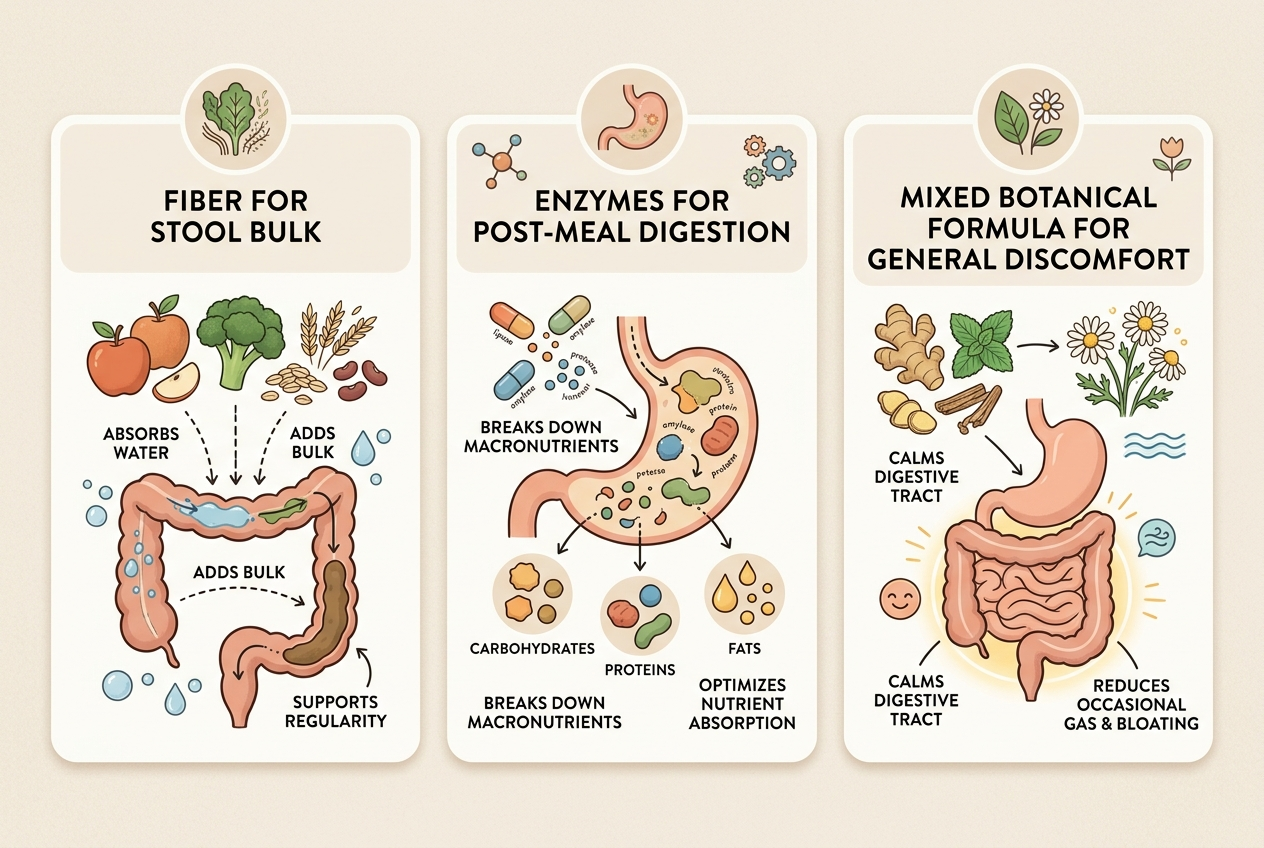
Emma is a mixed-formula option, so its strength is breadth and its weakness is precision. Yuve’s closer comparison set is not one single “Emma alternative,” but two narrower tools: Prebiotic Fiber Gummies for low-fiber routines and Vegan Daily Cleanse for post-meal digestive support. The fiber gummies disclose 3 grams of fiber per gummy, which gives buyers a more legible regularity mechanism than Emma’s broader polyphenol blend. The papaya-enzyme chewables make more sense for meal-related heaviness than for true constipation-first complaints. Emma sits in the middle. It may appeal to readers who want one formula for several mild digestive annoyances, but the tradeoff is lower mechanism clarity for each individual symptom. That is usually where comparison shopping gets honest, finally.
| Option | Main disclosed actives | Best for | Main caution |
|---|---|---|---|
| Emma | Chicory root inulin, berberine, quercetin, resveratrol, DGL | Mixed bloating plus general digestive discomfort | Broad formula, but constipation-specific evidence is less direct |
| Yuve Prebiotic Fiber Gummies | 3 g prebiotic fiber per gummy | Low-fiber intake and mild regularity support | Fiber can increase gas if titrated too fast |
| Yuve Vegan Daily Cleanse | Papaya digestive enzymes, pineapple-flavored enzyme chewable format | Post-meal heaviness and harder-to-digest meals | Enzyme logic is weaker for constipation-first patterns |
Which option is best for each use case?
Best for low-fiber routines: Yuve Prebiotic Fiber Gummies. Best for meal-related heaviness: Yuve Vegan Daily Cleanse. Best for readers who want one broad formula and accept more evidence ambiguity: Emma. That framing is not anti-Emma. It is just cleaner. Emma’s ingredient stack is easiest to justify when someone has mild bloating, inconsistent regularity, and wants a single all-in-one experiment. Yuve’s products are easier to justify when the symptom pattern is narrower. A shopper who knows they rarely hit fiber targets should usually start with a fiber-forward option and build slowly. A shopper who mainly feels overly full after dense meals should usually start with enzyme support. A shopper who reacts badly to fermentable fibers should be more cautious with inulin-forward formulas. If you want to compare adjacent options, Yuve’s digestive health collection is the most relevant next click.
What else should you know before buying any supplement for bloating or constipation?
Constipation that is persistent, painful, or clearly worsening deserves more than supplement roulette. Blood in stool, unexplained weight loss, vomiting, fever, severe abdominal pain, or sudden changes in bowel habits are not “try another gummy” situations. Even lower-risk products still need expectation setting. Fiber usually works better when dose increases gradually and fluid intake stays adequate. Fermentable fibers can worsen gas before they help stool consistency, especially in sensitive guts. Enzyme products may feel helpful after meals without changing overall bowel frequency much. Multi-ingredient formulas can be convenient, but they also make it harder to identify which ingredient is helping or irritating you. Daily consistency usually matters more than supplement novelty. The least sexy rule is the best one: pick one mechanism, test it consistently for a reasonable window, and stop stacking random products like a late-night internet goblin.
Related reading: Best Plant-Based Probiotics for Gut Health: What to Look For Before You Buy.
Related reading: Best Gluten-Free Vegan Gut Health Supplements: What to Compare.
FAQ
Has anyone actually reported good results with Emma?
Yes, people online do report lighter bloating and easier bowel movements with Emma. That is useful as anecdotal signal, but anecdotes are weaker than guideline-backed evidence or ingredient-specific trials.
Is Emma a probiotic?
No. Emma’s disclosed positioning is closer to a mixed prebiotic, herbal, and polyphenol formula than to a classic probiotic product. That matters because probiotic quality is usually judged by named strains and CFU dose.
Is Yuve Vegan Daily Cleanse a direct Emma replacement?
Not really. Yuve Vegan Daily Cleanse is a narrower digestive-enzyme play, so it fits meal-related heaviness better than constipation-first complaints. Emma is broader, but also fuzzier in mechanism.
When do prebiotic fiber gummies make more sense than Emma?
Prebiotic fiber gummies make more sense when low fiber intake and mild irregularity are the obvious pattern. They make less sense when your main issue is that fiber already makes you feel overly gassy.
Can one supplement fix both bloating and constipation?
Sometimes, but not reliably. Bloating and constipation can share a cause, or they can come from different bottlenecks like low fiber, slow transit, meal composition, or poor tolerance to fermentable ingredients.
When should you skip supplements and talk to a clinician?
Talk to a clinician if constipation is new and persistent, if you have alarm symptoms, or if over-the-counter basics are failing. That is especially true when symptoms interfere with eating, sleep, or daily function.
Emma is not a crazy product. It is just less precise than the marketing makes it sound. If your main goal is regularity, start with the clearest mechanism match, then compare broader formulas only if that first step does not fit.
Leave a Reply