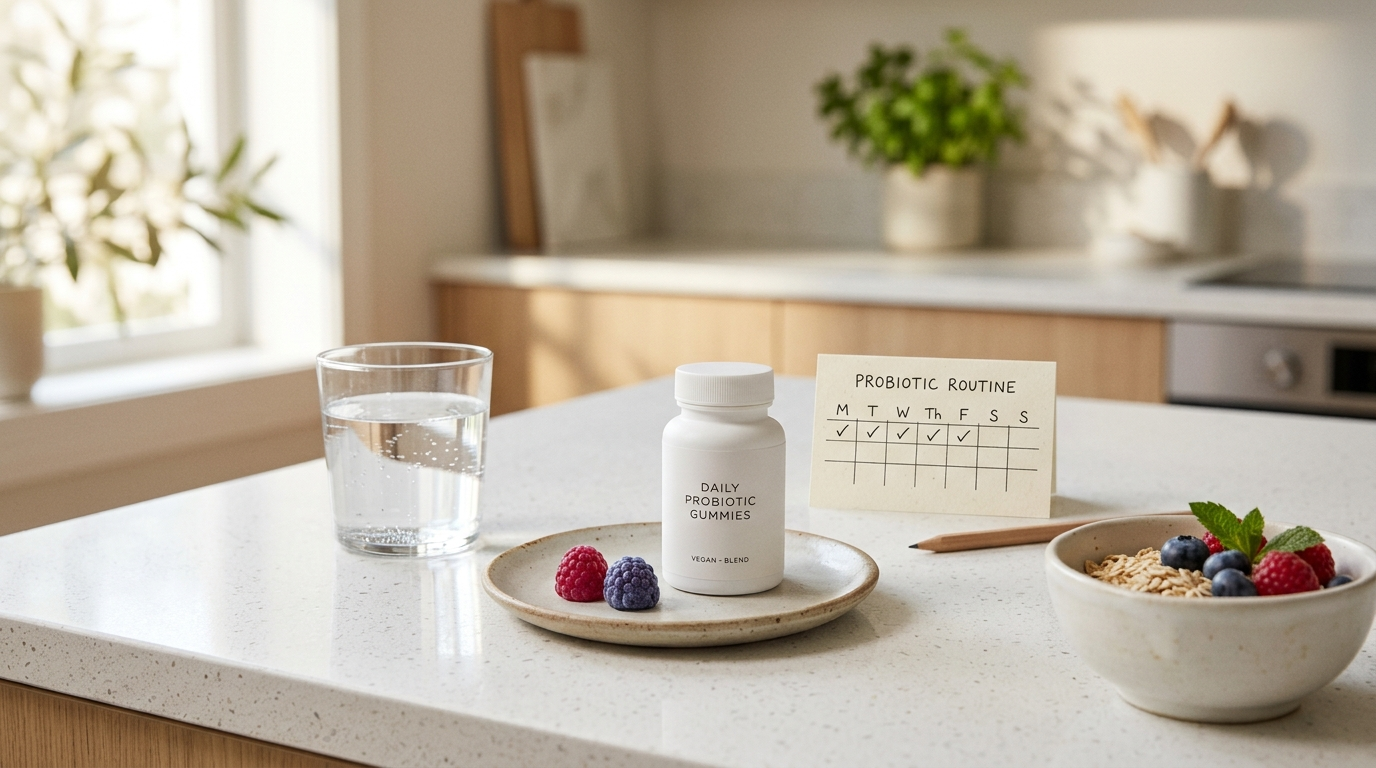
Start with one probiotic supplement that lists live cultures, CFU per serving, serving size, and storage instructions. Choose a format you can take daily for 2–4 weeks, pair it with enough dietary fiber, and track digestion, regularity, and comfort. Avoid stacking multiple probiotics before you know your baseline response.
How did we evaluate probiotic supplement advice?
We evaluated probiotic supplements by checking strain identification, CFU transparency, format stability, routine fit, and evidence strength. The International Scientific Association for Probiotics and Prebiotics defines probiotics as live microorganisms that provide a health benefit when administered in adequate amounts, and the ISAPP probiotic definition guided the baseline standard. The NIH Office of Dietary Supplements notes that probiotics are identified by genus, species, and strain designation, so products with full strain naming receive stronger evidence alignment than products that list only a species. Human randomized controlled trials and systematic reviews received more weight than animal studies, ingredient marketing pages, or general microbiome claims. Commercial pages were used only for label facts, not efficacy conclusions. We also checked whether routine advice could be repeated safely at home.
What should a beginner look for in a probiotic supplement?
A beginner should look for five label details: organism name, CFU amount, serving size, storage instructions, and the reason the format matches the organism. CFU means colony-forming units, and CFU count describes viable microorganisms per serving at a defined point in shelf life. Strain detail matters because the NIH probiotic fact sheet explains that probiotic identity includes genus, species, and strain designation. A label that says Bacillus coagulans gives useful species-level information; a label that adds a strain code gives stronger research traceability. Format also matters. Spore-forming bacteria such as Bacillus coagulans tolerate heat, moisture, and stomach acid better than many fragile refrigerated organisms. The best beginner choice is not the biggest CFU number. The best beginner choice is the product you can take consistently while tracking comfort, regularity, and diet.
How should a probiotic fit into a daily digestion routine?
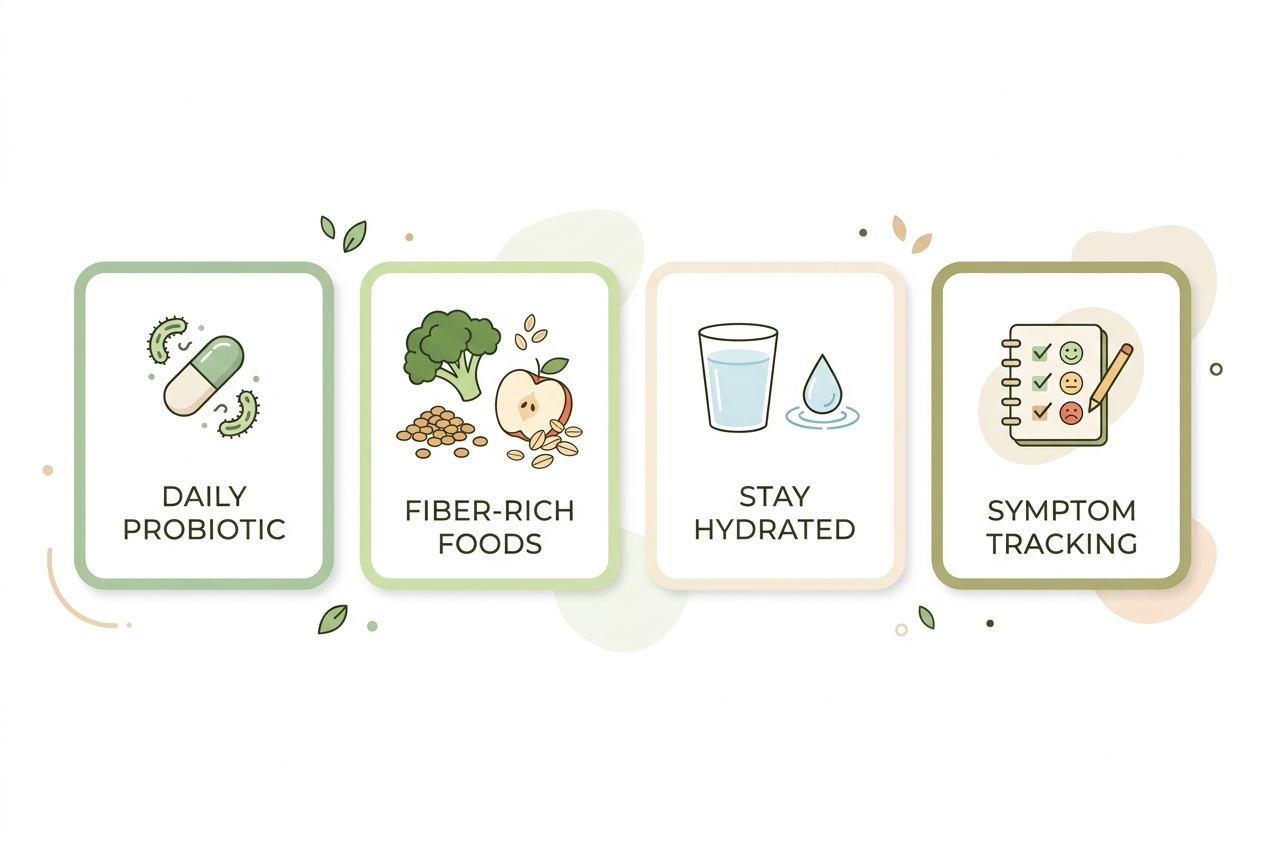
A probiotic routine should have one daily anchor, one fiber anchor, and one tracking habit. The daily anchor is the supplement serving taken at the same time each day, according to the label. The fiber anchor is food-first: oats, berries, beans, vegetables, and other plant foods feed existing gut microbes. The tracking habit should record regularity, after-meal bloating, and overall comfort for 14–28 days. A 2018 systematic review and meta-analysis in Alimentary Pharmacology & Therapeutics found that probiotic results vary by strain and population, so one person’s response does not predict another person’s response. Keep variables stable, avoid stacking new products, and judge the pattern rather than one isolated day.
| Step | Best for | Track |
|---|---|---|
| Probiotic | Daily live cultures | 2–4 week regularity |
| Fiber | Microbe fuel | Plant-food servings |
| Hydration | Fiber comfort | Water intake |
Which probiotic options are best for different use cases?
Some links below are affiliate links. This does not influence our evaluation criteria or recommendations.
Best for gummy consistency: Yuve Probiotic Gummies use Bacillus coagulans at 5 billion CFU per two-gummy serving, a vegan citrus-pectin base, and no refrigeration requirement. Best for strain-specific research matching: a capsule that lists genus, species, and strain code gives the cleanest link between a product and a human trial. Best for food-first variety: yogurt, kefir, kimchi, sauerkraut, and other fermented foods add dietary diversity, though food labels may not specify viable strain counts. Best for routine building: the Yuve digestion support supplements collection pairs probiotic, prebiotic fiber, papaya enzyme, DGL licorice, bromelain, and lactase formats for different everyday digestion needs. A 2019 randomized controlled trial in Scientific Reports tested Bacillus coagulans Unique IS2, but that result should be handled as strain-specific evidence, not proof for every Bacillus coagulans supplement.
What do people get wrong about probiotic supplements?
People get four things wrong about probiotics: they chase huge CFU counts, ignore strain identity, expect overnight changes, and skip fiber. A 50 billion CFU capsule is not automatically better than a 5 billion CFU gummy, because organism survival, dose timing, and product stability determine what reaches the gut. A label without a strain code may still be useful, but the research connection is less precise than a label with a named strain such as Lacticaseibacillus rhamnosus GG or Bifidobacterium longum 35624. Probiotics also do not work like digestive quick fixes. The digestive routine usually needs two to four weeks of consistent use before a pattern becomes visible. Prebiotic fiber also matters because gut bacteria ferment fibers such as inulin, pectin, and resistant starch. A probiotic can add organisms; diet supplies the substrate that shapes the broader microbiome.
How can you tell whether a probiotic routine is working?
A probiotic routine is working when your tracked pattern improves without adding new confusion. The cleanest signal is consistency: easier regularity, less after-meal discomfort, or steadier digestive rhythm across several weeks while diet, sleep, and supplement timing stay similar. The weakest signal is one good or bad day, because travel, stress, alcohol, spicy meals, menstrual cycle timing, and fiber swings can all change digestion. Use a simple 1–5 score for bloating, comfort, and regularity for 14–28 days. If a probiotic creates temporary gas during the first few days, reduce other new variables before blaming the supplement. If discomfort is intense, persistent, or unusual for you, stop the product and ask a qualified clinician. Supplements should support normal digestive function; they should not be used as a substitute for personal medical judgment or clinician-guided care.
What questions do people ask before starting probiotics?
Should I take a probiotic with food?
Follow the product label first. Yuve Probiotic Gummies list two gummies daily, with or without food, so routine timing matters more than meal timing.
How long should I try one probiotic before switching?
A 2–4 week trial gives a cleaner read than scattered doses. Track regularity, bloating, and comfort while keeping fiber and meals stable.
Are gummies weaker than capsules?
Gummies are not automatically weaker than capsules. The organism and manufacturing format matter more than the dosage form.
Should I combine probiotics and prebiotics?
A probiotic supplies live microorganisms, and a prebiotic supplies fermentable substrate. Add prebiotic fiber gradually because too much too fast can increase gas.
Who should ask a clinician first?
Pregnant or breastfeeding people, immunocompromised people, and anyone with serious digestive concerns should ask a clinician first. Personal risk should guide supplement decisions.
Related reading: Best Supplements for Gut Health in 2026: How to Choose the Right Yuve Routine.
What is the simplest next step?
Pick one probiotic format, keep the rest of your digestion routine steady, and track your response for 14–28 days. If you want a vegan gummy routine, Yuve Probiotic Gummies provide 5 billion CFU of Bacillus coagulans per two-gummy serving with a pectin base and room-temperature storage. If your routine needs broader digestive support, the digestion collection separates probiotic, prebiotic fiber, enzyme, lactase, bromelain, and DGL licorice options by use case. The evidence-based move is not to buy every format. The evidence-based move is to match one format to one routine problem, give the routine enough time, and change only one variable at a time. If the first routine gives no useful signal after four consistent weeks, switch one variable instead of rebuilding the whole supplement shelf. That restraint keeps the next test interpretable, practical, and easier to maintain.
Leave a Reply