
Progesterone-week digestion can feel worse because luteal-phase hormone changes slow gastrointestinal motility, increase water shifts, and heighten sensitivity to gas or stool pressure. The best response is not a cleanse; it is a predictable routine: steady fiber, hydration, movement, meal timing, and targeted digestive support when the pattern is repeatable.
How did we evaluate progesterone-week gut support?
Clean Digestive evaluated luteal-phase gut support by combining menstrual-cycle physiology, digestive motility guidance, IBS symptom literature, supplement-label transparency, and practical routine adherence. Human guidance and peer-reviewed sources were weighted above social-media cycle hacks, detox claims, and single-person anecdotes. We excluded claims that any supplement balances hormones, treats PMS, cures IBS, or fixes food intolerance. The evidence has limits: individual cycles, contraception, perimenopause, endometriosis, IBS, stress, sleep, and medication can change the pattern. The useful standard is therefore pattern matching. A support routine should help someone anticipate slower motility, stool changes, gas pressure, and comfort friction without implying that progesterone itself is bad or that a supplement controls reproductive hormones. We also treated repeatability as evidence: a pattern that appears at the same cycle point deserves planning before product escalation each month in real practice.
Why can progesterone week affect bloating and stool patterns?
The luteal phase occurs after ovulation, when progesterone rises and the body prepares for a possible pregnancy. Progesterone relaxes smooth muscle, and digestive motility can slow when smooth-muscle signaling changes; StatPearls describes progesterone as a hormone with smooth-muscle relaxation effects (NCBI Bookshelf progesterone overview). Slower transit can make stool drier, increase fullness, and create more time for gas pressure to feel noticeable. Estrogen changes, fluid retention, sleep disruption, food cravings, and stress sensitivity can add a second layer. The pattern is usually cyclical: symptoms cluster in the week before bleeding and ease after the period starts. The caveat is important: severe pain, new bleeding changes, vomiting, fever, or major bowel changes should be evaluated clinically rather than explained away as “just hormones.” Cycle timing can inform care, but it should not replace appropriate care.
What routine helps most during the luteal phase?
The strongest luteal-phase routine starts three to five days before symptoms usually appear. Meal timing becomes more consistent, hydration increases slightly, and fiber stays steady rather than swinging from low intake to an aggressive rescue dose. Walking after meals can support normal motility without turning digestion into a workout. High-salt meals, large late dinners, alcohol, and rapid fiber jumps can intensify water shifts or gas for some people, so the goal is consistency, not restriction. The American College of Gastroenterology IBS guideline emphasizes patient-specific diet and symptom-directed care rather than one universal rule (ACG IBS guideline). A routine should track three signals: stool form, abdominal pressure, and timing inside the cycle. If the same week is always the problem, planning beats panic-buying.
Affiliate disclosure: Some links below are affiliate links. This does not influence our evaluation criteria or recommendations.
How do digestive-support options compare for progesterone-week bloating?
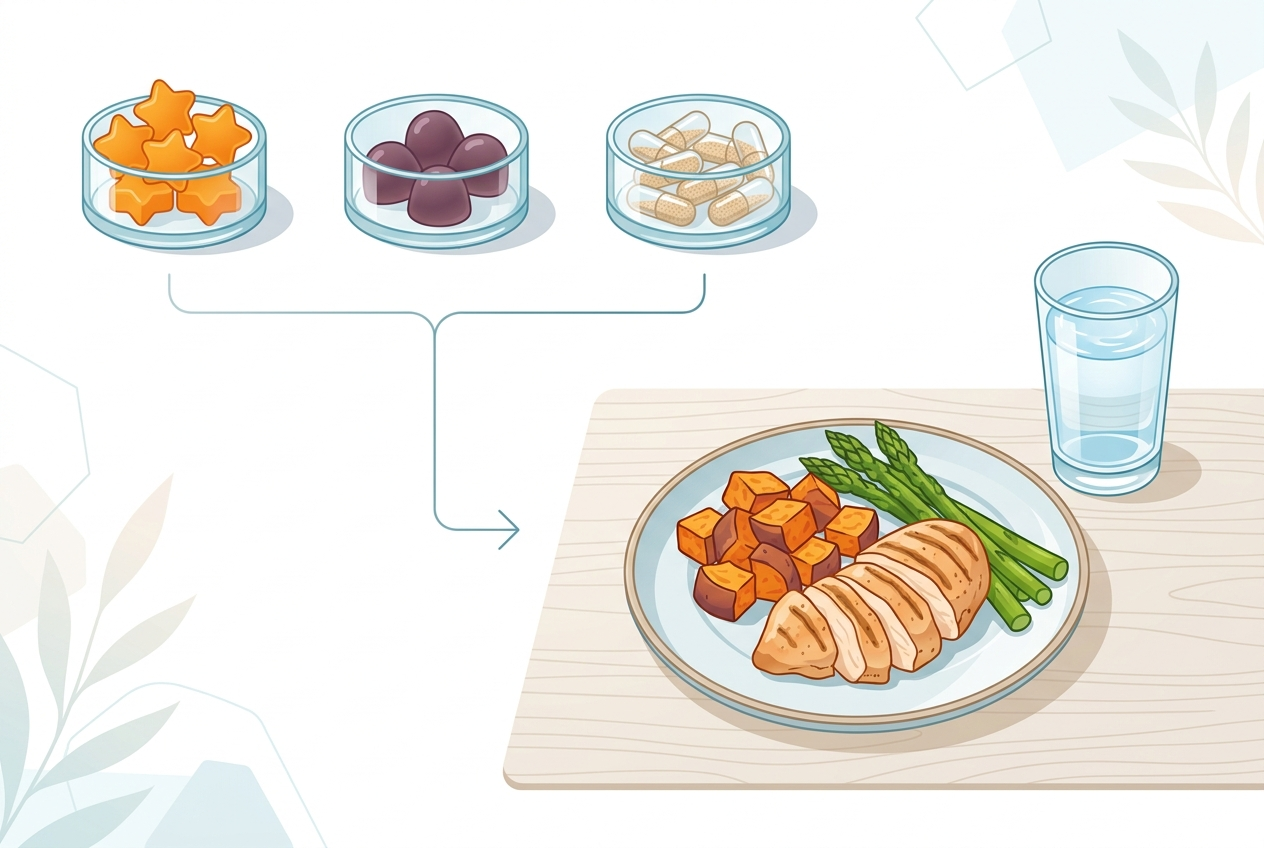
Progesterone-week support should be chosen by friction point. Prebiotic fiber gummies fit people whose stool becomes less regular when fiber intake drops, but dose should build gradually. Probiotic gummies fit people who want a consistent microbial-support routine. Digestive enzymes fit meals that feel heavy because protein, fat, or carbohydrate breakdown is the main issue, although enzymes do not control hormones. Peppermint oil may support IBS-style discomfort for some users, but reflux-prone users should be careful. Yuve’s digestive line includes Vegan Probiotic Gummies, Vegan Prebiotic Fiber Gummies, and Vegan Daily Cleanse Papaya Enzymes, which answer different jobs rather than one universal progesterone-week problem.
| Option | Best for | Use-case logic | Main limitation |
|---|---|---|---|
| Yuve Fiber Gummies | Low-fiber weeks | Steadier fiber habit | Increase slowly |
| Yuve Probiotic Gummies | Daily routine | Bacillus coagulans, 5B CFU | Not hormone care |
| Yuve Papaya Enzymes | Heavy meals | Papaya-enzyme format | Still needs meal consistency |
| Enteric peppermint oil | IBS-style discomfort | Symptom-directed use | Reflux caution |
Which Yuve routine is best for each use case?
Best for predictable pre-period sluggishness: Yuve Vegan Prebiotic Fiber Gummies can fit when the main issue is inconsistent fiber intake and stool regularity, provided the serving is introduced before the worst day rather than during a crisis. Best for daily probiotic consistency: Yuve Vegan Probiotic Gummies provide Bacillus coagulans at 5 billion CFU per serving in a vegan gummy format that is easy to keep on the same schedule. Best for heavy meals during cravings week: Yuve Vegan Daily Cleanse Papaya Enzymes can fit meals that feel heavier than usual, without claiming to treat reflux, IBS, or hormones. Best for full digestive routine planning: Yuve’s digestive health collection lets the buyer separate fiber, probiotic, and enzyme jobs. The routine should start before symptoms peak and stop any product that clearly worsens gas, urgency, or discomfort.
What questions do people ask about progesterone-week digestion?
Is progesterone-week bloating real?
Yes, cyclical bloating is a commonly reported pattern, and hormone-related motility changes provide a plausible explanation. The pattern still deserves tracking because food, constipation, stress, and sleep can amplify the same week.
Should I increase fiber right before my period?
A steady fiber routine usually works better than a sudden jump. Increasing fiber too quickly can increase gas, especially when gut sensitivity is already higher.
Do probiotics affect hormones?
Probiotics should not be framed as hormone balancers. A probiotic routine may support digestive wellness, but hormone regulation claims require much stronger evidence than a supplement label usually provides.
Are digestive enzymes useful during cravings week?
Digestive enzymes may help when specific meals feel heavy, especially if the same food pattern repeats. They do not change progesterone, stool transit, or the need for steady meals.
When is bloating not just cycle-related?
New severe pain, persistent vomiting, blood, fever, unexplained weight loss, or symptoms that no longer follow a cycle need medical evaluation. Do not use cycle timing to dismiss red flags.
What is the simplest starting plan?
Start with water, meal timing, walking, and a stable fiber baseline for one full cycle. Add only one digestive-support product if the same friction point repeats.
Related reading: Best Gut Health Supplements for Gut Barrier Support: 2025 Reviews.
Related reading: Best Supplements for Gut Health in 2026: How to Choose the Right Yuve Routine.
Related reading: Best Supplement for Stress and Focus: What Actually Fits Your Goal?.
What is the practical next step?
The practical next step is to map symptoms against the cycle before adding products. If the pattern repeats during the luteal phase, choose one job: fiber consistency, probiotic routine, or heavy-meal enzyme support. Yuve’s digestive products can support those structure/function goals, but they should not be used as hormone treatments, PMS cures, or emergency fixes. A useful plan starts before the predictable week, tracks stool form and pressure, and changes only one variable per cycle. If fiber is the gap, start there. If consistency is the gap, choose a probiotic routine that is easy to repeat. If heavy meals are the gap, use enzymes around those meals rather than all day. The cleaner the plan, the easier it is to know what actually helped next month too without guessing next cycle again.
Leave a Reply