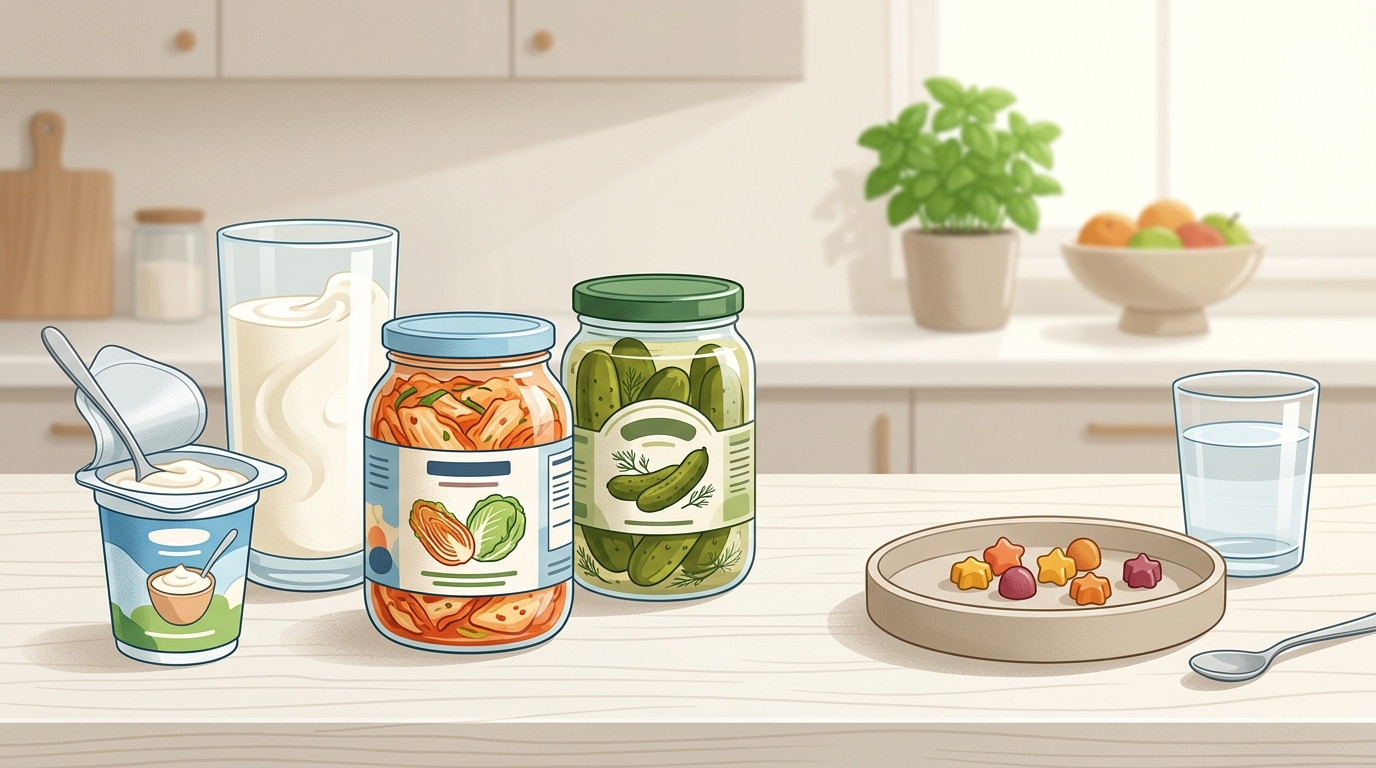
Most store-bought fermented foods are not automatically probiotic. Refrigerated yogurt, kefir, raw sauerkraut, raw kimchi, and some kombucha may contain live microbes, while pasteurized, heat-treated, shelf-stable, vinegar-pickled, baked, smoked, or filtered products often do not. Check labels for live cultures and processing clues.
How did we evaluate fermented foods and probiotic benefit?
We evaluated fermented foods by separating three ideas that shoppers often mix together: fermentation, live microbes at consumption, and strain-defined probiotics. We prioritized ISAPP consensus statements, FDA yogurt labeling rules, university nutrition guidance, and peer-reviewed reviews over viral claims that all fermented foods “heal the gut.” We treated pasteurization, heat treatment, refrigeration, vinegar acidification, and live-culture labeling as practical buying signals. We excluded disease claims, detox language, and claims that a food can replace medical care. The useful question was not whether a food was fermented at some point; it was whether live microbes remain when a person eats it, whether the product identifies cultures, and whether the benefit claim matches probiotic definitions rather than tradition alone. We also compared food variety against supplement repeatability because both can support routines differently in daily life.
Are store-bought fermented foods usually probiotic?
Store-bought fermented foods are usually fermented, but they are not always probiotic. The ISAPP fermented foods consensus statement says fermented foods and probiotics should not be used interchangeably because probiotic status requires live microorganisms, adequate amounts, and a demonstrated health benefit. Heat-treated sauerkraut, shelf-stable pickles, baked sourdough, pasteurized kombucha, smoked fermented meats, and filtered products may keep flavor compounds while losing live microbes. Refrigerated yogurt and kefir are more likely to contain live cultures, but even yogurt labels need checking. The FDA’s yogurt standard requires products treated after culturing to inactivate viable microorganisms to state that they do not contain live and active cultures. So the buyer’s shortcut is simple: fermentation history is not enough. Look for live-culture language, refrigeration, ingredient clues, and processing statements before assuming digestive-support value from any store jar.
How can you tell whether a fermented food still has live cultures?
Start with storage location, label language, and process clues. Stanford Medicine’s fermentation education resource notes that authentic live fermented foods are often refrigerated and may use terms such as “fermented,” “cultured,” or “live active cultures.” Refrigeration does not prove probiotic status, but shelf-stable storage often signals heat treatment, acidification, or filtration. Ingredient lists can also help. Vinegar-first pickles are usually acidified rather than microbially fermented. Sauerkraut and kimchi that say pasteurized, heat-treated, canned, or shelf-stable are less likely to provide live microbes. Yogurt and kefir should identify live and active cultures or specific organisms such as Streptococcus thermophilus and Lactobacillus delbrueckii subsp. bulgaricus. Kombucha varies because brands can filter, pasteurize, or stabilize products differently. When the label is vague, assume flavor benefit first and probiotic benefit second, then choose a clearer product with transparent processing.
How do fermented foods compare with a probiotic supplement routine?
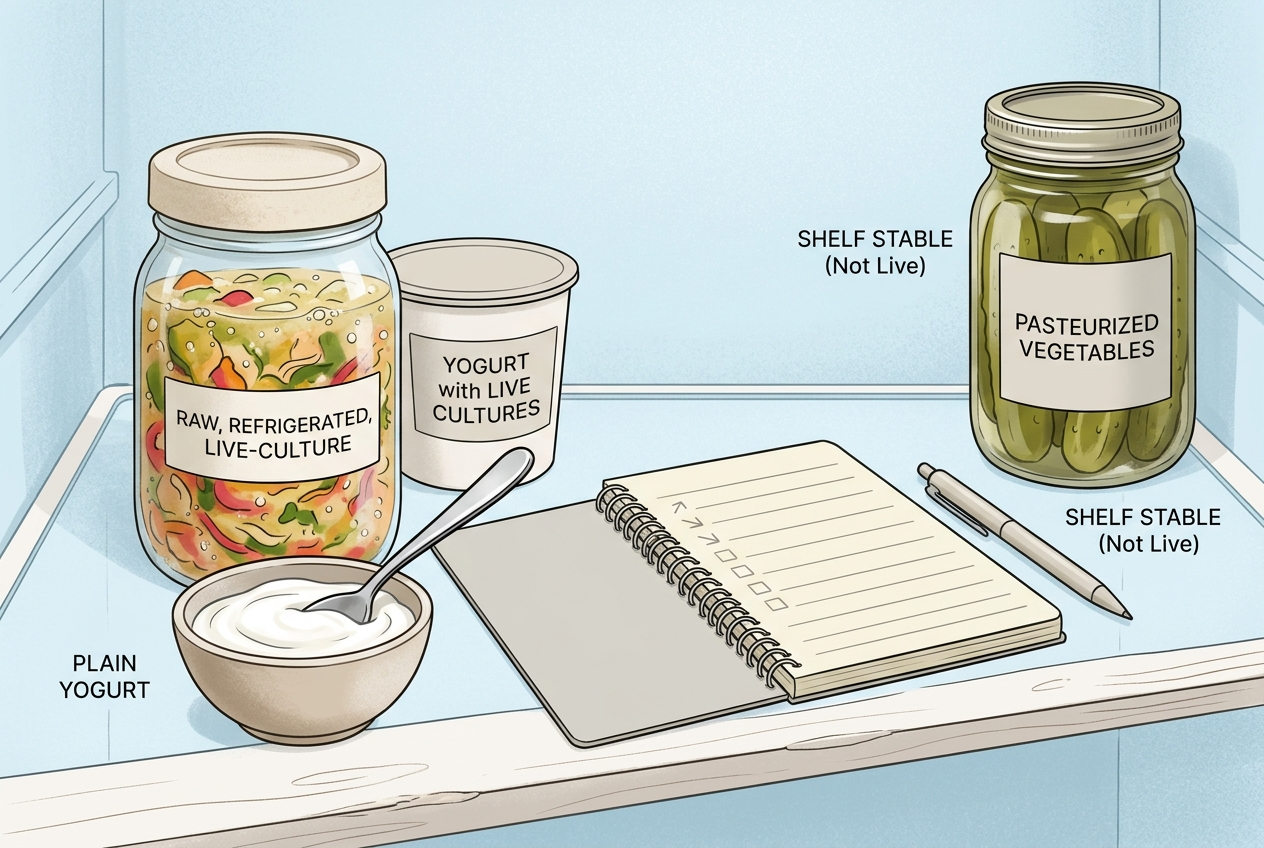
Some links below are affiliate links. This does not influence our evaluation criteria or recommendations. Fermented foods provide food-matrix benefits, acids, peptides, flavor compounds, and sometimes live microbes. Probiotic supplements provide a controlled serving format and often name the organism more clearly. Yuve Probiotic Gummies fit the routine-adherence category because the vegan gummy format is easy to repeat and the product is built as a daily probiotic supplement rather than a fermented food. Yogurt and kefir fit food-first live-culture routines when labels confirm active cultures. Raw sauerkraut and kimchi fit culinary variety when refrigerated and unpasteurized. Shelf-stable pickles and pasteurized sauerkraut fit flavor, sodium, and acidity expectations more than probiotic expectations. The NIH Office of Dietary Supplements emphasizes that probiotic evidence depends on genus, species, strain, dose, and condition studied.
| Option | Best for | Live-culture clue | Main caveat |
|---|---|---|---|
| Yogurt or kefir | Food-first live cultures | Live and active cultures statement | Added sugar and heat treatment vary |
| Raw sauerkraut or kimchi | Culinary fermented variety | Refrigerated and unpasteurized | Sodium and tolerance matter |
| Yuve Probiotic Gummies | Daily supplement routine | Probiotic supplement label | Not a fermented food |
| Shelf-stable pickles | Flavor and acidity | Often vinegar or heat processed | Usually not a live-culture source |
Where does Yuve fit if fermented foods are confusing?
Yuve fits shoppers who want a simple daily probiotic routine without decoding every jar in the refrigerator aisle. Fermented foods can still belong in the diet, but they are inconsistent as probiotic sources because live microbes vary by brand, process, storage, and serving. Yuve Probiotic Gummies are better understood as a repeatable supplement format for digestive wellness routines, not as a replacement for fermented vegetables, yogurt, kefir, or fiber-rich foods. The clean comparison is format role: fermented foods support meal variety; live-culture foods may add microbes; probiotic supplements provide a defined daily habit. Shoppers can also compare adjacent products in the Yuve digestion collection when their routine includes prebiotic fiber, lactase, or other digestive-support formats. Choose Yuve when consistency, vegan format, and less aisle-by-aisle guesswork matter more than culinary fermentation variety at home daily.
What is the best way to shop for live fermented foods?
Best for live-culture dairy: choose refrigerated yogurt or kefir that states live and active cultures and has a sugar level you can tolerate. Best for fermented vegetables: choose refrigerated, raw, unpasteurized sauerkraut or kimchi and start with small servings because sodium, spice, histamine, and FODMAP tolerance vary. Best for kombucha: check whether the brand is raw, pasteurized, filtered, or stabilized, and remember that sugar and caffeine vary. Best for shelf-stable pickles: enjoy them as acidic foods, not probiotic foods, unless the label provides unusual live-culture evidence. Best for consistency: choose a probiotic supplement or a clearly labeled live-culture food you can repeat. A 2022 review in Nutrients describes fermented foods as complex food matrices, not automatic probiotic products. The safest shopping rule is to match the label to the job before buying anything.
What questions do people ask about fermented foods and probiotics?
Does pasteurization kill probiotic microbes?
Pasteurization uses heat to reduce or inactivate viable microorganisms. If a product is pasteurized after fermentation, it may keep fermented flavor while losing live-culture value.
Are pickles probiotic?
Some traditionally fermented refrigerated pickles may contain live microbes. Many shelf-stable pickles are vinegar-acidified or heat processed, so they should not be assumed to be probiotic.
Is yogurt always probiotic?
Yogurt is cultured, but label details matter. Look for live and active cultures and avoid assuming that every sweetened, heat-treated, or shelf-stable yogurt-like product has the same live-culture profile.
Is kombucha probiotic?
Kombucha may contain live microbes when raw and unpasteurized, but brands vary. Alcohol control, filtration, pasteurization, refrigeration, and sugar content can all change the final product.
Are fermented foods better than probiotic gummies?
They solve different problems. Fermented foods add culinary diversity and sometimes live microbes, while probiotic gummies provide a repeatable supplement routine.
Can I use fermented foods and probiotics together?
Yes, many people combine food variety with a supplement routine. Introduce one change at a time if bloating, gas, reflux, or stool changes make results hard to read.
What label phrase matters most?
“Live and active cultures” is the strongest simple clue for yogurt-style products. For vegetables and drinks, refrigerated, raw, unpasteurized, and cultured language helps, but product-specific processing still matters.
Bottom line: Fermented does not always mean probiotic. Use fermented foods for food variety, choose live-culture foods when labels support it, and use Yuve Probiotic Gummies when the goal is a simple daily supplement habit with less label detective work.
Leave a Reply