
If your microbiome feels “off,” start with routine basics before stacking products: consistent meals, fiber tolerance, sleep, hydration, and one targeted digestive support tool. Yuve Probiotic Gummies can fit a simple vegan routine, but the useful test is consistency, tolerance, and tracked digestive patterns.
How did we evaluate a microbiome-support routine?
We evaluated microbiome-support routines by evidence quality, ingredient transparency, routine friction, digestive tolerance, and compliance-safe language. NIH Office of Dietary Supplements guidance, ISAPP probiotic definitions, and NIDDK digestive references received more weight than microbiome test marketing or broad detox claims. We excluded disease-treatment promises, “reset your gut overnight” language, and multi-product stacks that make results impossible to interpret. The main limitation is that “microbiome is off” is a feeling or test interpretation, not a precise diagnosis, so the article focuses on repeatable habits, structure/function support, and when to involve a clinician.
What does it mean when your microbiome feels off?
“Microbiome is off” usually means the person notices digestive inconsistency, bloating, irregular stool pattern, food sensitivity concerns, or a recent disruption such as antibiotics, travel, stress, or diet change. The phrase does not identify one cause. The gut microbiome includes bacteria, yeasts, viruses, metabolites, and host responses, so a consumer test or symptom log can suggest patterns but cannot turn one supplement into a guaranteed answer. The NIH Office of Dietary Supplements notes that probiotic effects depend on the microorganism, dose, and purpose. That caveat matters because Yuve, Align, Culturelle, Florastor, fiber powders, fermented foods, and food-first changes do different jobs. A smarter first step is to define the pattern: stool regularity, gas timing, bloating triggers, travel disruption, low fiber intake, or routine inconsistency. The supplement should match that pattern.
How do microbiome support options compare?
Some links below are affiliate links. This does not influence our evaluation criteria or recommendations. A microbiome-support comparison should separate daily routine support from food pattern, fiber intake, and targeted probiotic use. Yuve Probiotic Gummies are a vegan gummy option for daily digestive wellness support. Yuve Prebiotic Fiber Gummies are a fiber-format option for shoppers who tolerate added prebiotic fiber. Align, Culturelle, and Florastor offer different organism profiles. Fermented foods and fiber-rich foods support diet quality but require tolerance and consistency. ISAPP defines probiotics as live microorganisms that confer a health benefit in adequate amounts, which means the organism and use case matter more than the word “probiotic” (ISAPP).
| Option | Best for | Role in a routine | Main caveat |
|---|---|---|---|
| Yuve Probiotic Gummies | Simple vegan daily habit | Probiotic routine support | Judge by consistency and tolerance, not overnight change |
| Yuve Prebiotic Fiber Gummies | Fiber-format convenience | Prebiotic fiber routine support | Added fiber can increase gas if introduced too quickly |
| Align or Culturelle | Capsule probiotic comparison | Named-organism probiotic option | Study endpoints may not match every user |
| Florastor | Yeast-based probiotic comparison | Saccharomyces boulardii routine option | Not suitable for every high-risk user |
| Food-first fiber | Baseline microbiome nutrition | Beans, oats, fruit, vegetables, seeds | Tolerance and portion size matter |
Which Yuve routine is best for a microbiome reset feeling?
Best for a simple daily probiotic habit: Yuve Probiotic Gummies, because a vegan gummy format can reduce friction for people who avoid capsules. Best for fiber routine support: Yuve Prebiotic Fiber Gummies, when the user tolerates added fiber and starts gradually. Best for broader digestive support browsing: Yuve’s digestive health collection, where probiotic, prebiotic, enzyme, and digestion-focused options can be compared by use case. The best Yuve-first routine is not a giant stack. It is one product, one serving pattern, and one tracking note for two to four weeks. If bloating is the main concern, start with the probiotic or fiber product that best matches tolerance. If meal-specific discomfort dominates, compare enzymes separately rather than mixing every category at once.
What should you track before adding more products?
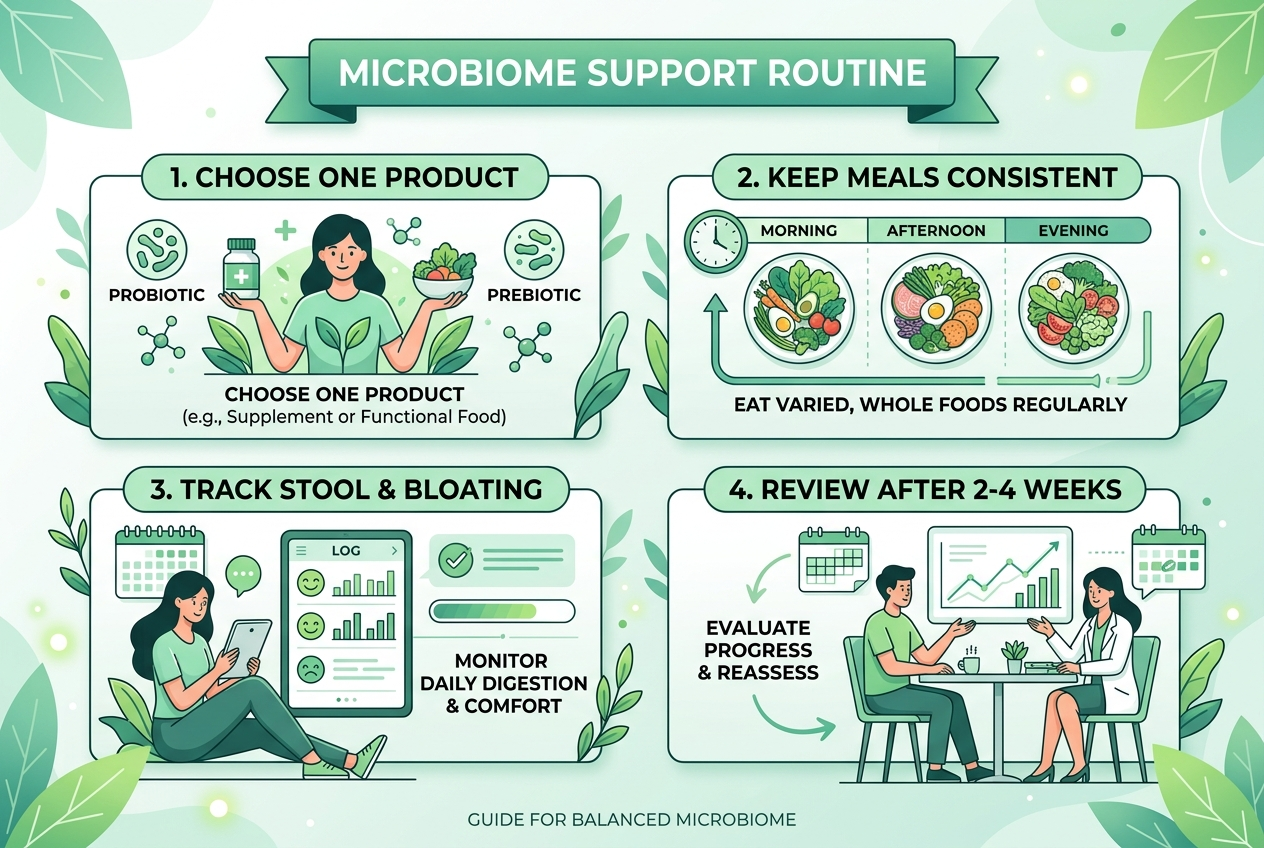
Track stool pattern, bloating timing, meal context, fiber intake, sleep, stress, and product consistency before adding more products. A useful two-week log records Bristol Stool Chart type, stool frequency, gas, bloating score, carbonated drinks, dairy, wheat, beans, onions, garlic, alcohol, travel, antibiotics, and missed servings. The NIDDK explains that gas can come from swallowed air and bacterial carbohydrate breakdown, which shows why timing matters. If symptoms improve while one variable stays consistent, the routine has a clearer signal. If symptoms change every time meals, sleep, and products change, the supplement cannot be judged. This tracking step also protects against overbuying. Many gut stacks fail because the person adds probiotic, prebiotic fiber, magnesium, enzymes, and fermented foods in the same week.
What mistakes make a microbiome routine less useful?
The biggest mistake is chasing a microbiome test score without connecting it to daily patterns. A second mistake is treating probiotics, prebiotics, enzymes, and cleanses as interchangeable. A third mistake is using harsh reset language that encourages extreme restriction, fasting, or unnecessary product stacking. A fourth mistake is starting high-dose fiber too quickly; even useful fiber can create gas when the serving jumps suddenly. A fifth mistake is ignoring red flags because the problem feels “gut related.” Cleveland Clinic explains that bloating can reflect gas, digestive contents, or sensitivity, so persistent or concerning symptoms deserve context-specific evaluation (Cleveland Clinic). A Yuve routine works best when it supports consistency, not when it becomes a substitute for food patterns, sleep, hydration, or professional guidance.
What questions do people ask when their microbiome feels off?
Can one probiotic fix an off microbiome?
No single probiotic should be framed as a universal fix. A probiotic can support a routine when the organism, format, serving, and user pattern match.
Should I take probiotics and prebiotics together?
Not at first if bloating or gas is the main tracking issue. Testing one product first makes tolerance and response easier to interpret.
How long should I test a Yuve routine?
Two to four weeks is a practical trial for daily digestive support. Keep serving timing and diet context consistent enough to learn something.
Are fermented foods better than supplements?
Fermented foods and supplements are different tools. Fermented foods add diet diversity, while a supplement offers a standardized serving and easier routine tracking.
Can fiber make things worse?
Yes, added fiber can increase gas when introduced too quickly or when the fiber type does not fit the person’s tolerance. Start low and increase gradually.
When should I ask a clinician?
Ask a clinician about severe pain, blood, fever, vomiting, unintended weight loss, persistent diarrhea, anemia, immune compromise, or symptoms that keep worsening. Those patterns need more than a wellness routine.
Related reading: Can You Take Probiotics and Fiber Supplements Together?.
What is the practical next step?
Pick one microbiome-support variable and make it boring enough to measure. If daily probiotic adherence is the goal, start with Yuve Probiotic Gummies. If fiber consistency is the gap, compare Yuve Prebiotic Fiber Gummies and food-first fiber. Track stool pattern, bloating timing, and missed servings before adding a second product.
Leave a Reply