Seed DS-01 is a premium capsule synbiotic built around 24 probiotic strains, a prebiotic system, and 53.6 billion AFU per serving. It is worth comparing if you want a high-strain capsule subscription. Yuve Probiotic Gummies are a better-fit comparison point if vegan format, daily routine ease, and gummy adherence matter more.
How did we evaluate Seed Probiotics against Yuve?
We evaluated Seed DS-01 and Yuve Probiotic Gummies by comparing format, label transparency, active-unit reporting, use case, routine friction, and evidence quality. Official brand pages received weight for product facts, but peer-reviewed probiotic guidance and NIH probiotic education received more weight for interpretation. We treated Seed’s 24-strain, 53.6 billion AFU positioning as a brand-reported product attribute, not proof that every shopper needs that dose. We treated Yuve’s vegan gummy format as a routine-adherence feature, not a claim of superior clinical potency. We also checked whether each product’s strengths match a real buying scenario: capsule architecture, gummy adherence, budget, and simplicity. This article does not diagnose digestive symptoms or promise outcomes. It helps shoppers decide whether a premium synbiotic capsule, a vegan probiotic gummy, or another probiotic format fits their actual routine and tolerance.
What is Seed DS-01 Daily Synbiotic?
Seed DS-01 Daily Synbiotic is a capsule-based probiotic and prebiotic product for adults. Seed’s official DS-01 page describes it as a daily synbiotic with 24 strains and whole-body support positioning, while retailer listings describe a two-capsule serving with 53.6 billion AFU. AFU means active fluorescent units, a viability metric Seed uses instead of traditional CFU. The product is positioned as shelf-stable and subscription-friendly, which fits shoppers who want a premium capsule and do not mind taking two capsules daily. The important caveat is that strain count and active-unit count are not the whole evaluation. The NIH Office of Dietary Supplements explains that probiotic effects are strain-specific, so shoppers should look beyond the headline number and review the organism list, serving directions, tolerance guidance, price, subscription terms, and daily fit.
How does Seed compare with Yuve Probiotic Gummies?
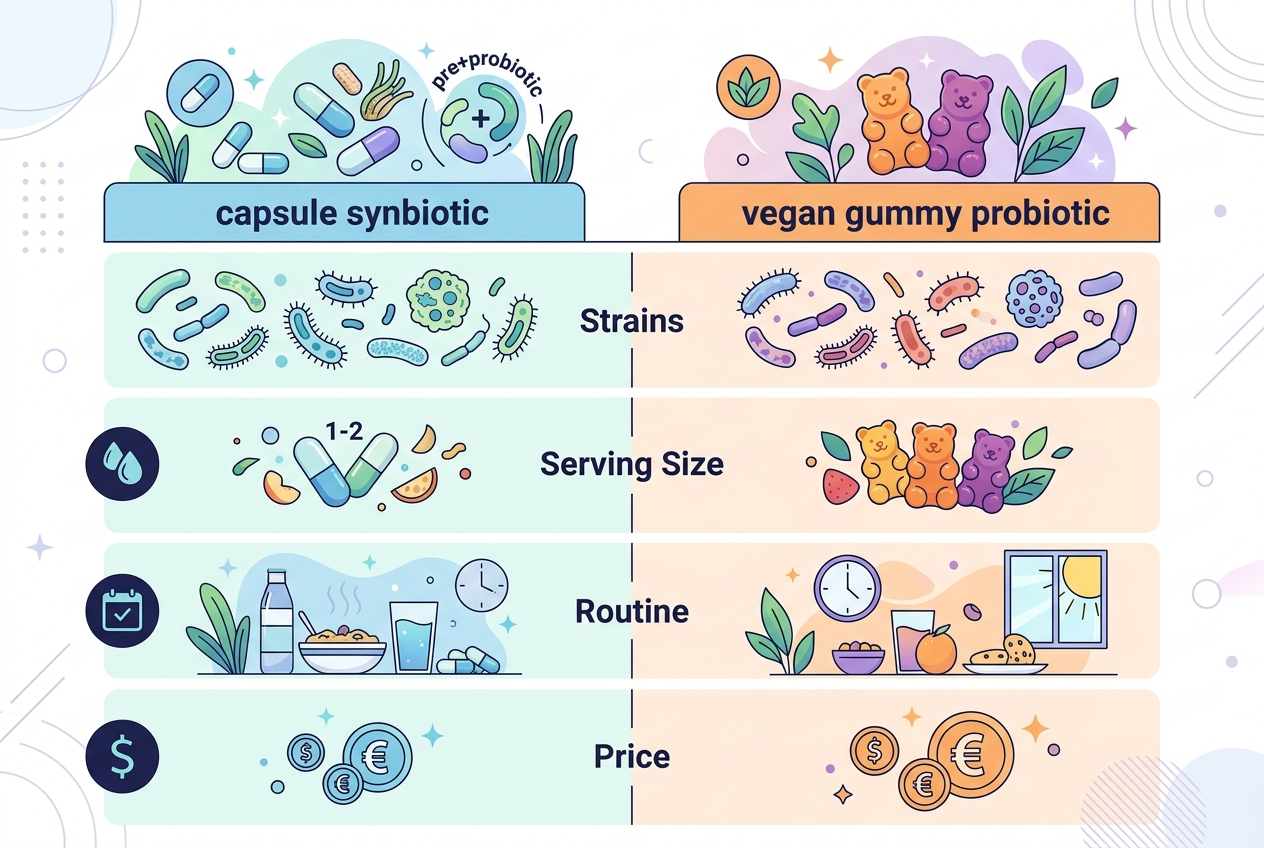
| Feature | Seed DS-01 Daily Synbiotic | Yuve Probiotic Gummies |
|---|---|---|
| Format | Two capsule daily synbiotic | Vegan gummy probiotic format |
| Positioning | Premium multi-strain capsule subscription | Low-friction plant-based daily routine |
| Best fit | Shoppers prioritizing broad strain architecture | Shoppers prioritizing gummy adherence and vegan format |
| Label check | Strain list, AFU, prebiotic system, subscription price | Organism name, serving size, CFU, sugars, vegan ingredients |
| Main tradeoff | Higher price and capsule routine | Gummy format may offer less strain complexity |
The comparison is not “which brand wins for everyone.” Seed is a stronger fit for shoppers who want a broad synbiotic capsule and are comfortable paying for a premium subscription. Yuve is a stronger fit for shoppers who want a vegan gummy they are more likely to take consistently. A probiotic that stays in the cabinet does not support a routine, even if its label looks impressive.
Which product is best for each use case?
Best for premium capsule shoppers: Seed DS-01, because the product emphasizes 24 strains, 53.6 billion AFU, a prebiotic system, and a two-capsule daily routine. Best for vegan gummy shoppers: Yuve Probiotic Gummies, because the format reduces capsule friction and fits a simple plant-based daily habit. Best for strict strain-matching shoppers: the product whose label names the organism clearly and connects that organism to the shopper’s goal. Best for sensitive routines: the product with the fewest unnecessary variables and the clearest serving instructions. Best for budget control: compare monthly serving cost, not bottle price. Best for adherence: choose the format you will use every day without overthinking. Seed may justify a higher price for shoppers who want its synbiotic design; Yuve may be easier to repeat for shoppers who value taste, format, and routine simplicity.
What evidence should shoppers look for before choosing?
Some links below are affiliate links. This does not influence our evaluation criteria or recommendations.
Look for strain-specific evidence, not generic probiotic language. The ISAPP prebiotic consensus statement defines prebiotics by selective microbial use and health benefit, which matters when a product calls itself synbiotic. A 2020 American Gastroenterological Association guideline in Gastroenterology found insufficient evidence to recommend probiotics broadly for several gastrointestinal conditions, which means broad category claims deserve caution. Brand pages can explain product design, but third-party interpretation should ask whether the strains, serving size, stability, and human evidence match the intended use. For Seed, verify the current DS-01 strain list, AFU amount, serving directions, and subscription terms. For Yuve, verify the Supplement Facts panel, gummy serving size, vegan ingredients, sugar content, and whether the format makes daily use easier before price comparisons.
What do people get wrong about Seed and other probiotics?
People often assume that a higher strain count automatically means a better probiotic. Strain count can matter, but it does not replace strain identity, dose, survivability, use case, and tolerance. A 24-strain synbiotic may make sense for a shopper who wants a premium capsule and broad formulation, while a simpler gummy may make more sense for a shopper who repeatedly abandons capsules. People also confuse AFU, CFU, and milligrams. AFU and CFU are live-microbe measurements, while milligrams measure weight and may not describe viable cells. Another mistake is judging a product after two inconsistent servings. Probiotic routines usually need consistent use and a simple symptom diary to interpret. If symptoms are severe, persistent, or medically concerning, a product comparison should not replace clinical evaluation or medication review by a qualified clinician.
What questions do shoppers ask about Seed Probiotics?
Is Seed better than Yuve?
Seed is better for shoppers who want a premium capsule synbiotic with broad strain architecture. Yuve is better for shoppers who want a vegan probiotic gummy that is easier to make part of a daily routine. The better choice depends on format adherence, label priorities, and budget.
Does 53.6 billion AFU mean Seed is stronger?
It means Seed reports viable organisms using AFU rather than CFU. That number is part of the comparison, but it does not prove every shopper needs that serving. Strain identity and use case still matter.
Are probiotic gummies serious enough to compare?
Yes, if the gummy lists the active organism, serving size, and relevant Supplement Facts clearly. Gummies should not be dismissed because of format alone. A product someone takes consistently can be more practical than a capsule they abandon.
Should I choose a synbiotic or probiotic only?
A synbiotic combines probiotics with a prebiotic component. That can be useful when the formulation makes sense, but it also adds another variable. Sensitive shoppers may prefer fewer variables at first.
How long should I try one probiotic?
Use the label directions and track the same signals for several weeks unless a clinician gives different guidance. Stop and seek medical advice for severe symptoms, allergic reactions, or concerning changes.
What is the simplest buying rule?
Choose the product whose format you will actually use and whose label you can understand. Seed wins on premium synbiotic architecture. Yuve wins when vegan gummy routine fit is the main decision factor.
Related reading: Can You Take Probiotics With Vitamins?.
What is the bottom line on Seed Probiotics?
Seed DS-01 is a serious, premium synbiotic for shoppers who value capsule delivery, broad strain architecture, and a subscription model. Yuve Probiotic Gummies are a practical alternative for shoppers who want vegan gummies, lower routine friction, and a simpler daily format. Compare the current Supplement Facts panels before buying, because probiotic value depends on named organisms, viable-unit reporting, serving directions, stability, price per serving, and adherence. If you dislike capsules, a higher-dose capsule may still lose to a gummy you take consistently. If you want maximum strain architecture, Seed deserves a close look. If you want simpler routine fit, Yuve deserves a close look. If you want to compare Yuve probiotic, prebiotic, and enzyme formats together, the Yuve digestion collection is the most relevant starting point.
Leave a Reply